59 Dyed Hair Ideas for Men: Colorful Hairstyles & Haircuts
Dyed hair can show off your unique personality in an exciting way
Looking for dyed hair ideas for men? From subtle blonde highlights and platinum blondes to bold blue, pink, purple, green, and multicolor looks, there are countless ways to add color to a men’s hairstyle.
We’ve collected 60+ dyed hairstyles for men to help you find your next look. Whether you want a subtle change, colorful highlights, a two-tone style, or a completely bold hair color, these examples combine modern men’s haircuts with eye-catching color.
Browse the gallery below, then use our guide to find the best hair color, haircut, and dye style for your hair type and personal style.
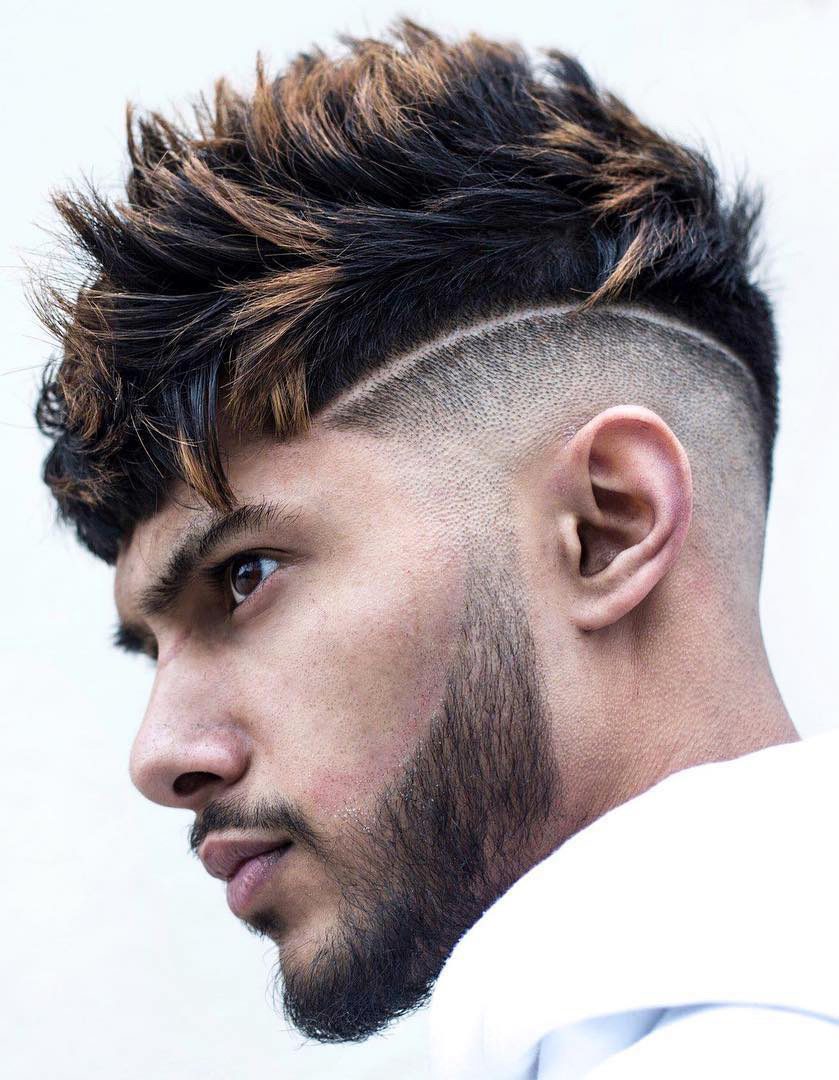
Clear Mid Fade Plus Dyed Highlights
The spiky texture of this faux hawk is more pronounced thanks to the light brown highlights on the tips. Plus, have you seen a cooler disconnected design?
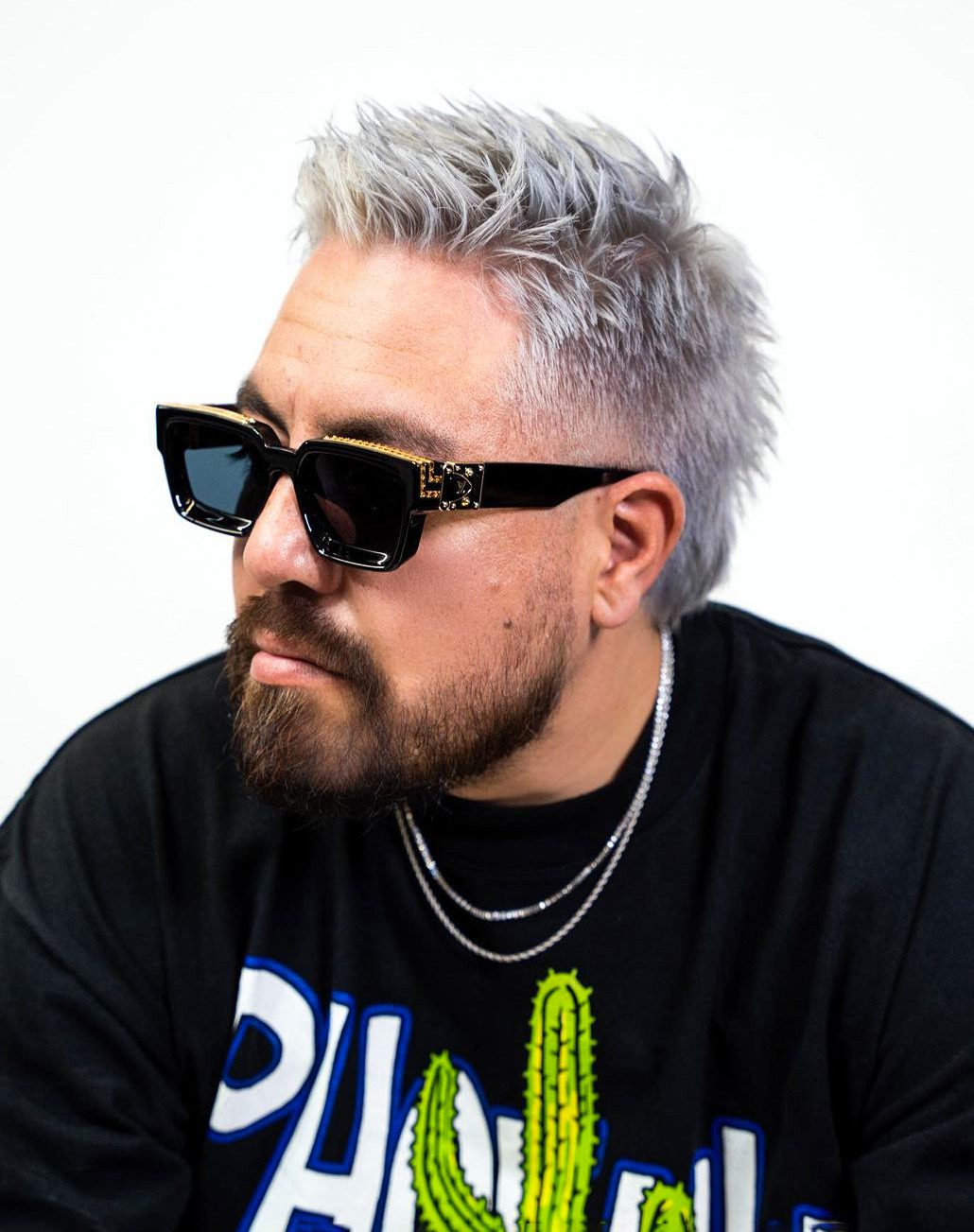
Dyed hair for men: Platinum Spiky Hairstyle
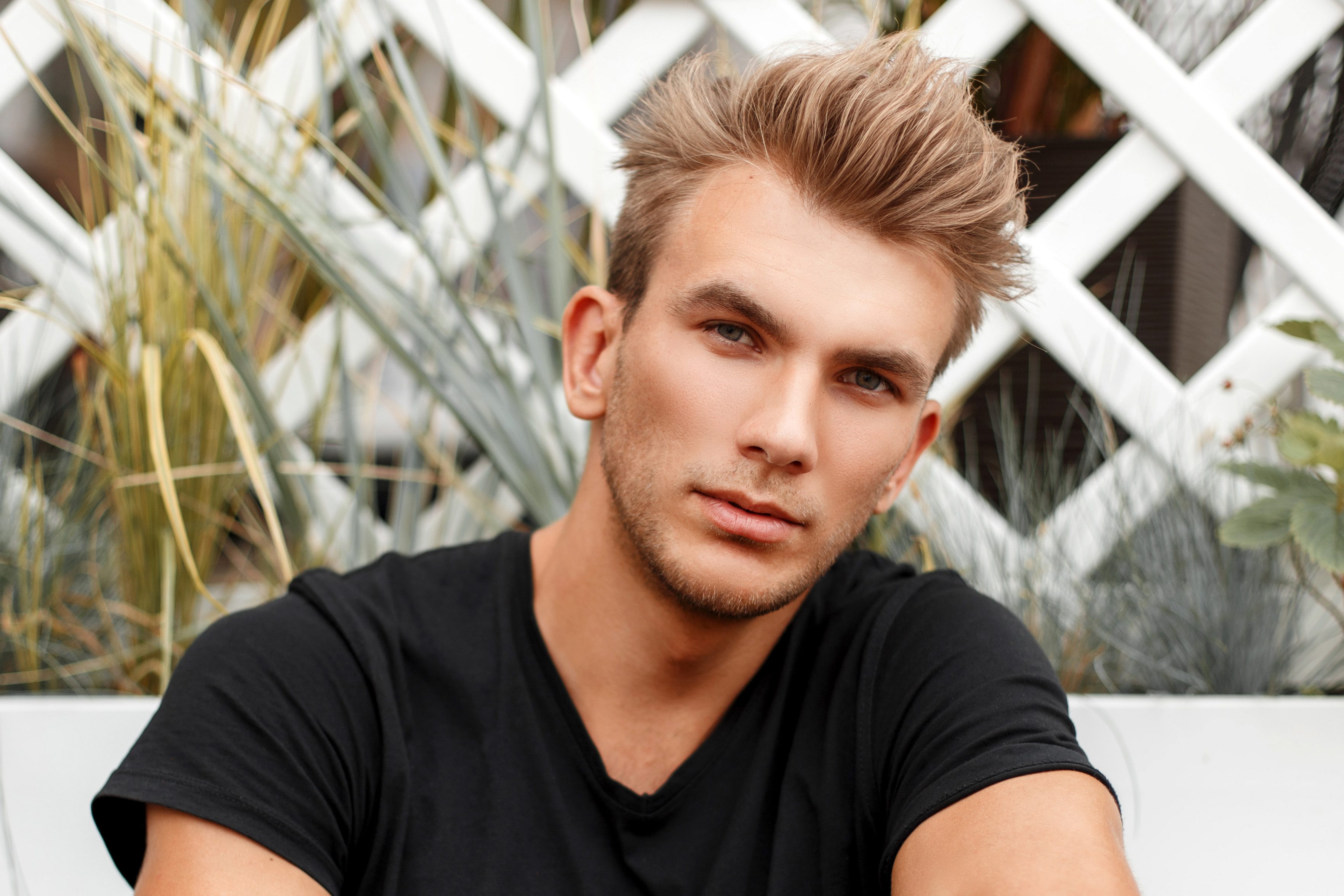
The hair style is piercey and textured, and the top of the hair is spiked up away and slightly to the side of the face. This look was achieved using a classic scissor cut, but the sides are still slightly shorter than the top which adds more shape to this style.
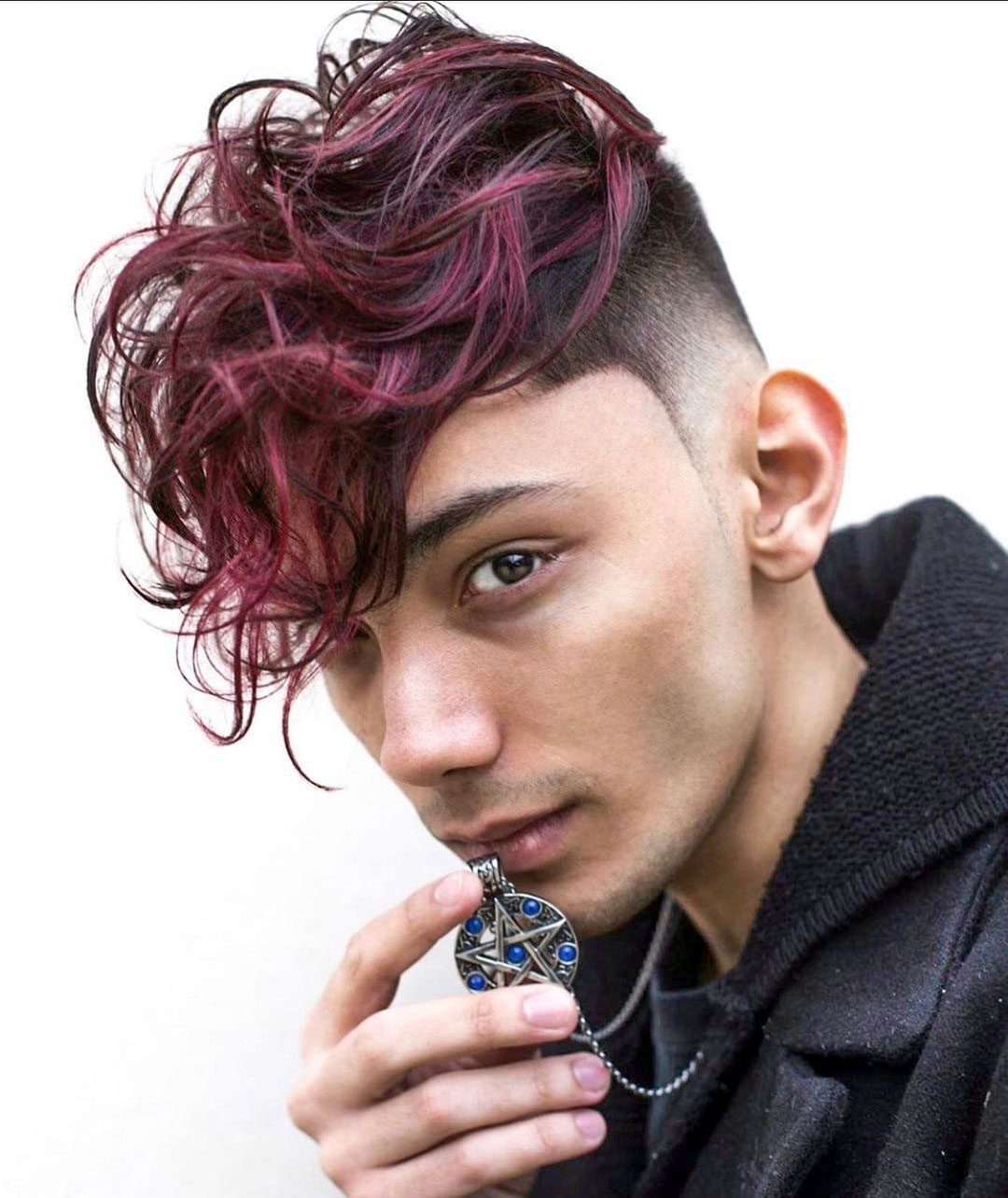
Balayage Side Swept Curly Undercut
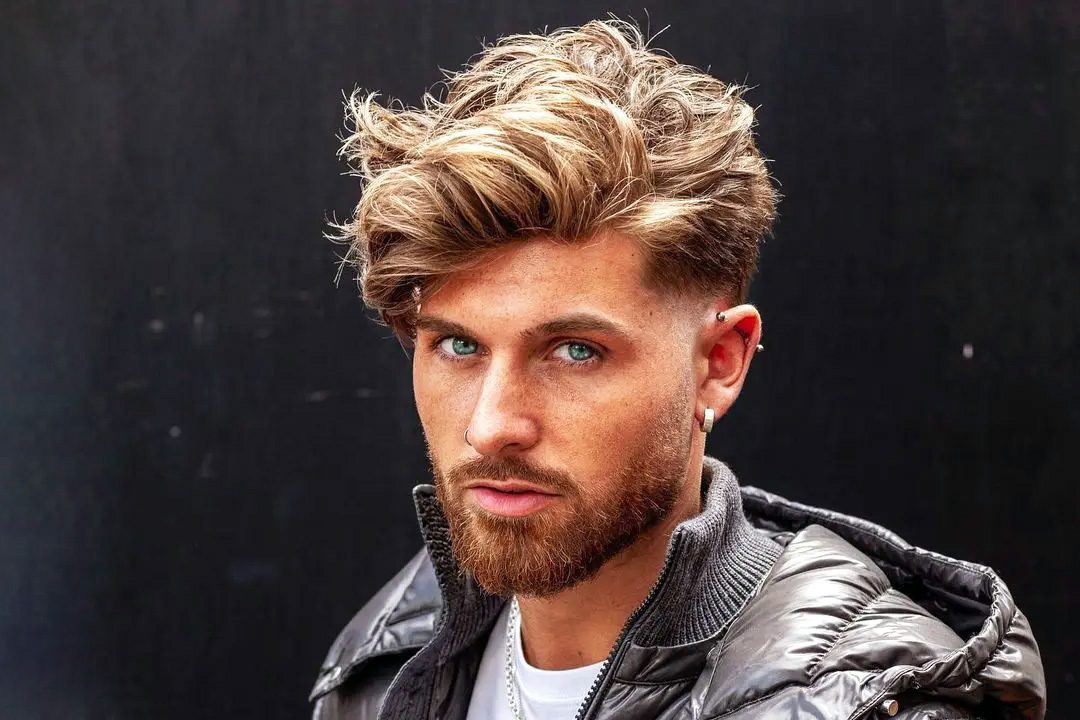
To get the full effect of a side swept curly undercut – add a striking hair color. You can achieve an even better effect if you only dye the curly part and in a balayage and leave the rest of the hair in your natural color. Not to say that the haircut itself isn’t striking and edgy – take into account the long, curly hair that is being swept to the side, which is accentuated by the undercut. Wear one simple accessory, like a pendant necklace, to not remove the focus from your face, and only keep a light 5 o’clock shadow.
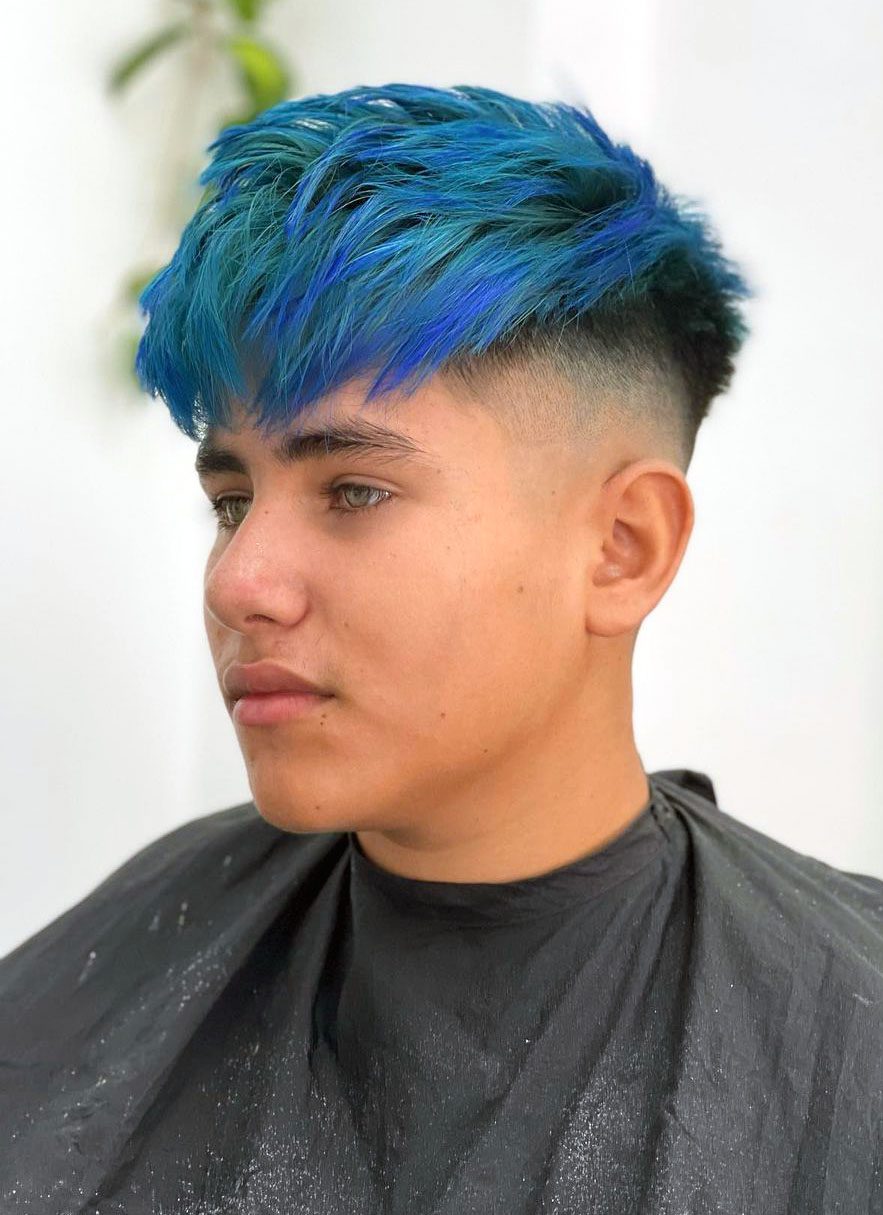
Blue Undercut with Angular Fringe
One of the essential things to note when choosing a hair color is the overall effect that it will have on your face, which includes how it will match your haircut, your skin color, and even your eye color. Will it bring out your eyes more? The answer (considering the photo) is simply yes. The eyes are light (almost) transparent gray – and having hair color in bright blue adds brightness to it. The haircut is also angled, forming a V-shape towards the nose bridge, bringing attention to the eyes once again.
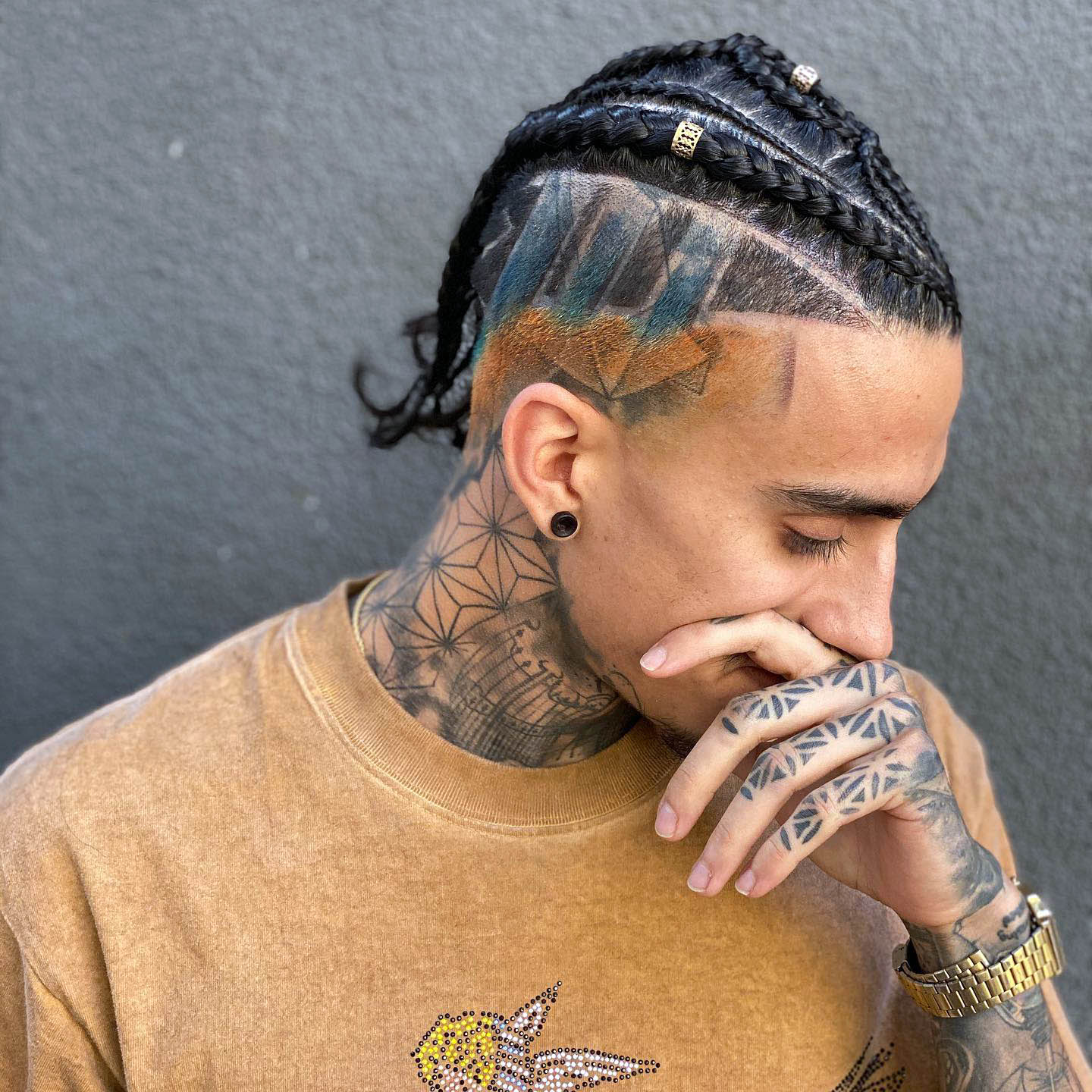
Braided Top with Dyed Sides
There is already so much amazing about this style but if we do a deep dive, the braids with beads already make it so unique but the dye on the sides is so subtle yet noticeable with its multiple shades. The lineup and slit shave work hand in hand with the dye and shave.
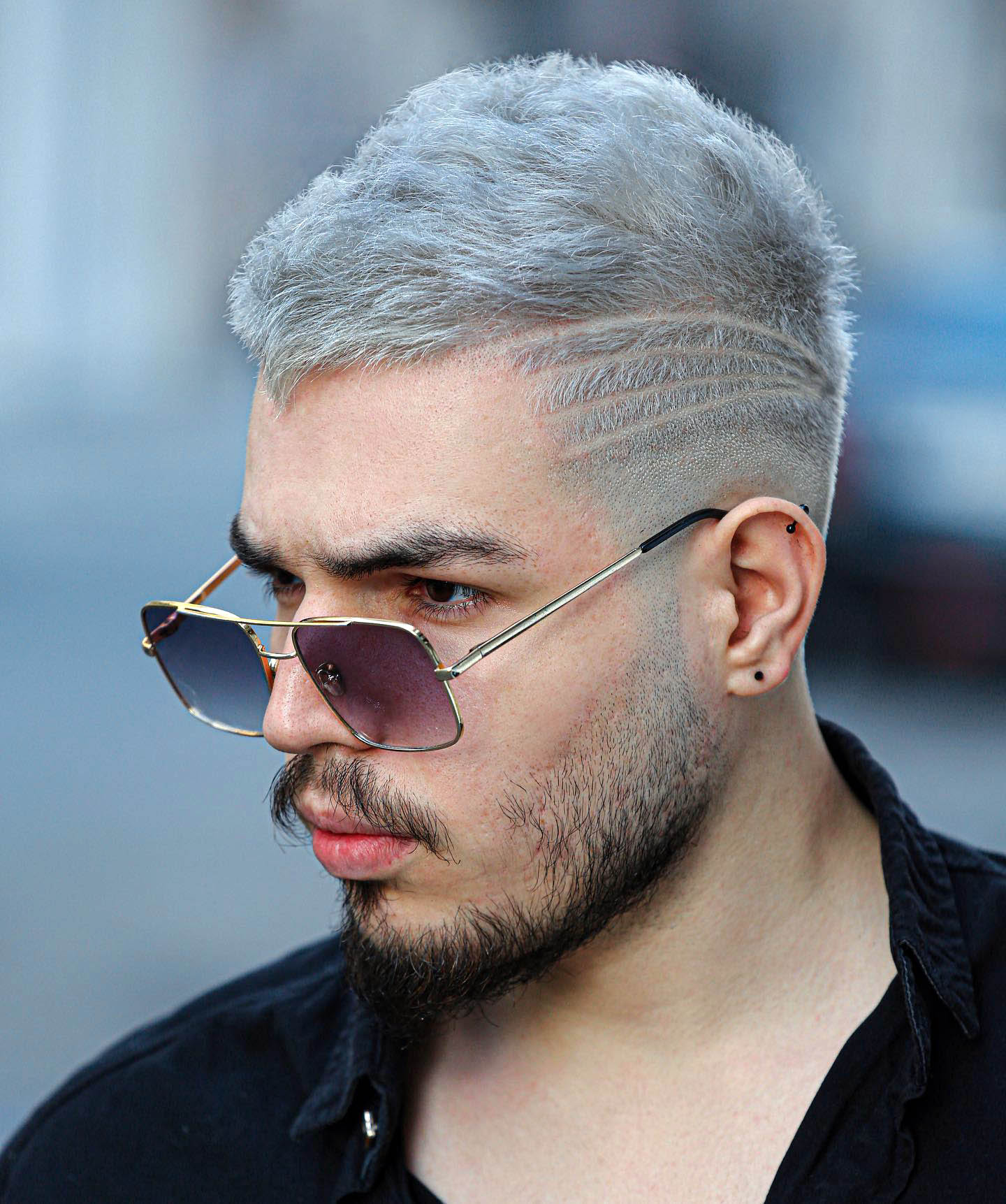
Slit Shave with Tapered Sides
Who says white hair isn’t cool? This style is an icy white dye with sides being slit shaved. The top is longer with sides being taper fade. The brush-up brings all the volume and attention to the top. The side burns fade helps to blend in that color with a black beard.
Related
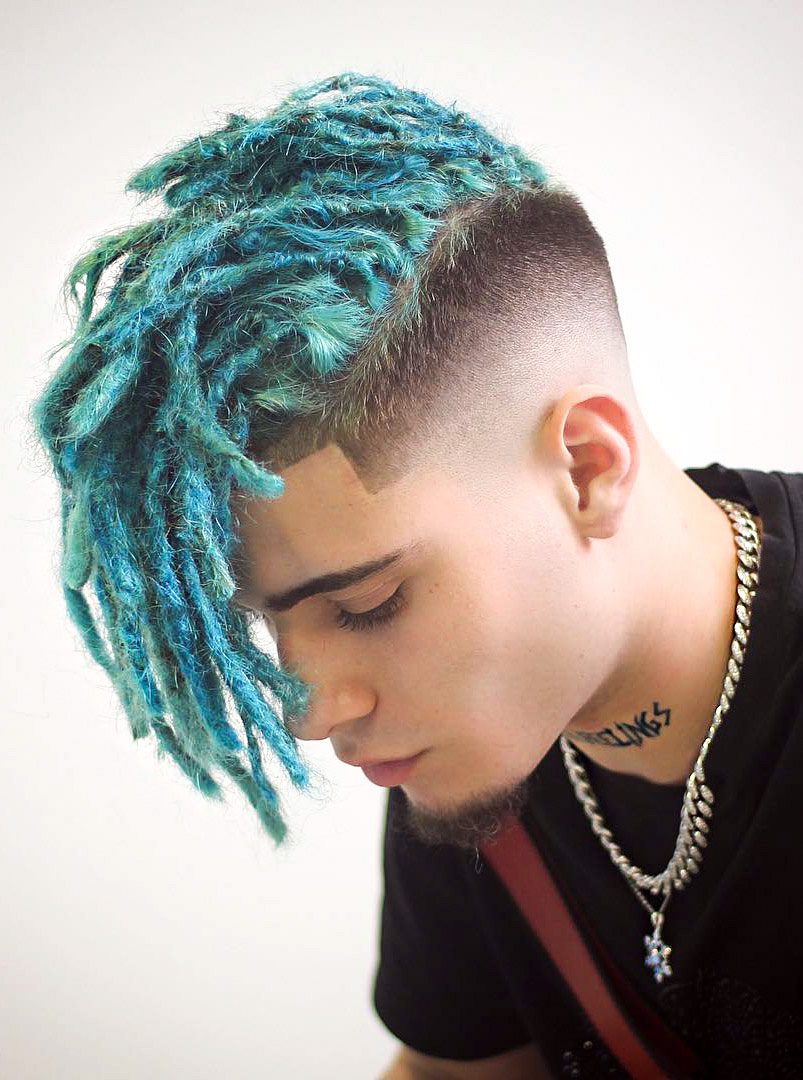
Colorful men’s hairstyles: Dyed Dreads
For an extremely bold, undeniable look, you can’t do wrong with these dyed dreads. The brightly dyed dreads contrast with the uncolored sides to make the color pop.
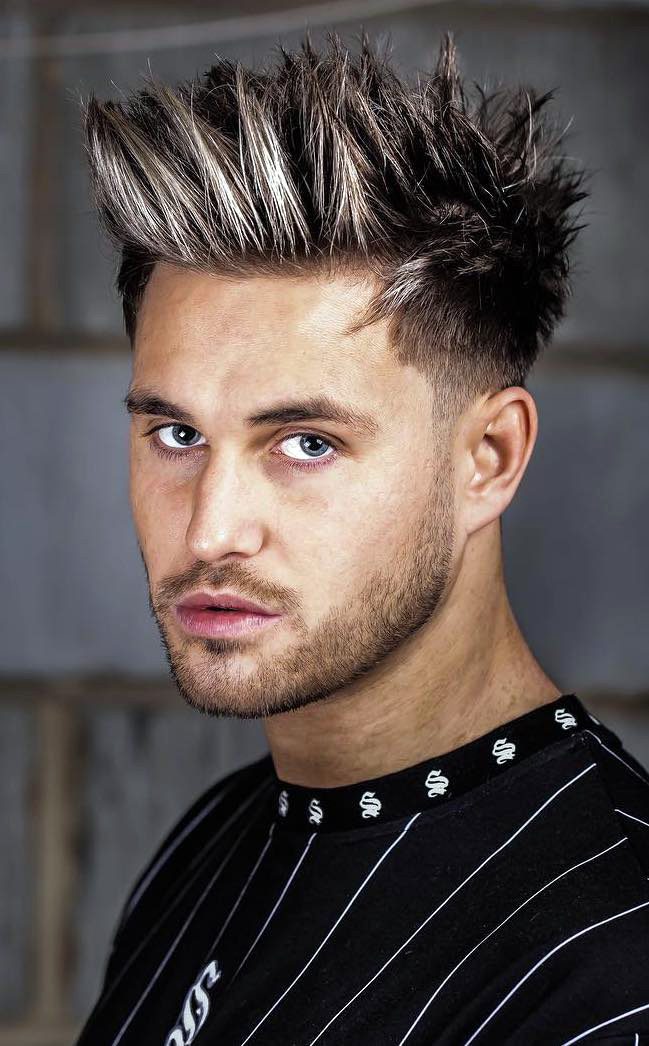
Highlighted Brush Up Spikes
It’s no surprise that dyed hair and spikes have always gone together. This style uses spikes to showcase the hair’s color, and it works well with either highlights or fully dyed hair.
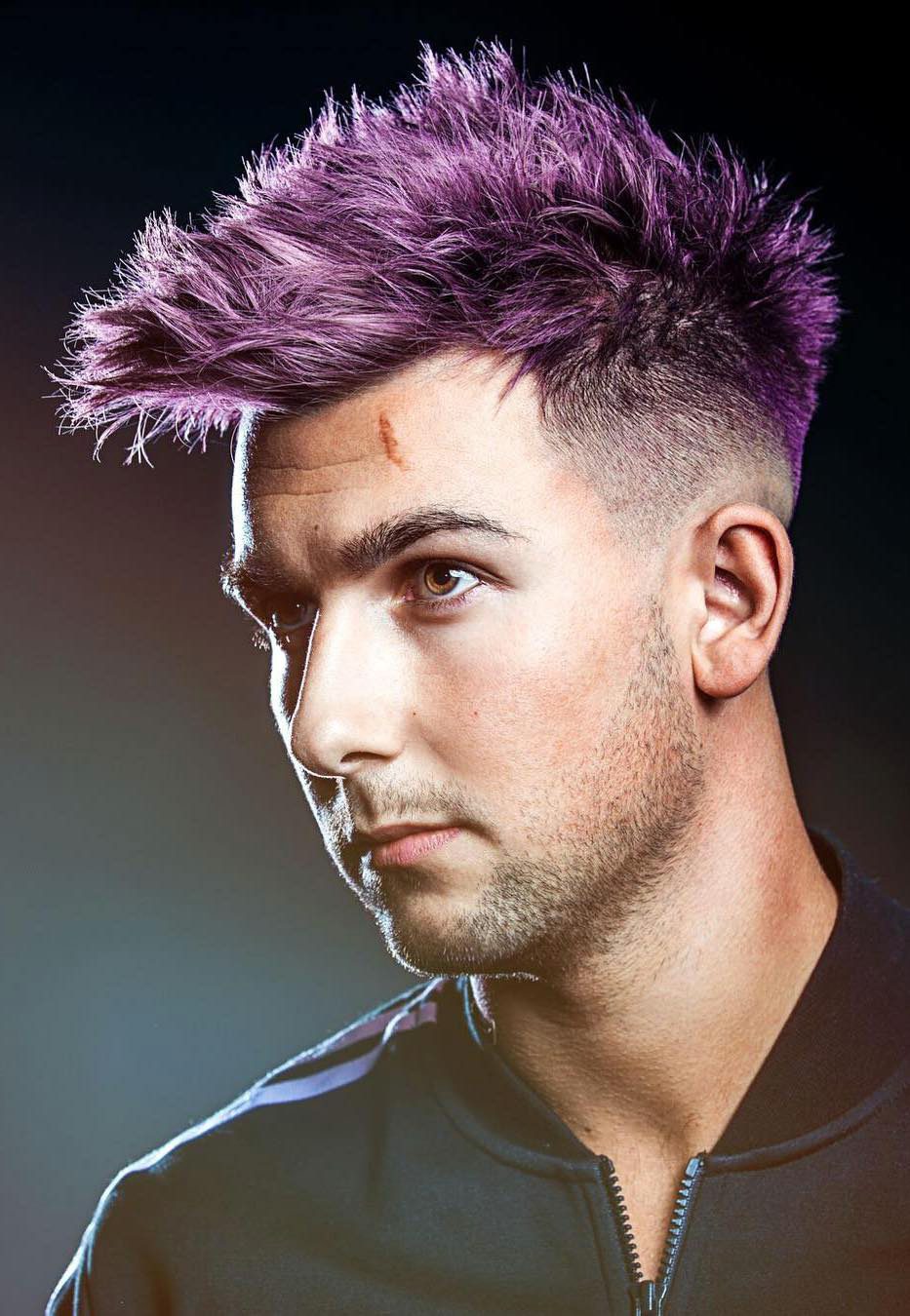
Colorful men’s hairstyles: Purplisation
This bright purple look is definitely one of a kind! With a long, extending fringe and skin faded sides, this is going to turn heads.
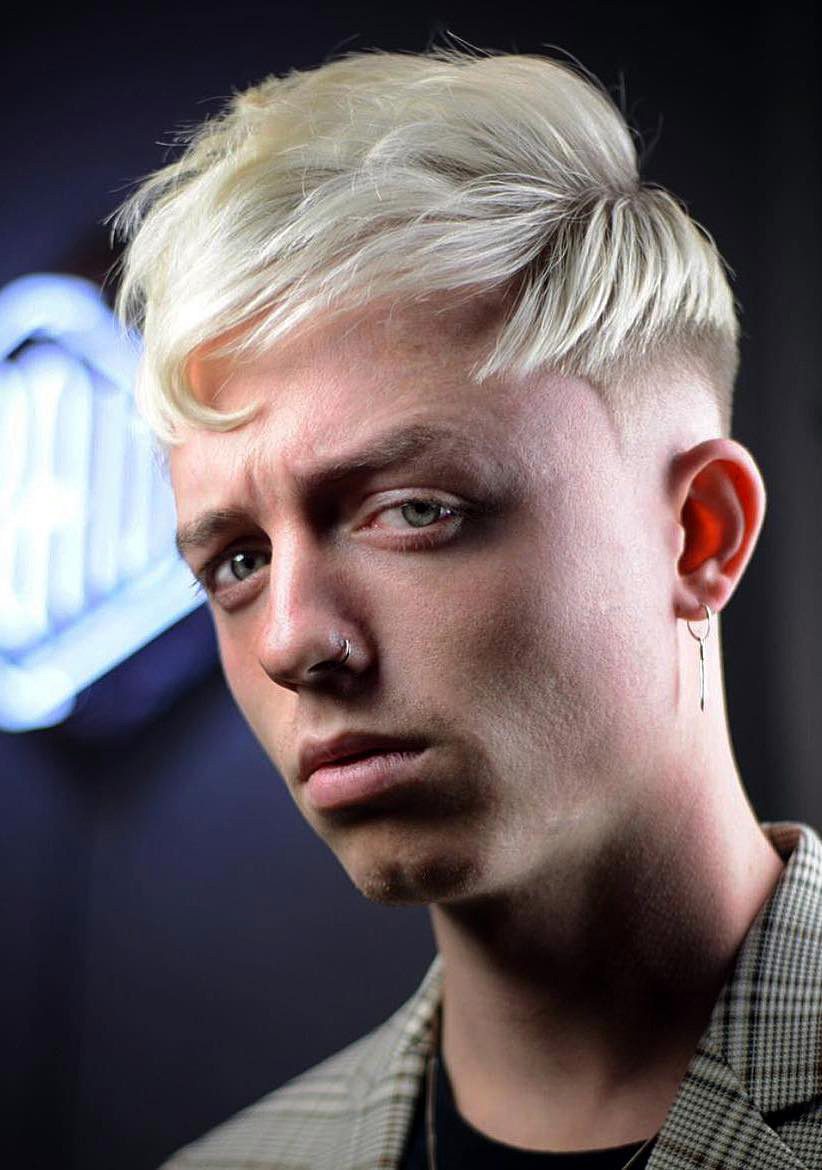
Side Parted Dyed Hair
The side part hairstyle is a truly timeless hairstyle, and as it turns out, it’s great for dyed hair, too. It especially complements hair that’s all dyed one color.
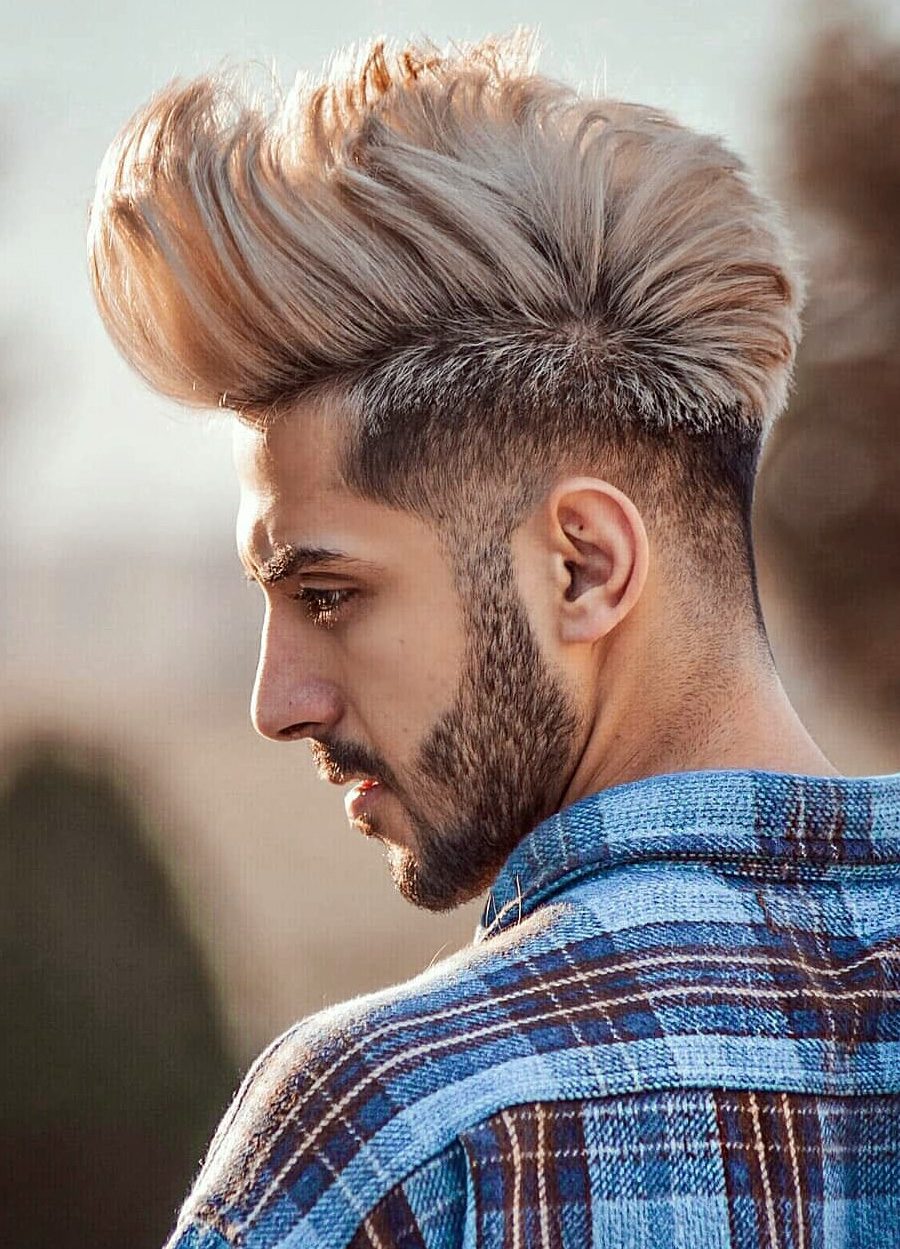
Hardcore Brush Up with Dyed Top
There’s nothing like a bold cut paired with an eye-popping color to make an edgy hair statement. Here, the top is brushed up to an extreme height and the blond dye makes a striking contrast to the dark undercut.
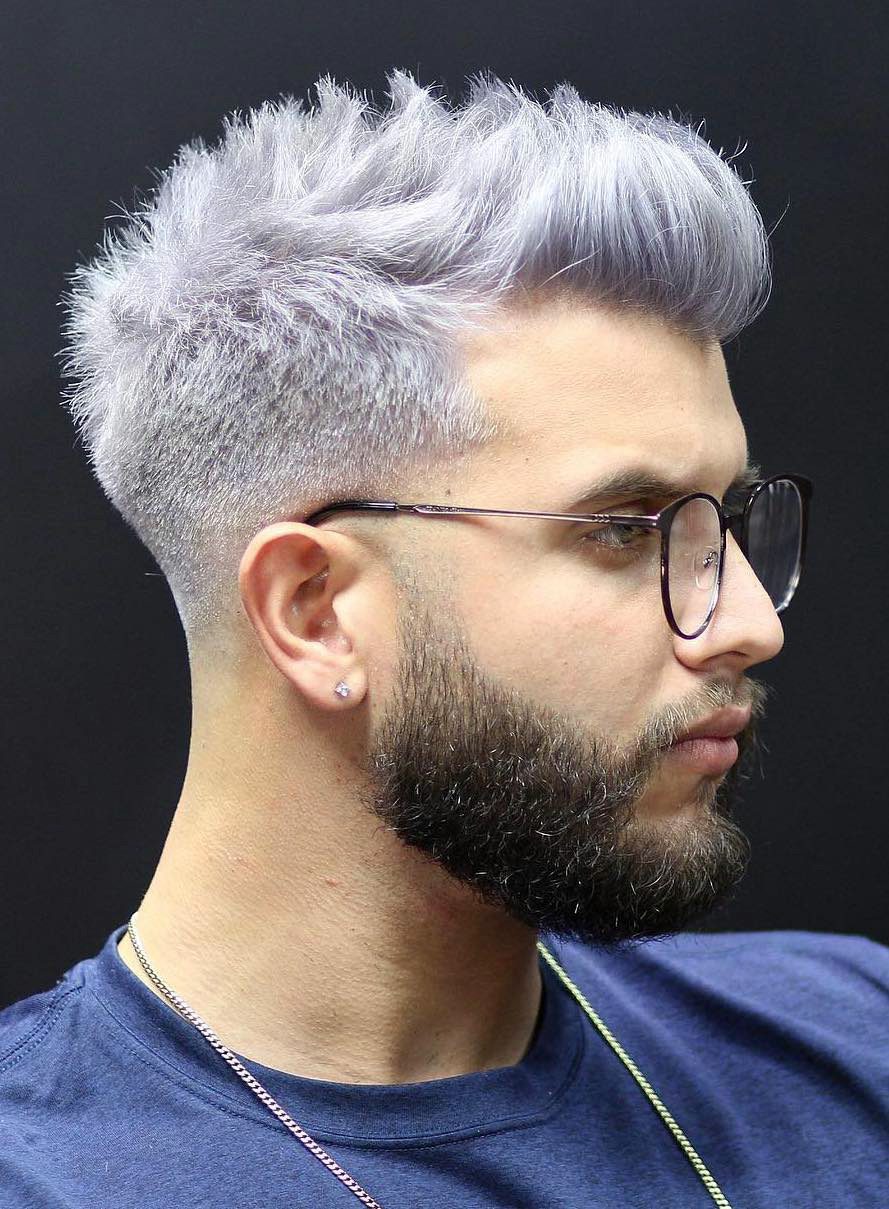
Vanilla Flavored Hair with Thin Texture
Grab attention with a really radiant color, like this very light lilac, almost silvery hue. The color paired with edgy styling gives a lot of character to thin textured hair.
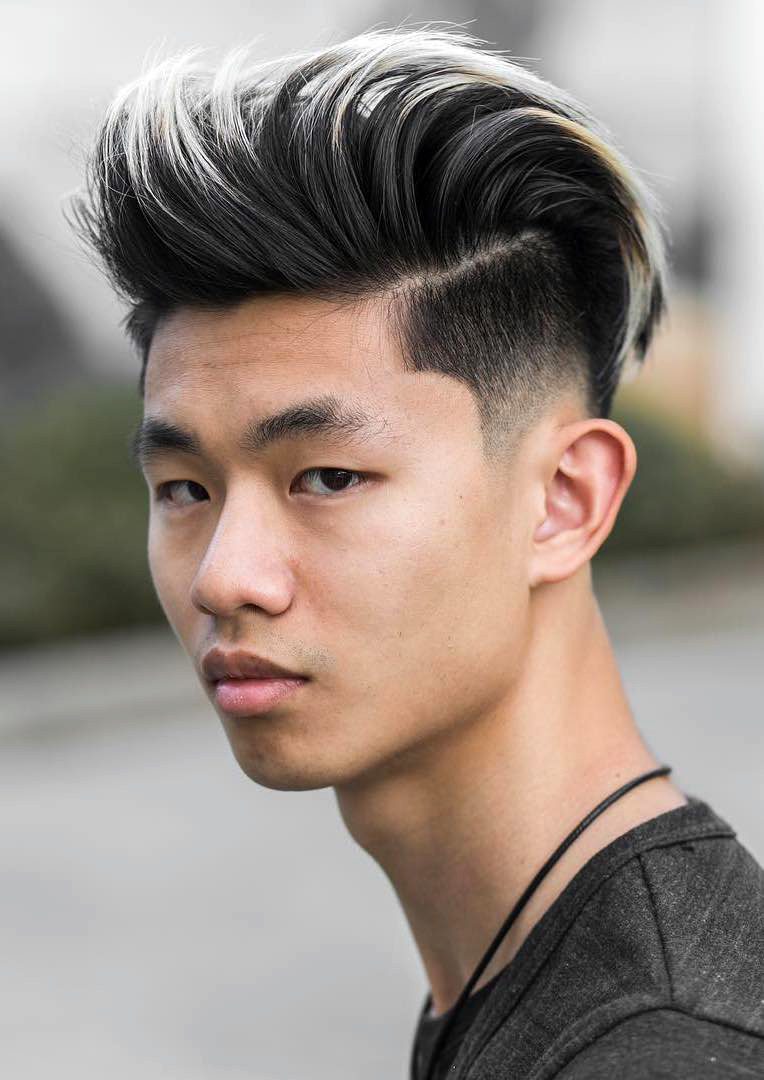
Highlighted Ends with Taper Fade
As you can see here, dyeing just the ends of your hair can result in a totally standout look. The color, the height of the top, and the contrast of the taper fade all make for an edgy style.
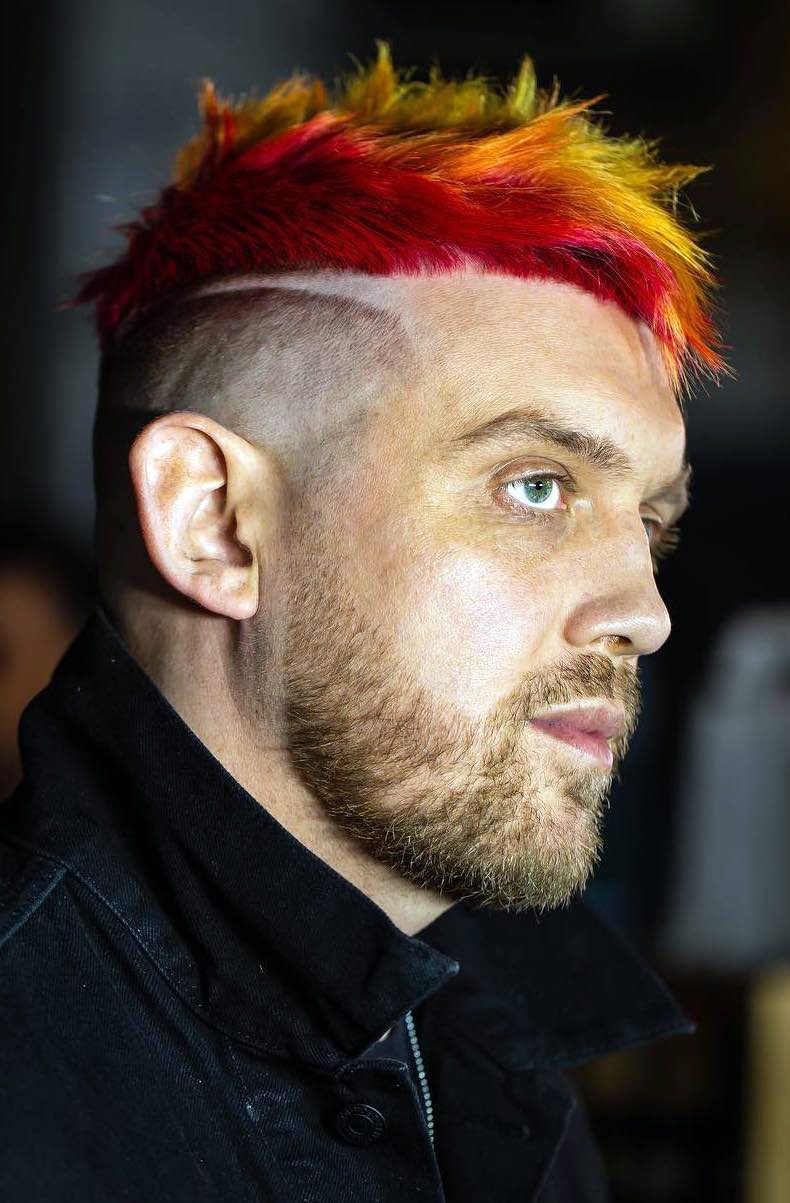
Thick to Thin Side Part
The thick to thin side part looks impressive as it is but why stop there? A flaming-hot color like this red, orange, and yellow combo can take your look to a whole different level.
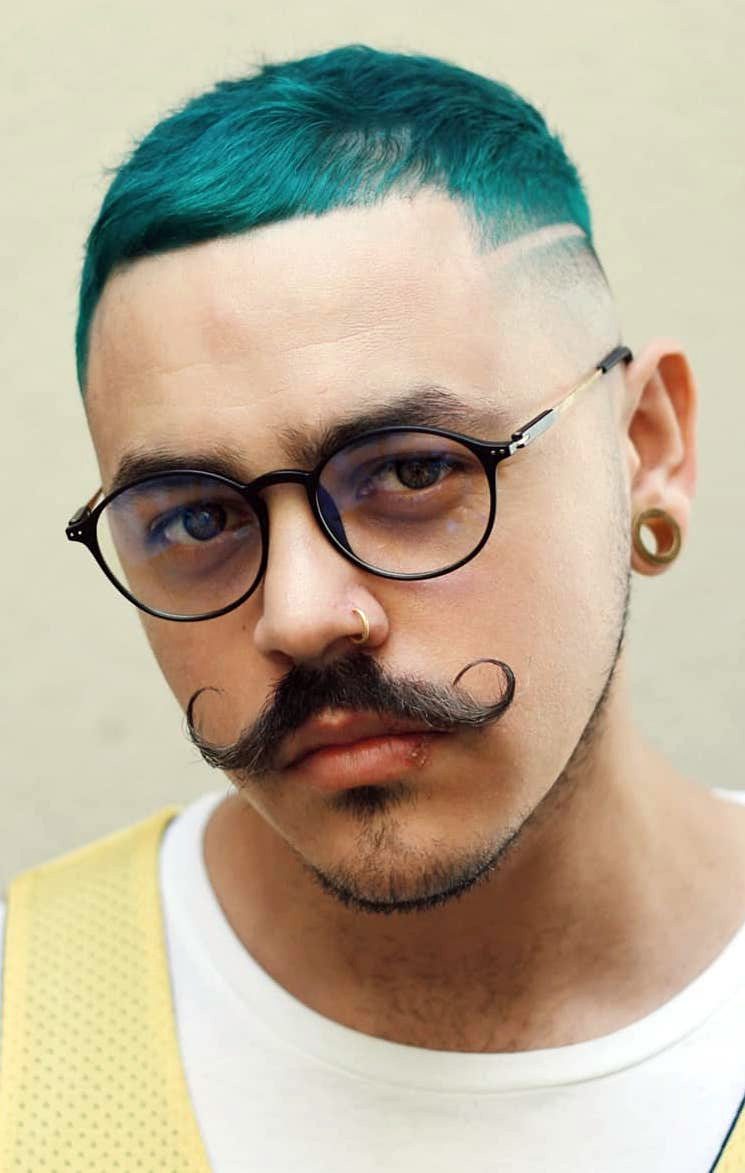
Blue Green Altogether with Disconnection
Speaking of daring color choices, here’s another one. You’re sure to stand out with this bright blue-green color, and the disconnected design makes it even more eye-catching.
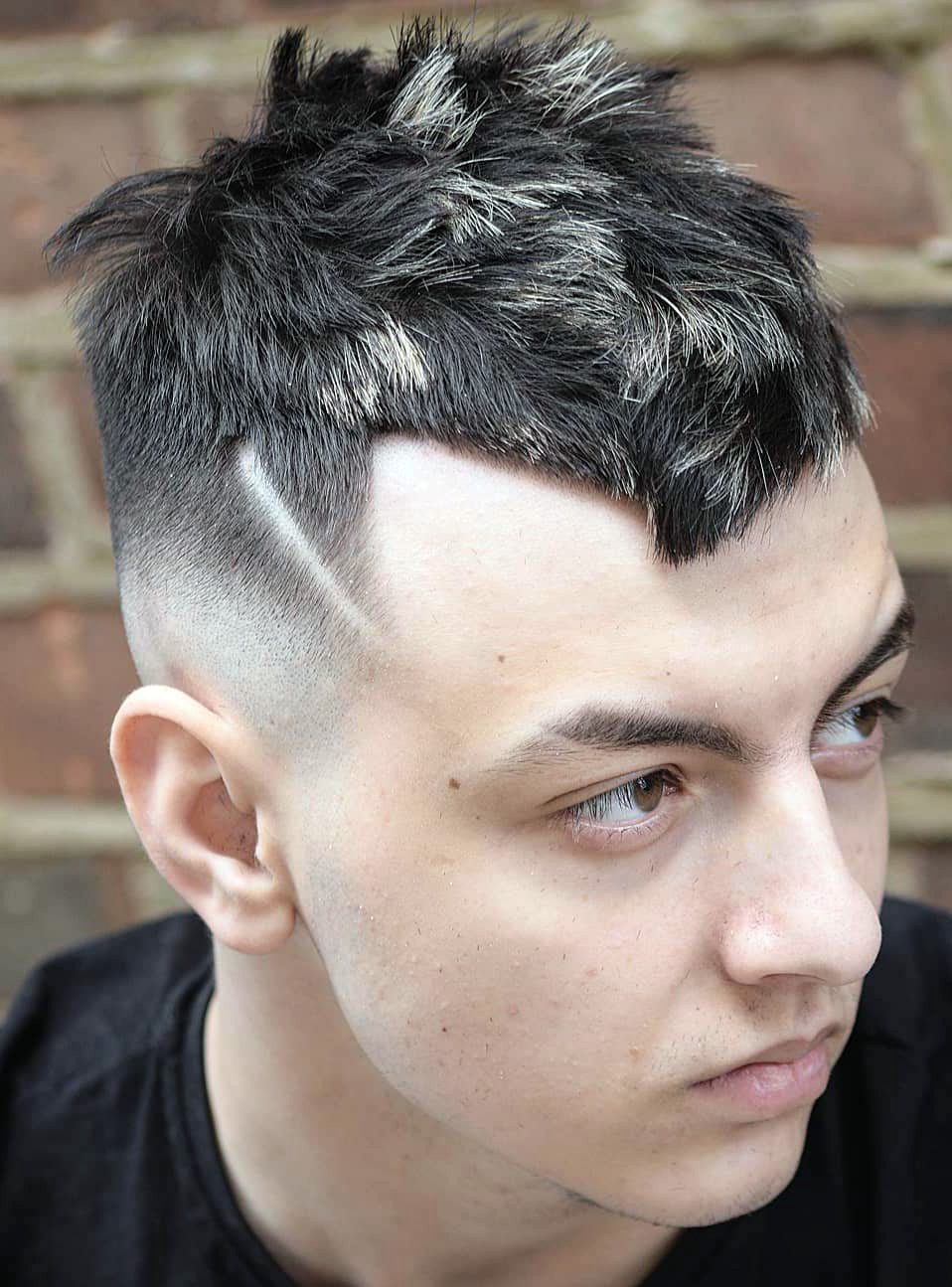
Dyed Banks with Angular Fringe
For a unique look, experiment with combinations of unusual cuts and dyes. Here, the fringe is cut at an angle and the top is messy with blond highlights.
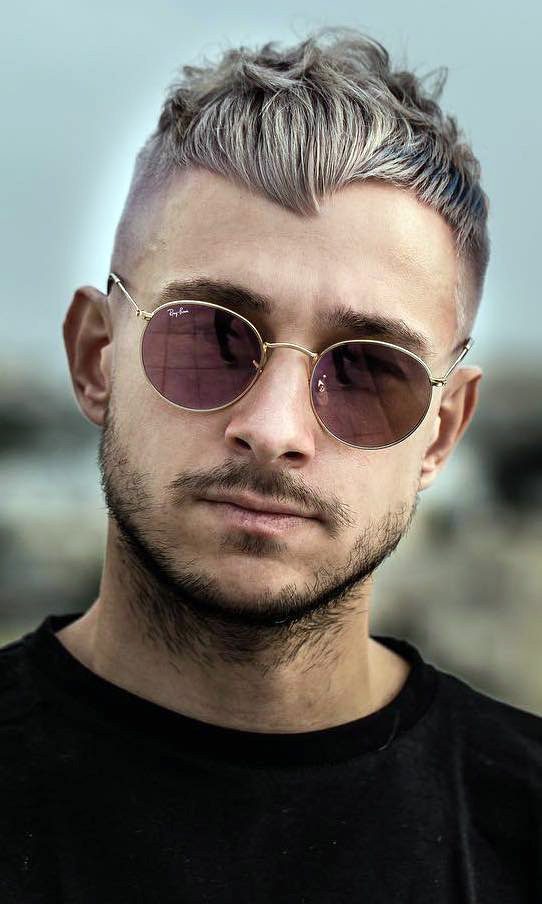
Dyed Fringe
Make your fringe the focal point of your hairstyle with a stylish color choice. Also, try an angular cut for an offbeat look.
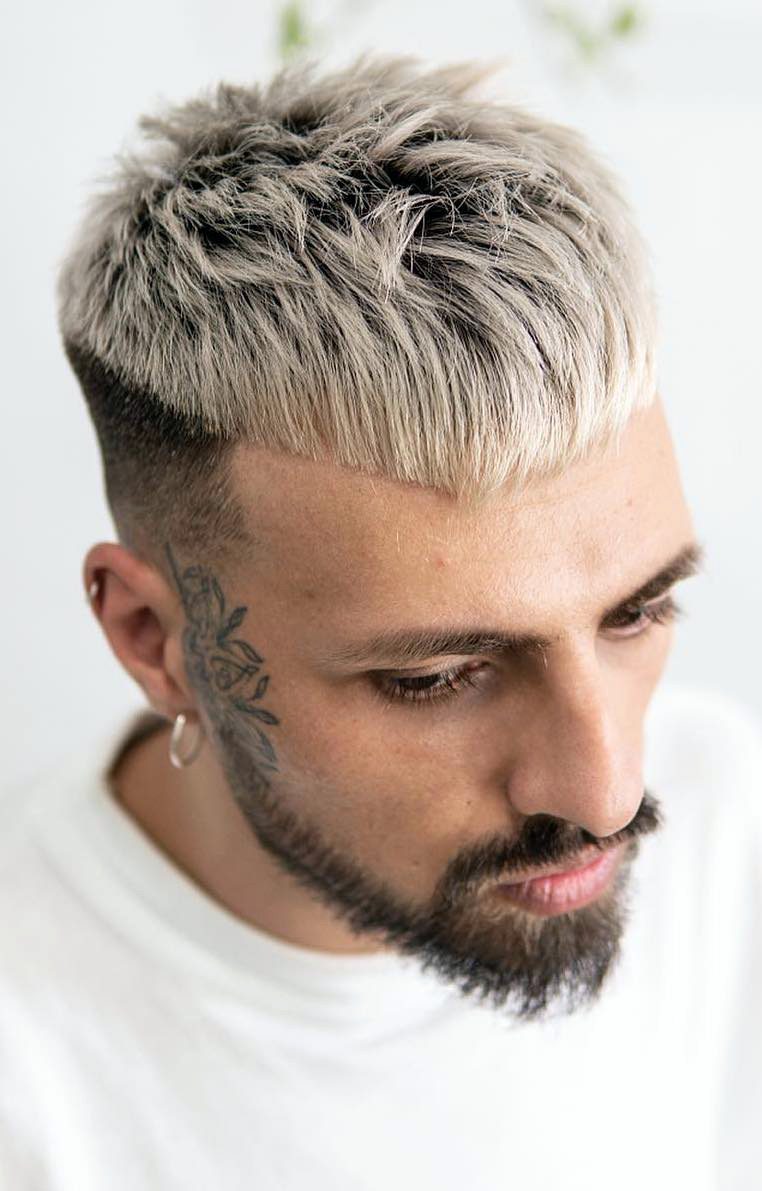
Dyed French Crop with Taper
A great way to delineate the top part of a French crop from the bottom is by dyeing it a lighter color. The taper then becomes more distinct, which results in a really striking haircut.
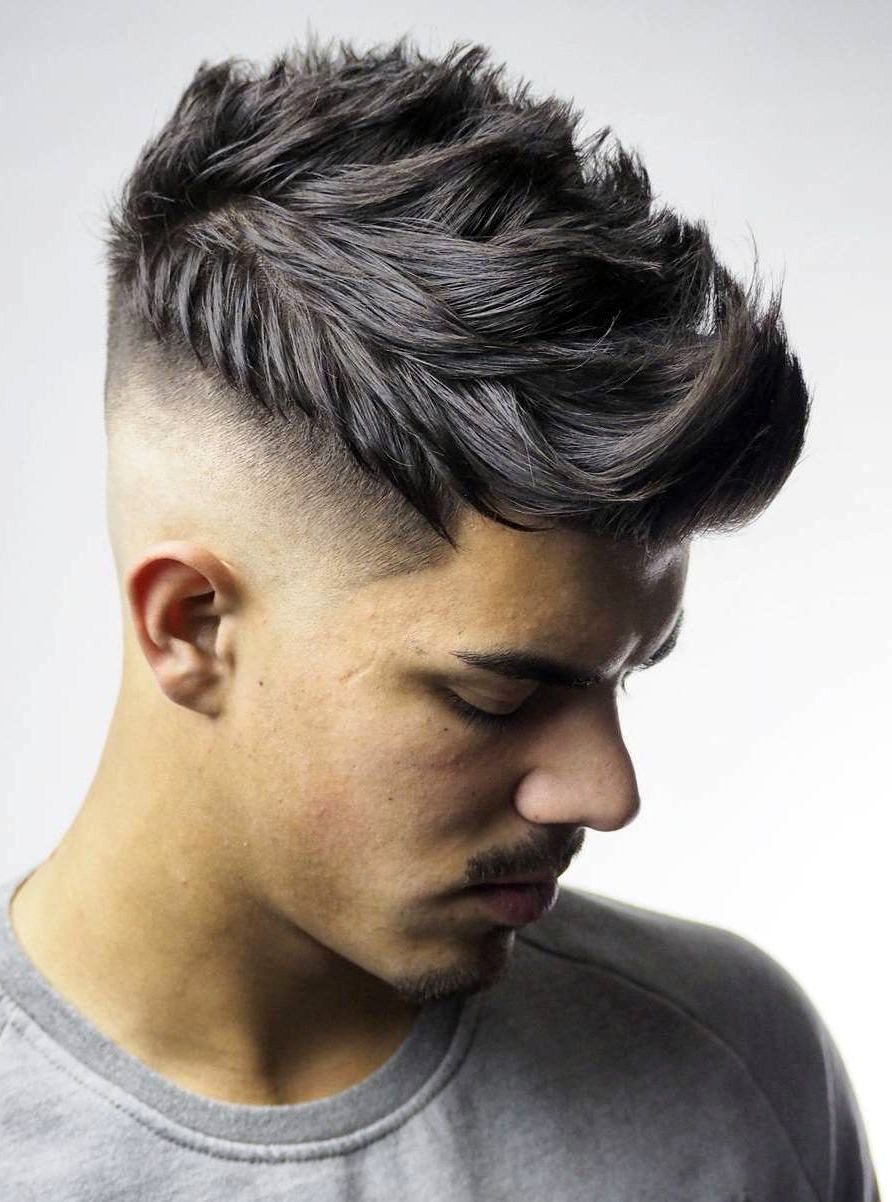
Faux with Skin Faded Sides
Dye jobs don’t always have to be bold colors or high-contrast highlights. As you can see here, even a subtle and natural hue can give your hair a rich appearance and texture.
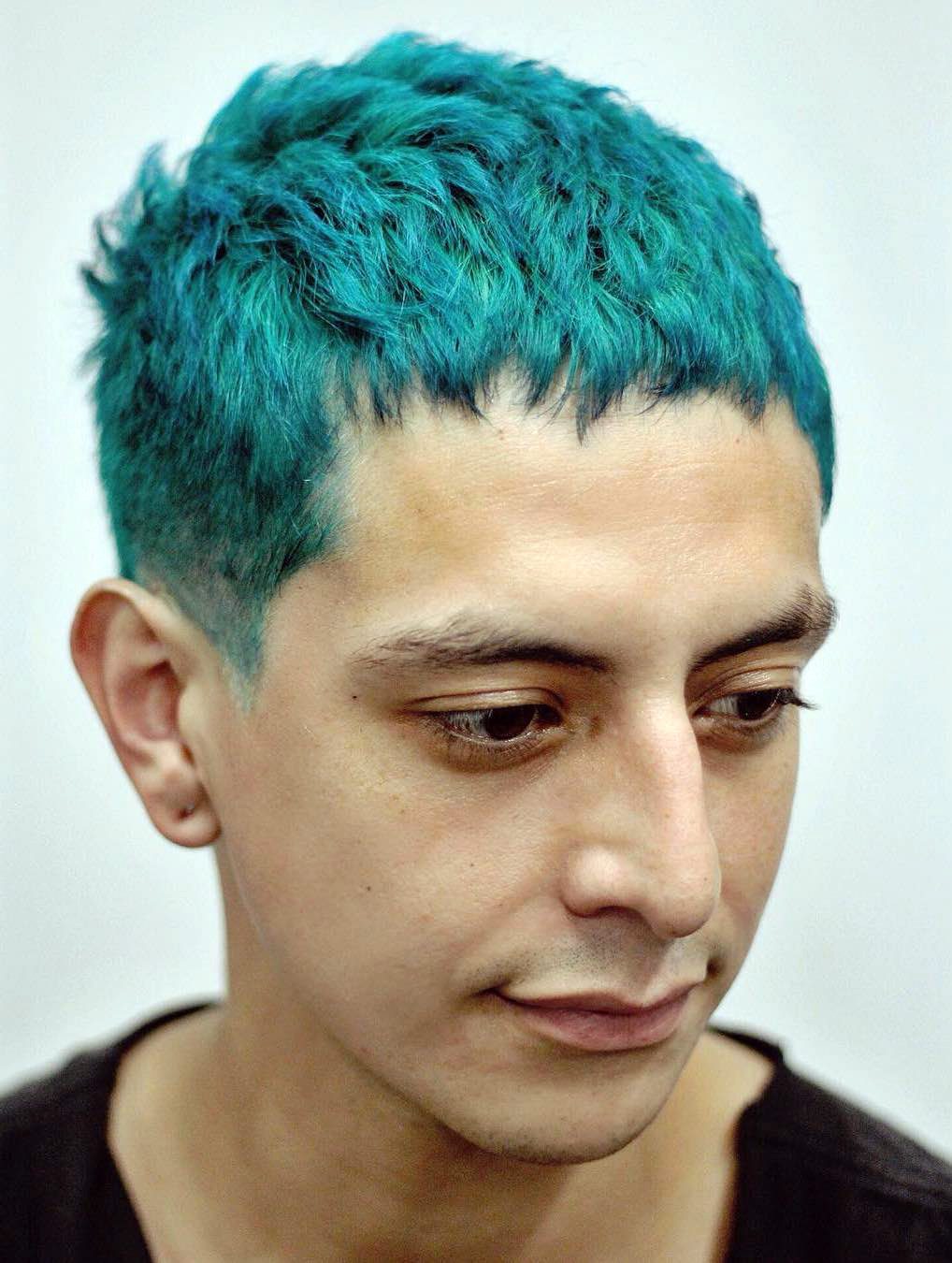
Aquaman Scissor Cut
Even if you’re sporting the simplest haircut, you can turn it into the most spectacular look with a bold color choice. Are you daring enough to try this bright turquoise hue?
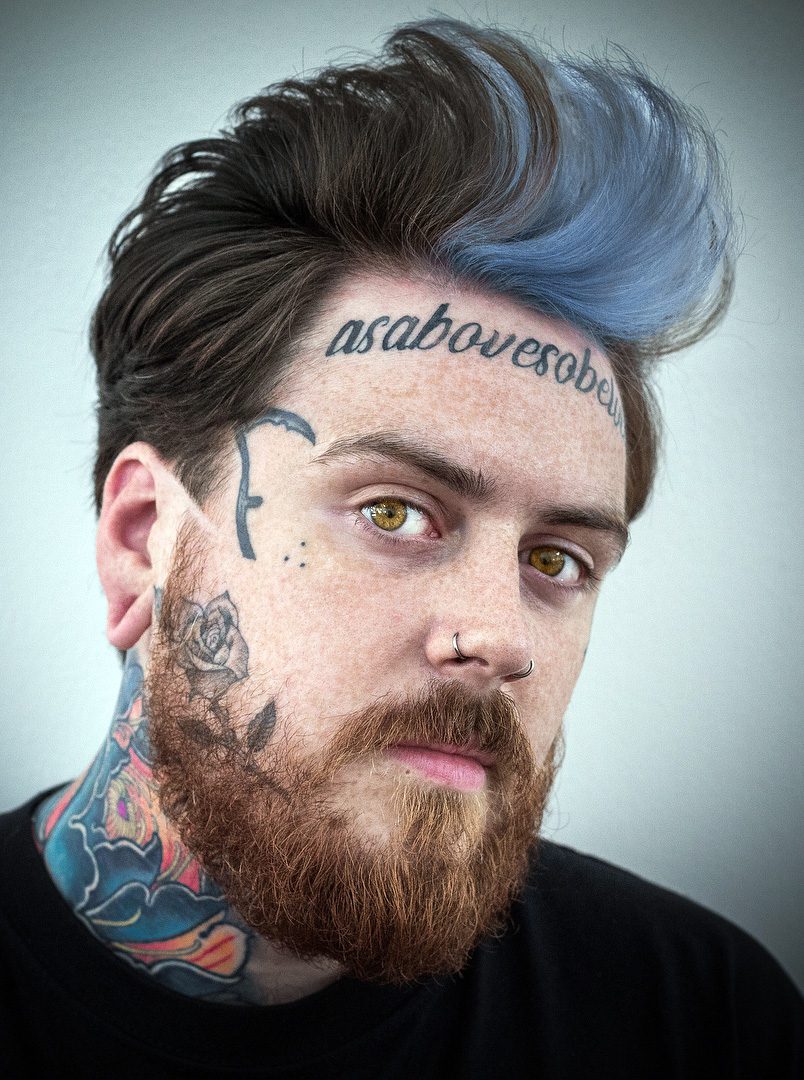
Open Quiff with Dyed Highlights
Nothing says “punk” quite like this quiff which has been partially dyed a pastel-blue color. The messy styling, that height at the top, plus the highlight all make this a super cool hairstyle.
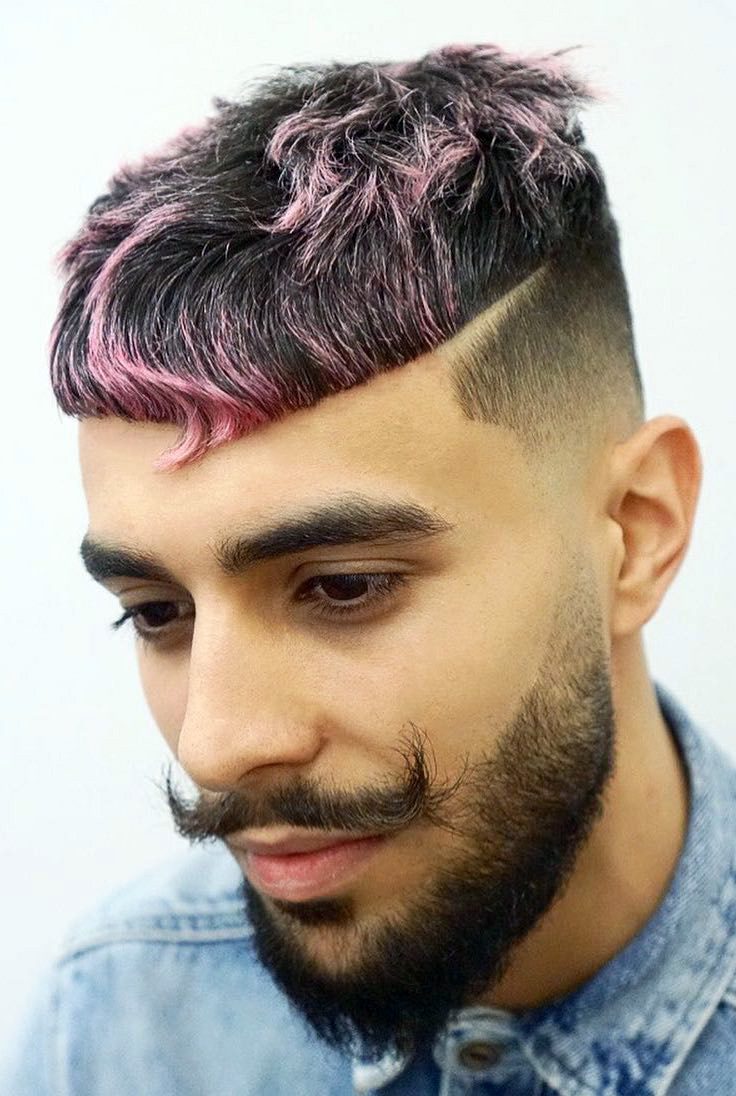
Highlighted Fringes
Sometimes, you don’t need much more than a statement fringe to achieve a head-turning look. Check out this perfectly sculpted fringe which has been given extra punch with some pink highlights.
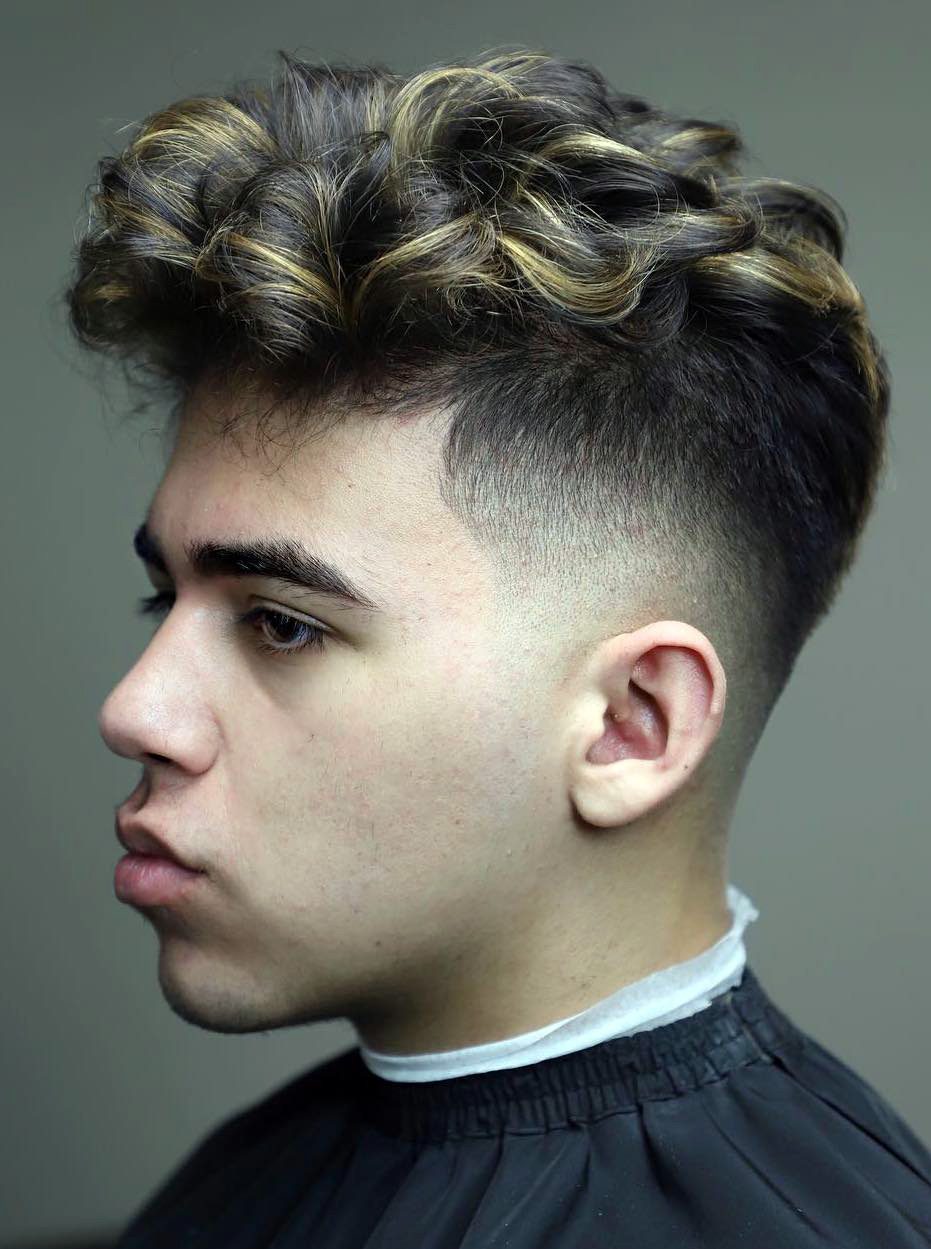
Highlighted Curls with Undercut Taper Fade
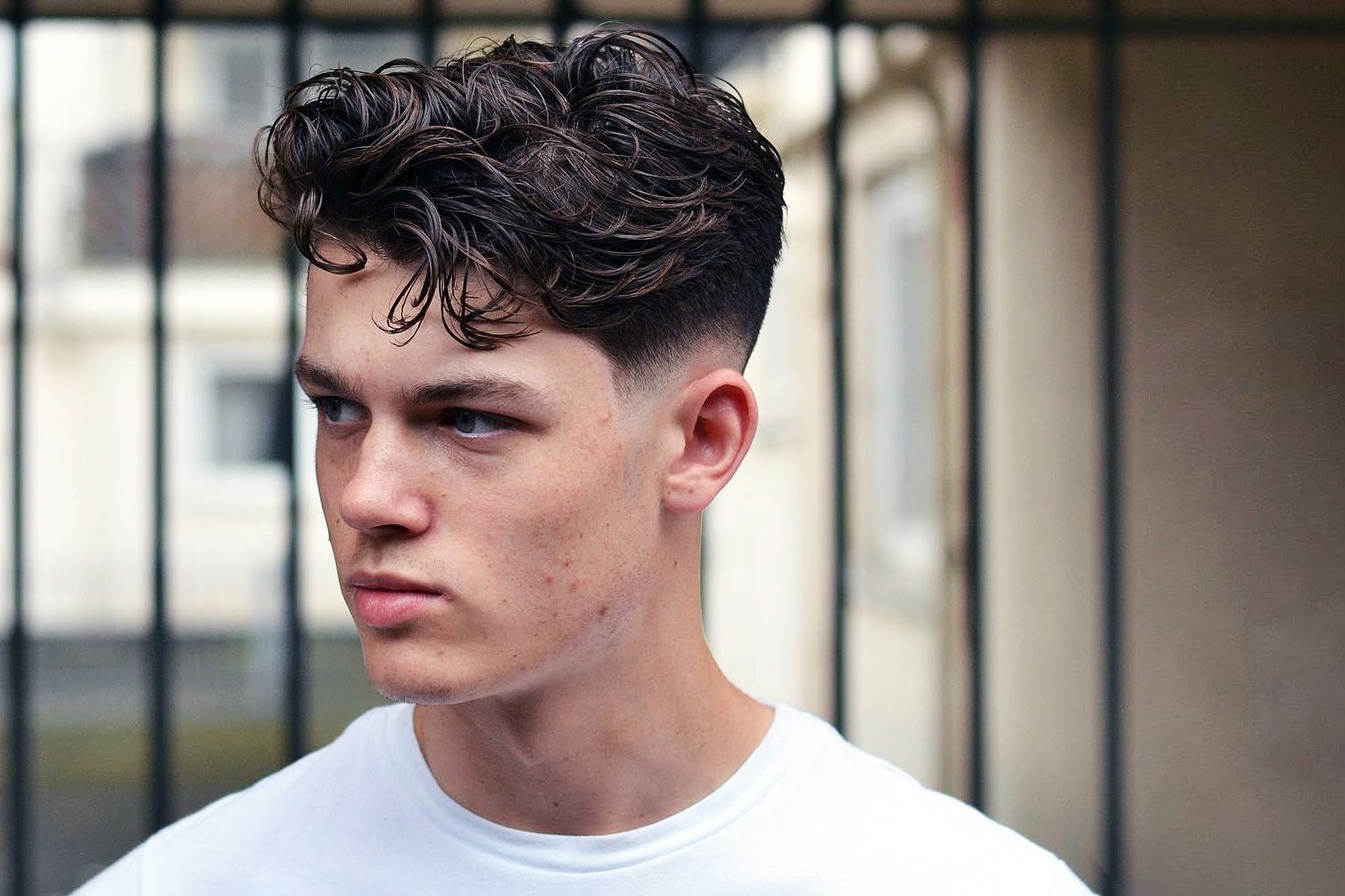
If you have dark curls, make them come alive with some blond highlights. They definitely add style and dimension, don’t you think? The undercut taper fade makes a striking contrast and ensures all eyes are on those rich curls.
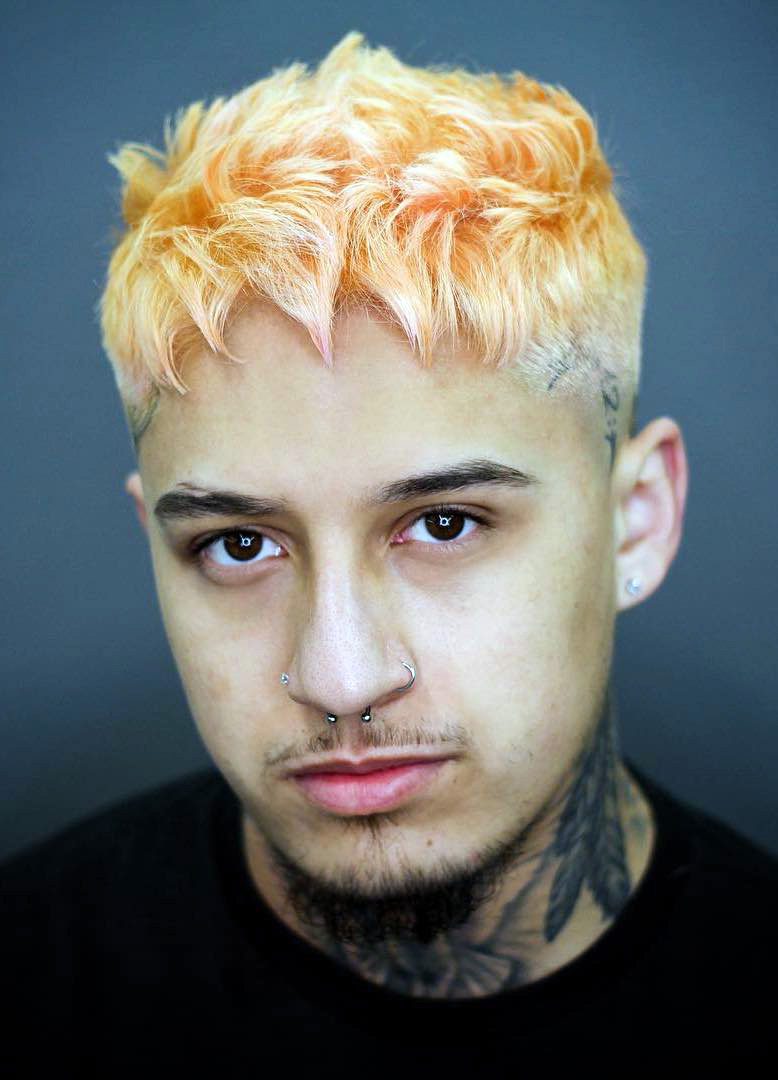
Sharp Pocky Fringes
You know who this reminds us of? Hinata from the anime series Haikyu!! If you love anime and have always wanted to sport one of those quirky cuts, this is the hairstyle for you.
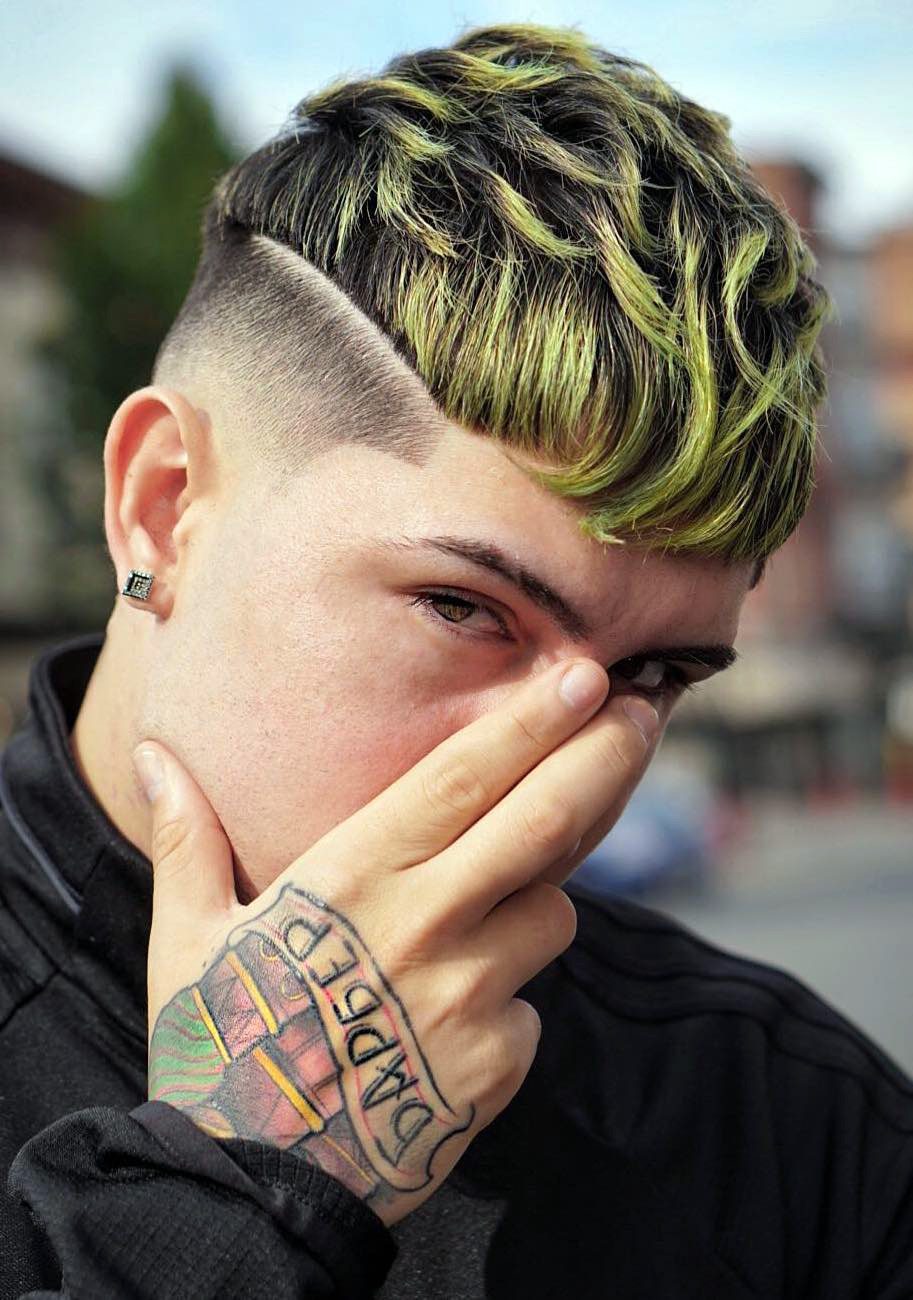
Dyed Bangs with Hard Undercut
When you pair statement bangs like these with a flashy color like neon green highlights, you’re sure to light up the room with your cool style. And the hard undercut definitely amps up the edge factor.
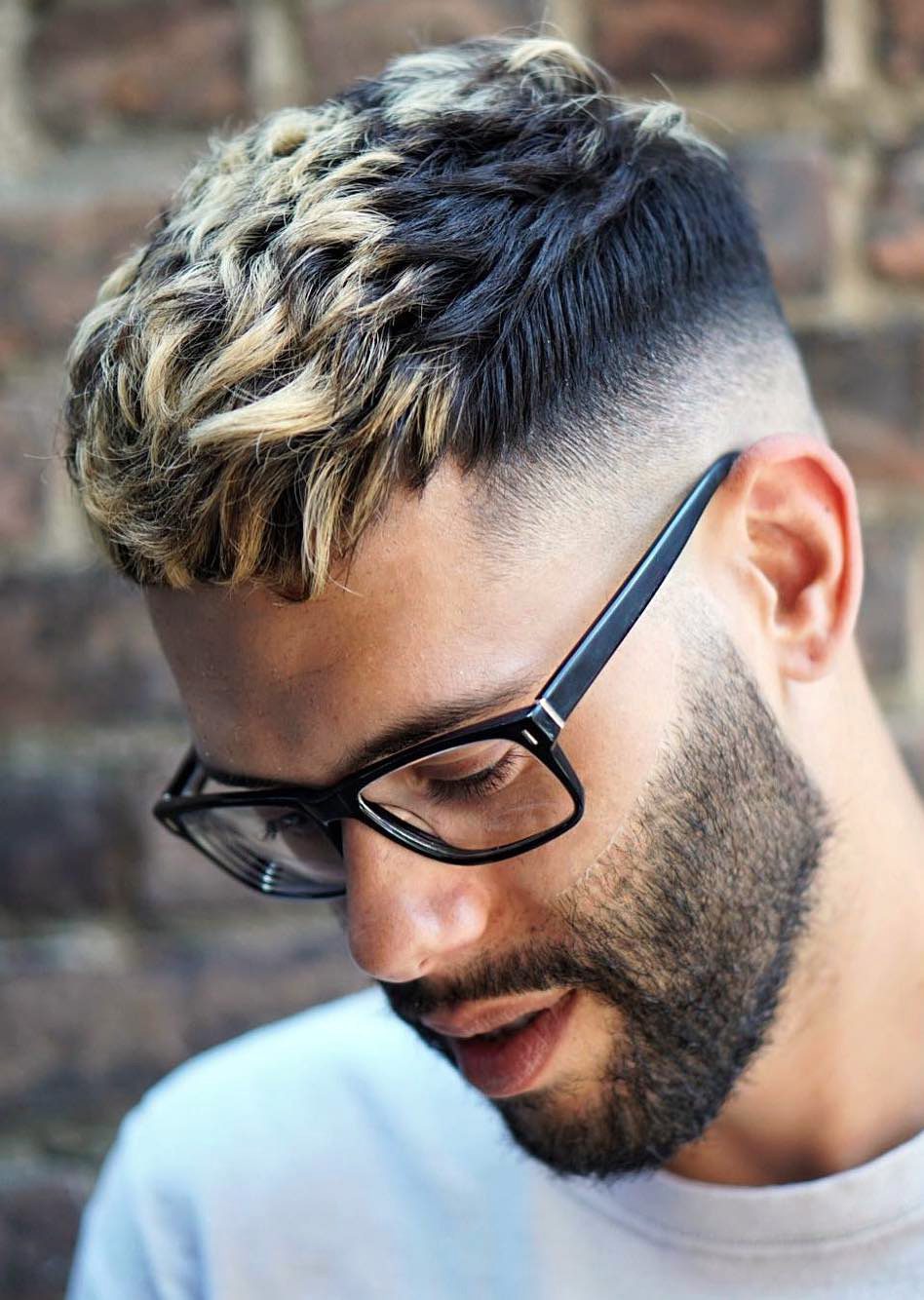
Half Dyed with Mid Fade
A high-contrast two-tone look like blonde and black is always a striking combo. When you add it to such a rich, piecey texture, the result is a totally eye-catching look.
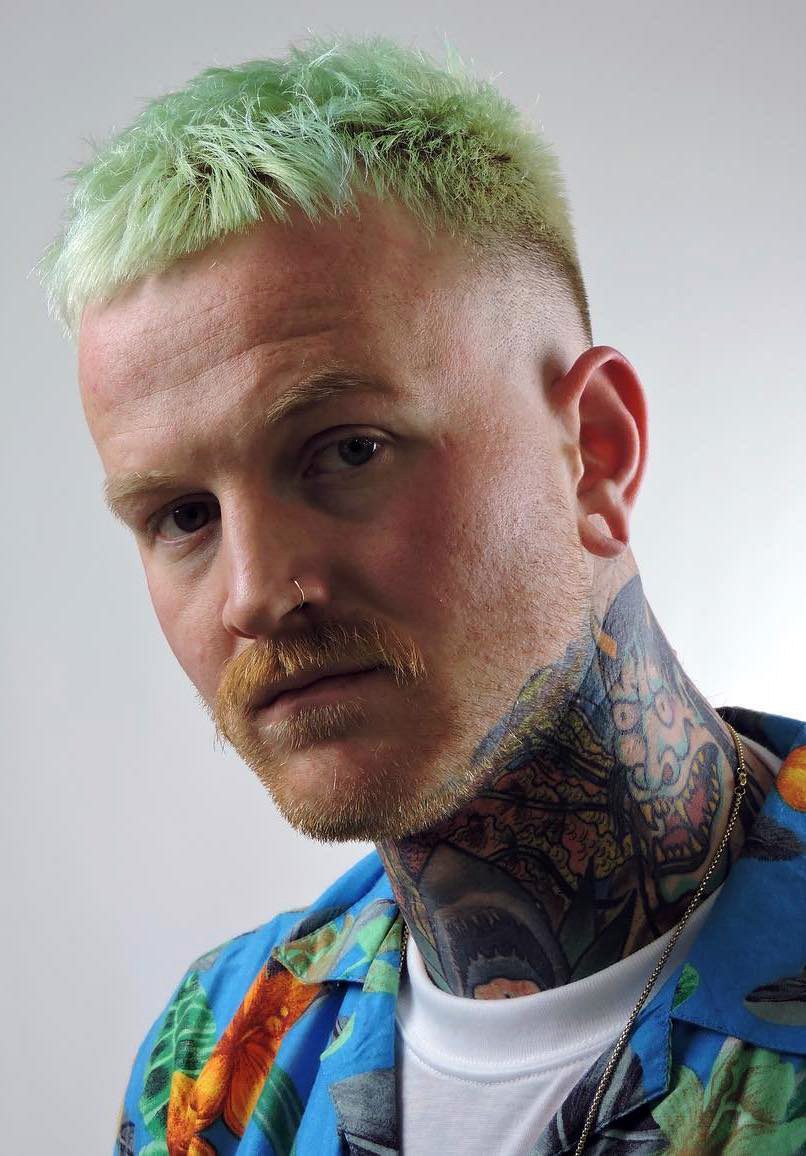
Candy Green Scissor Cut
Lighten up and play around with pastels for a cheery look. Candy green is definitely a peppy choice and it’s sure to turn heads even with the simplest cut.
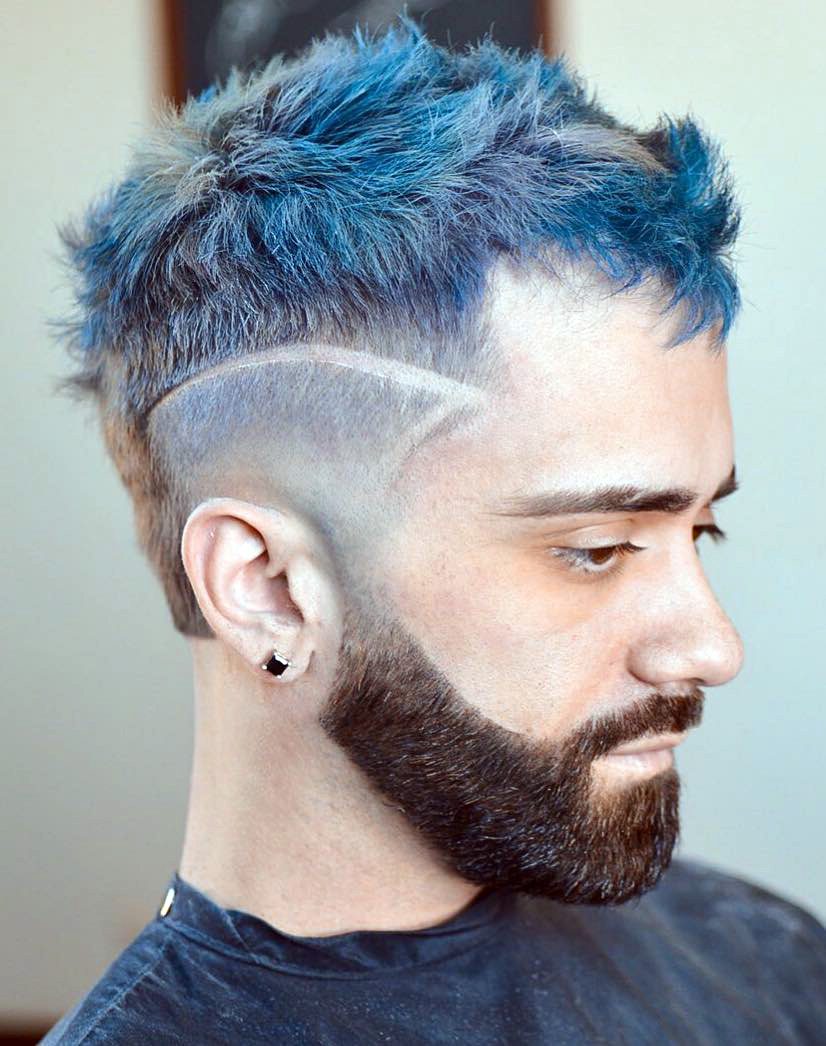
Sky Blue Texture with Slit Line Up
Wearing patches of color in different shades of blue and gray results in a really cool, artsy hairstyle. The mussed-up top and line design along the undercut take this to punk territory.
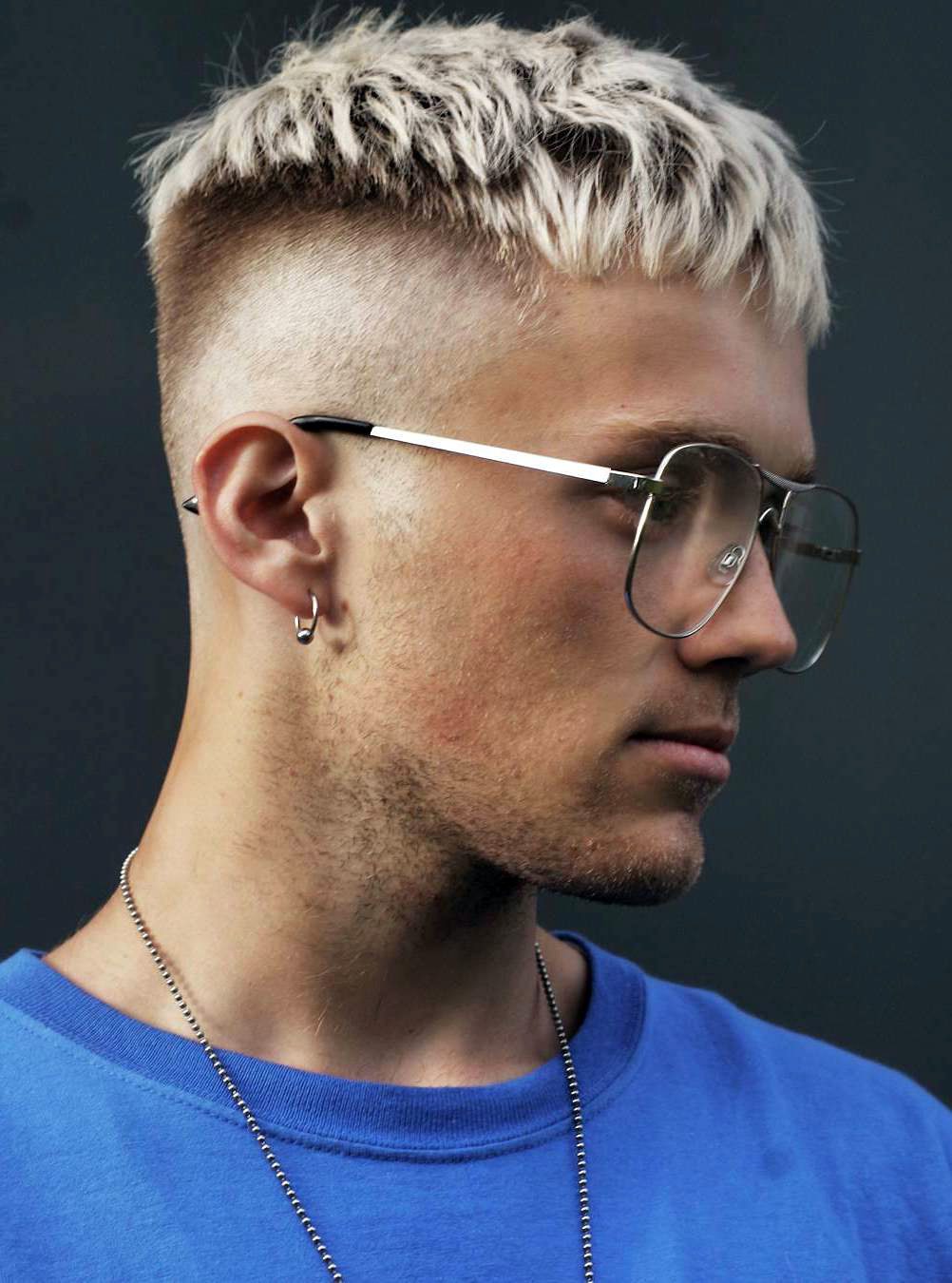
White Dye with Brown Undertone
Here, the tips are colored a white blond hue while the rest is brown. This is yet more proof of how a light dye contrasting with a darker undertone can add great depth and dimension to hair.
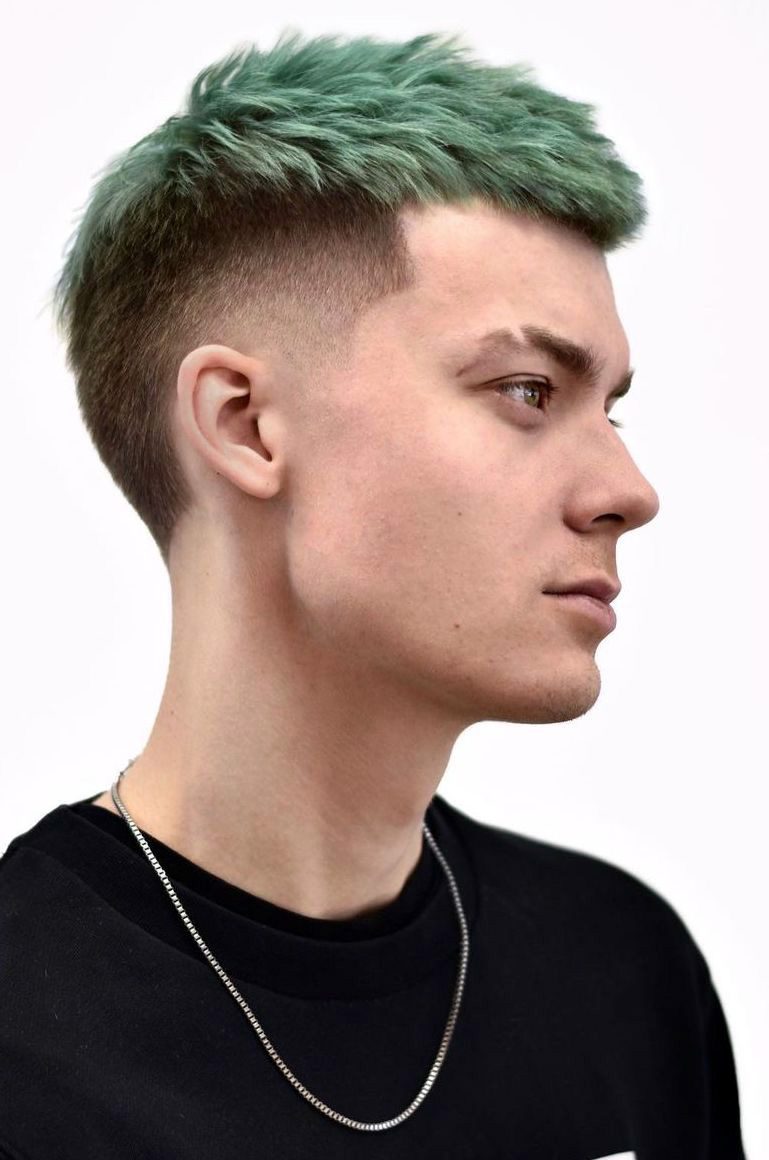
Menthol Green French Crop
Pocky top with green dye is pure fashion. The undercut with a taper fade on the side is where all the fun is at. The temple fade makes it very clean with a clean shave look makes it a very classy one too.
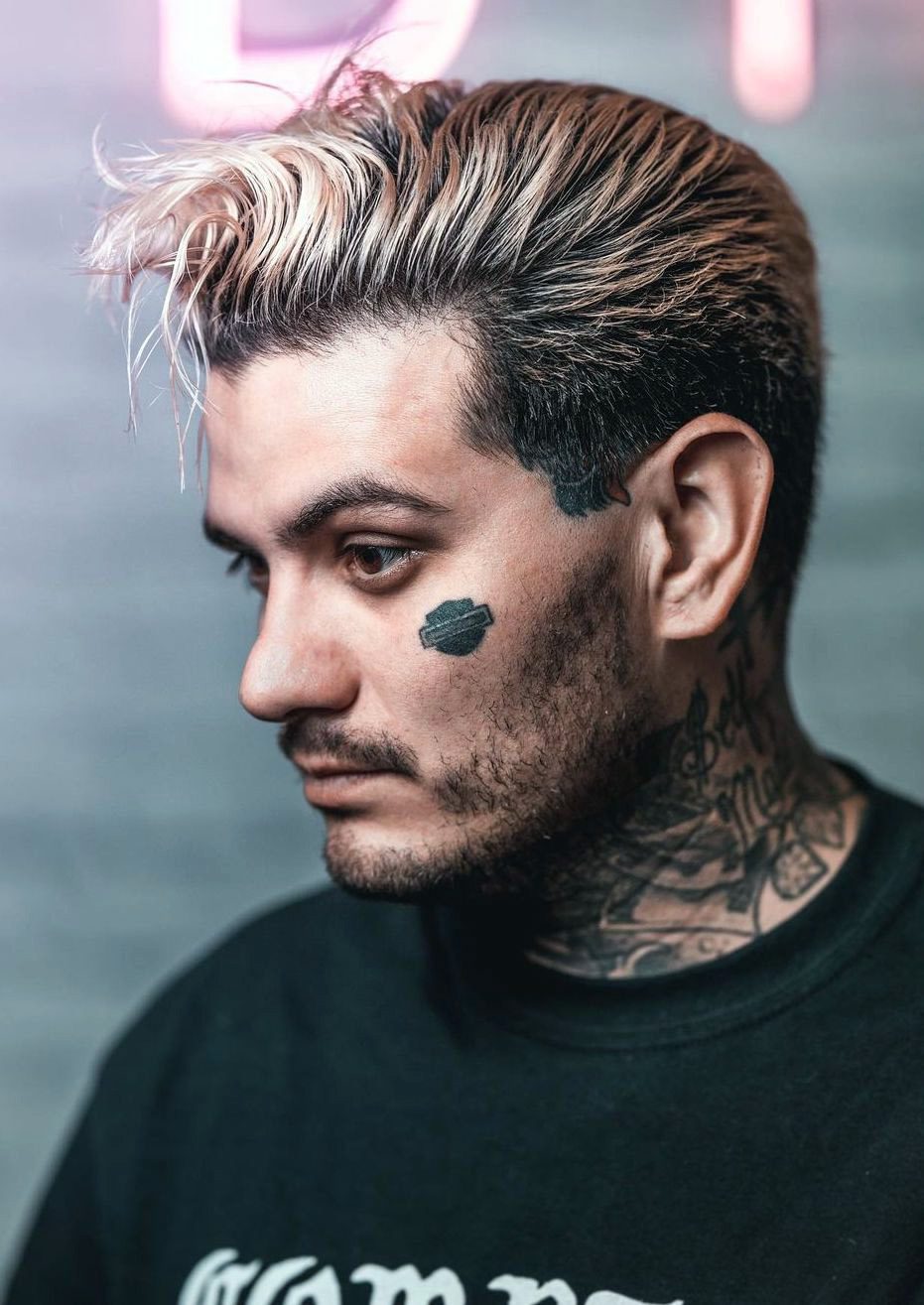
Dyed Hair For Men: Side Swept Twin Layered Dye
Twin layer dye has been a rising trend and we clearly see it here. The side swerve comes to the rescue and makes the look one step trendier. The top is very well maintained with that low profile volume yet the length of the strands is pretty long.
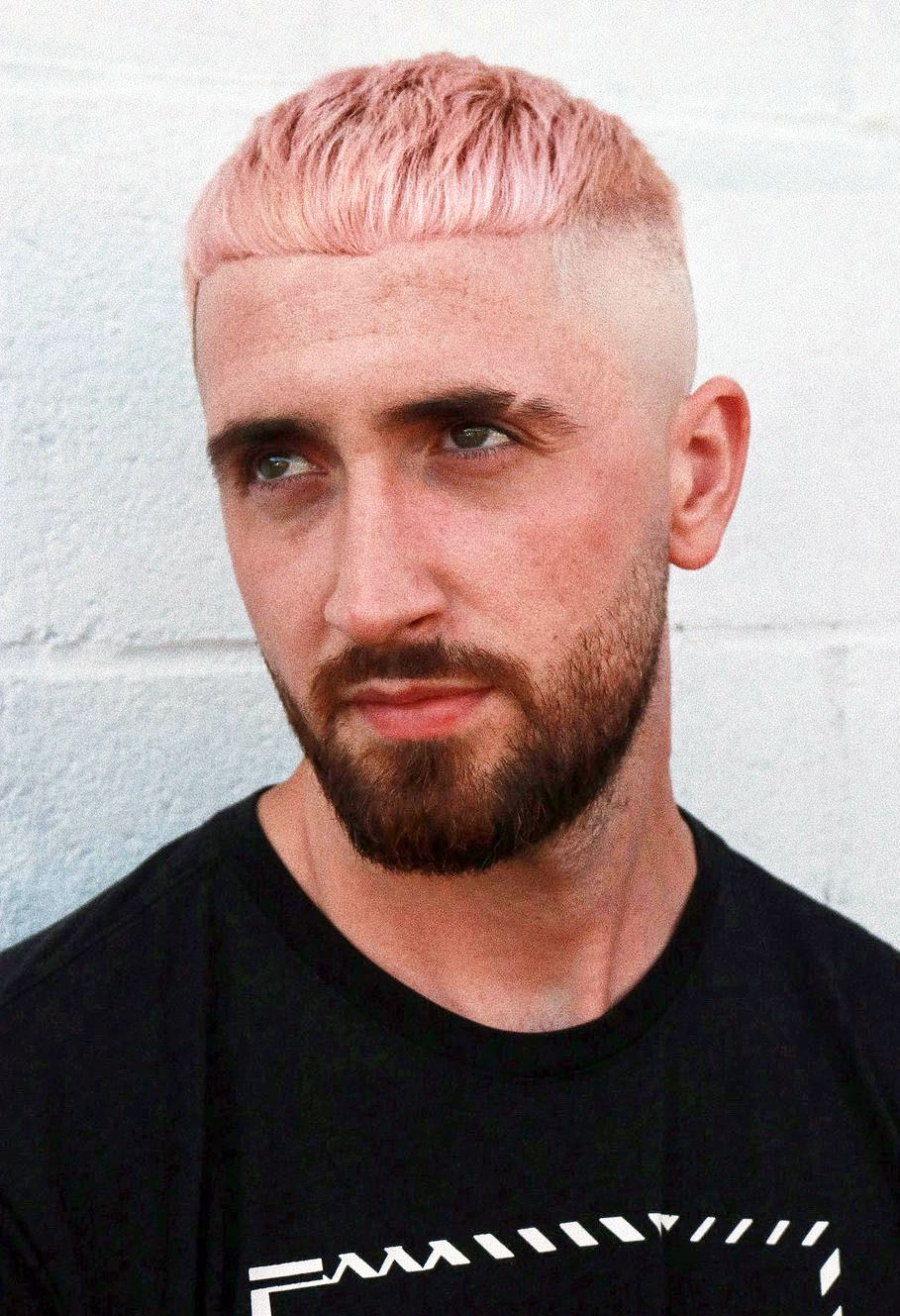
Dyed High and Tight with Straight Fringe
This is a classic short hair cut where the sides are kept super short to the head and slightly faded into the top. The top of this hair cut is all kept one length, but it is combed towards the front of the face. This gives the style a more clean, polished look.
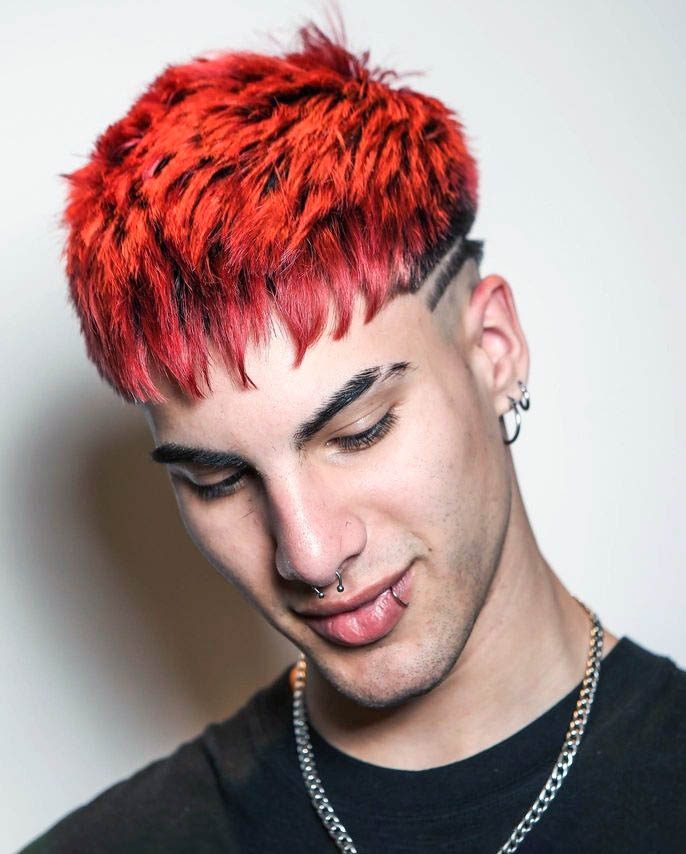
Red, Lined Edgar
If you’re going for a truly edgy look, try this one. The inspiration is drawn from the edgar style, where subtle variations add to the fashion. Vibrant coloring adds a sharp and bold sense of edginess as it drops down into the natural color, where a lined skin fade brings some hard contrast. The linework continues through the eyebrow, which brings our eyes down, and to the nose and lip piercings that add an even more rugged style.
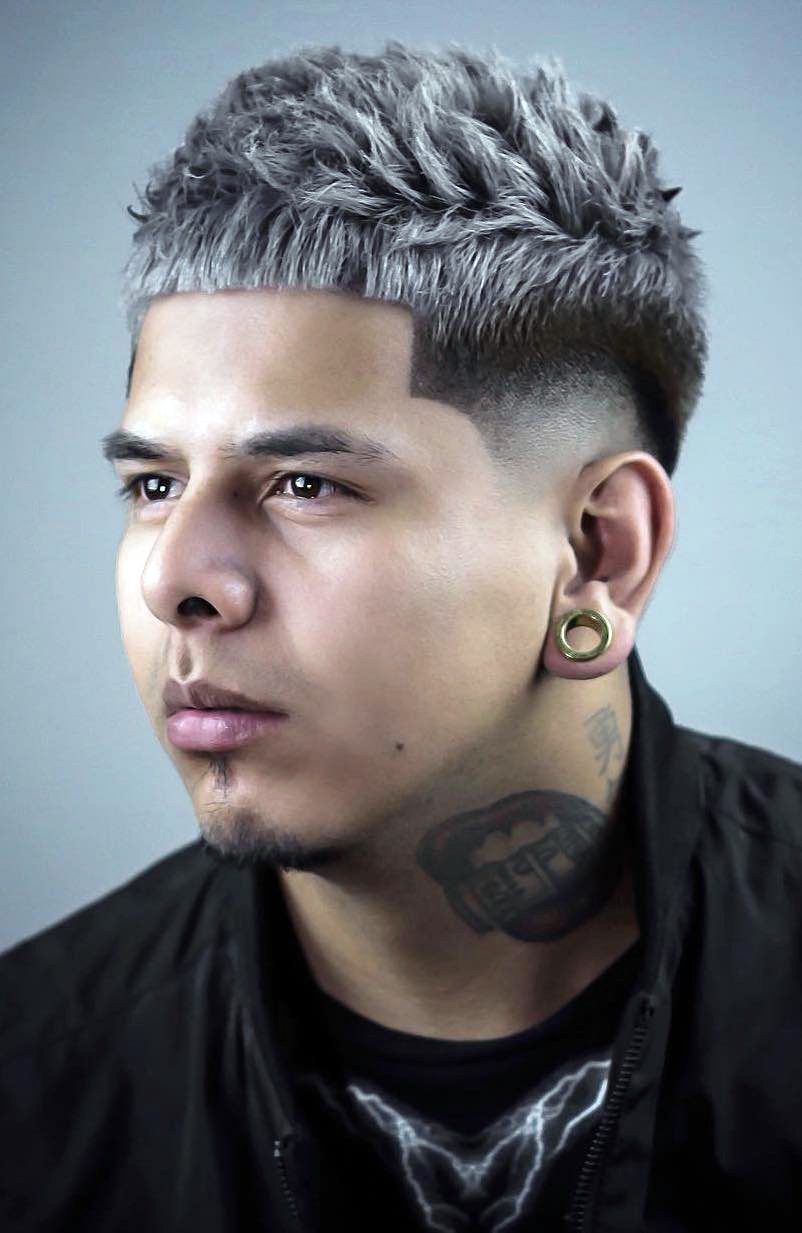
French Crop with Taper Fade
The French crop is a classic style, and it shows off dyed hair very well. The defined line up adds a nice touch that complements the spiky hair on top.
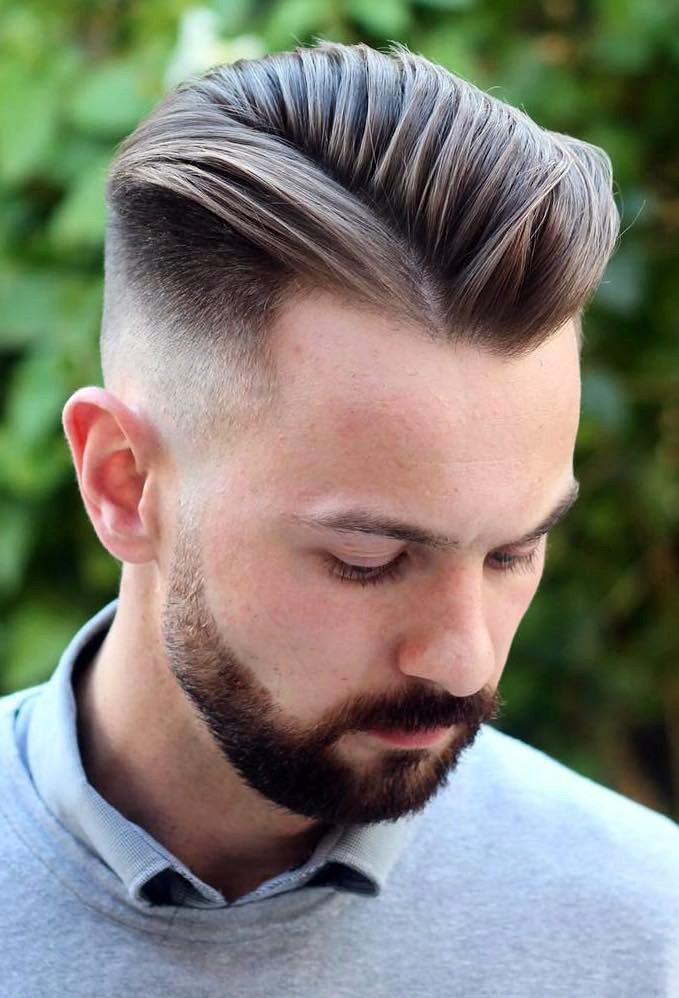
Dyed hair for men: Skin Faded Undercut
Milder highlights, where the color isn’t as obvious, can work with a wide range of hairstyles. Here, the skin fade draws attention to the parted hair atop the head.
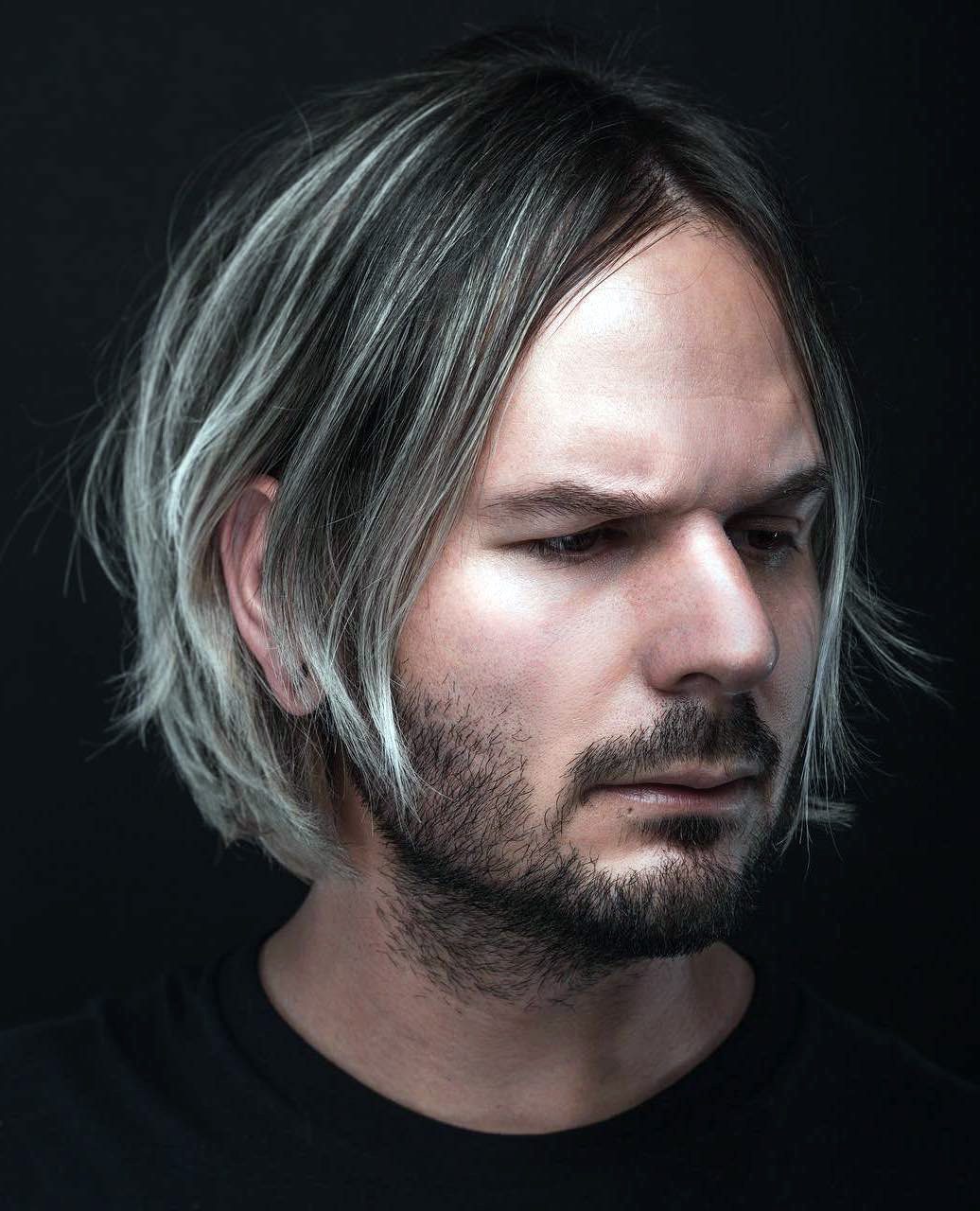
Mid Part Medium Length Hair
If you like longer hairstyles, here’s one that works nicely with colored hair and especially highlights. It’s also a nice low maintenance haircut.
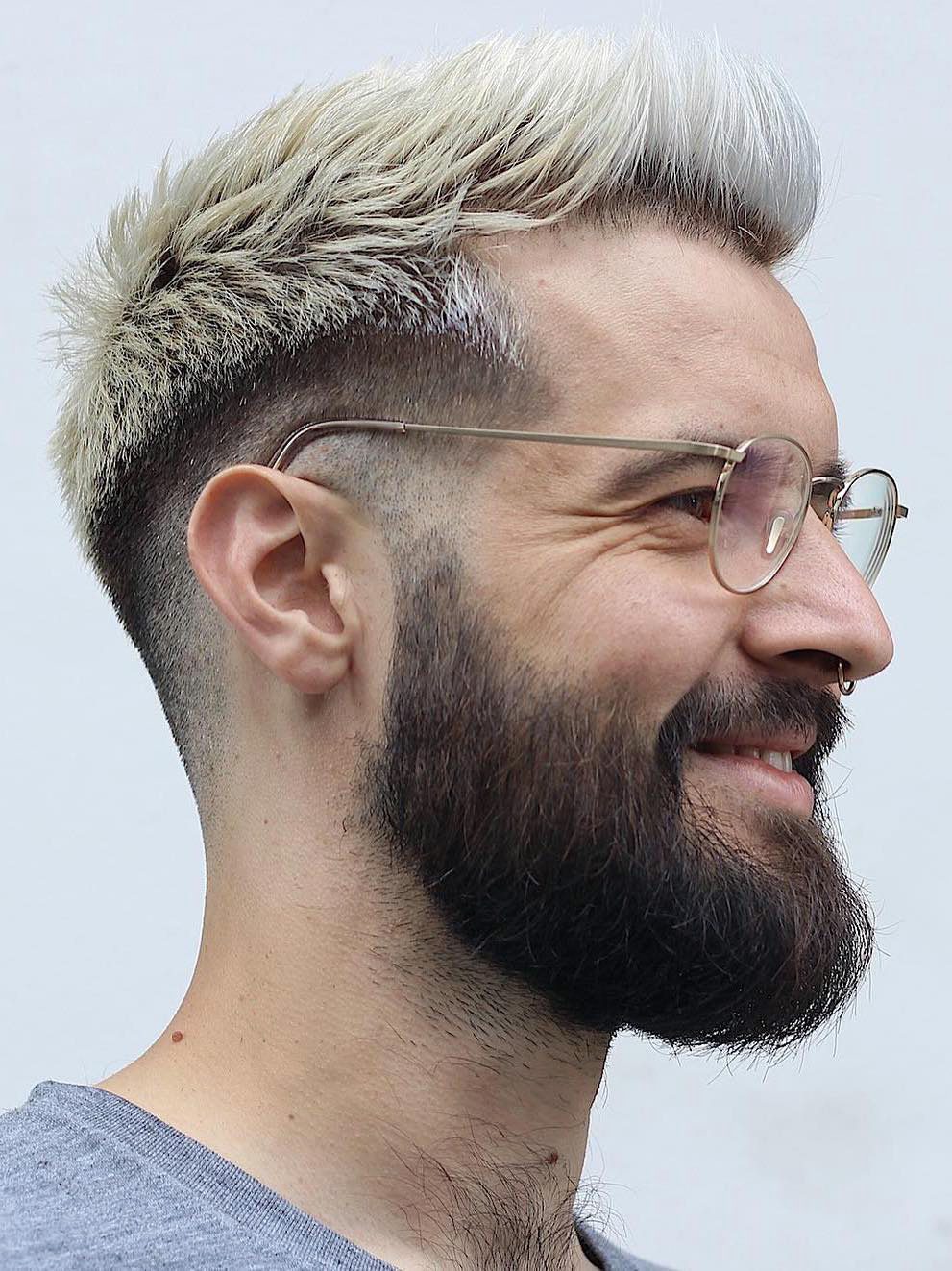
Simple Brush Up with Temple Fade
It might seem strange to pair a rather understated hairstyle with dyed hair, but this combination is surprisingly stylish. It helps to balance out the hair color and adds extra definition.
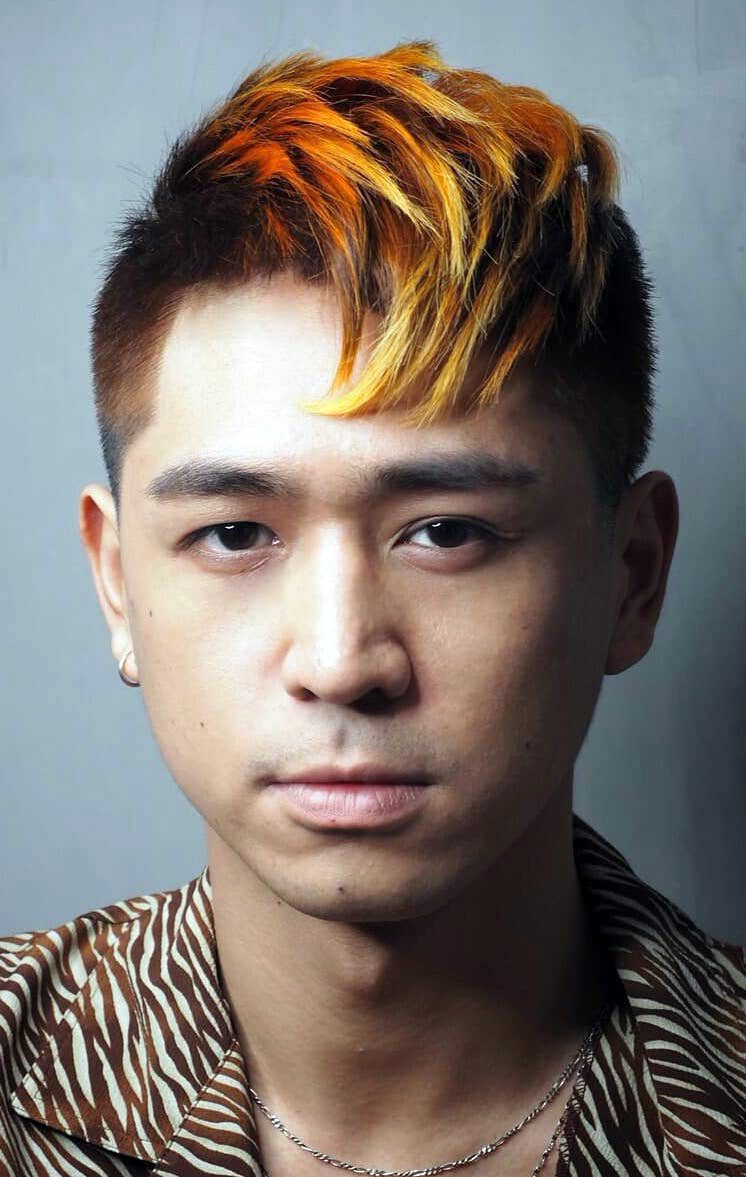
Dyed hair for men: Lion's Fringe
This fun and playful haircut is modeled after a lion’s mane. The orange-dyed fringe protrudes up and over the forehead, draping down to complete the animal-inspired look.
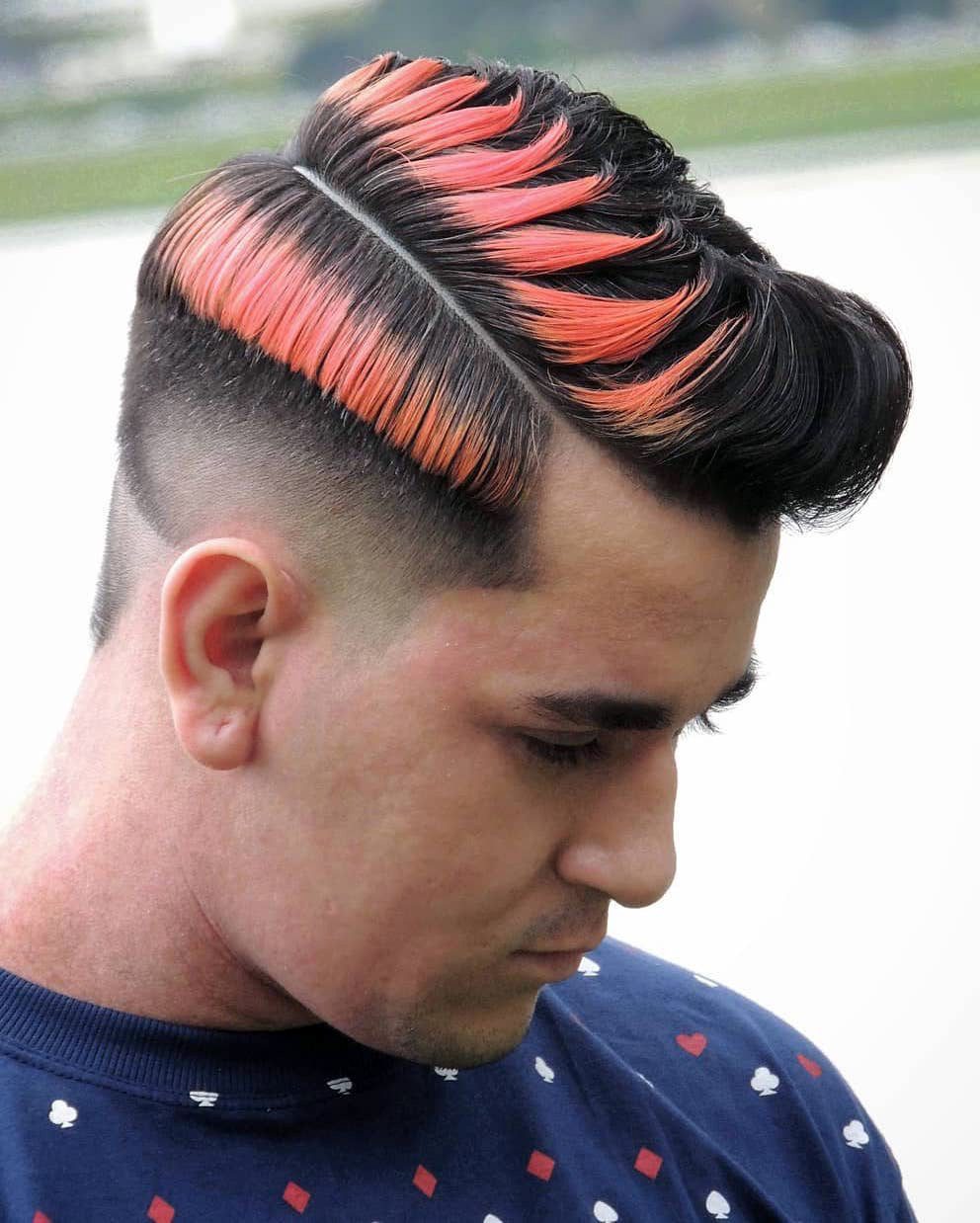
Slender Side Part with Curled Brush Up
If you’re feeling artsy, your hair can be your canvas. This style features a pink dye job that looks like brushstrokes accentuating the side part and adding dimension to the texture.
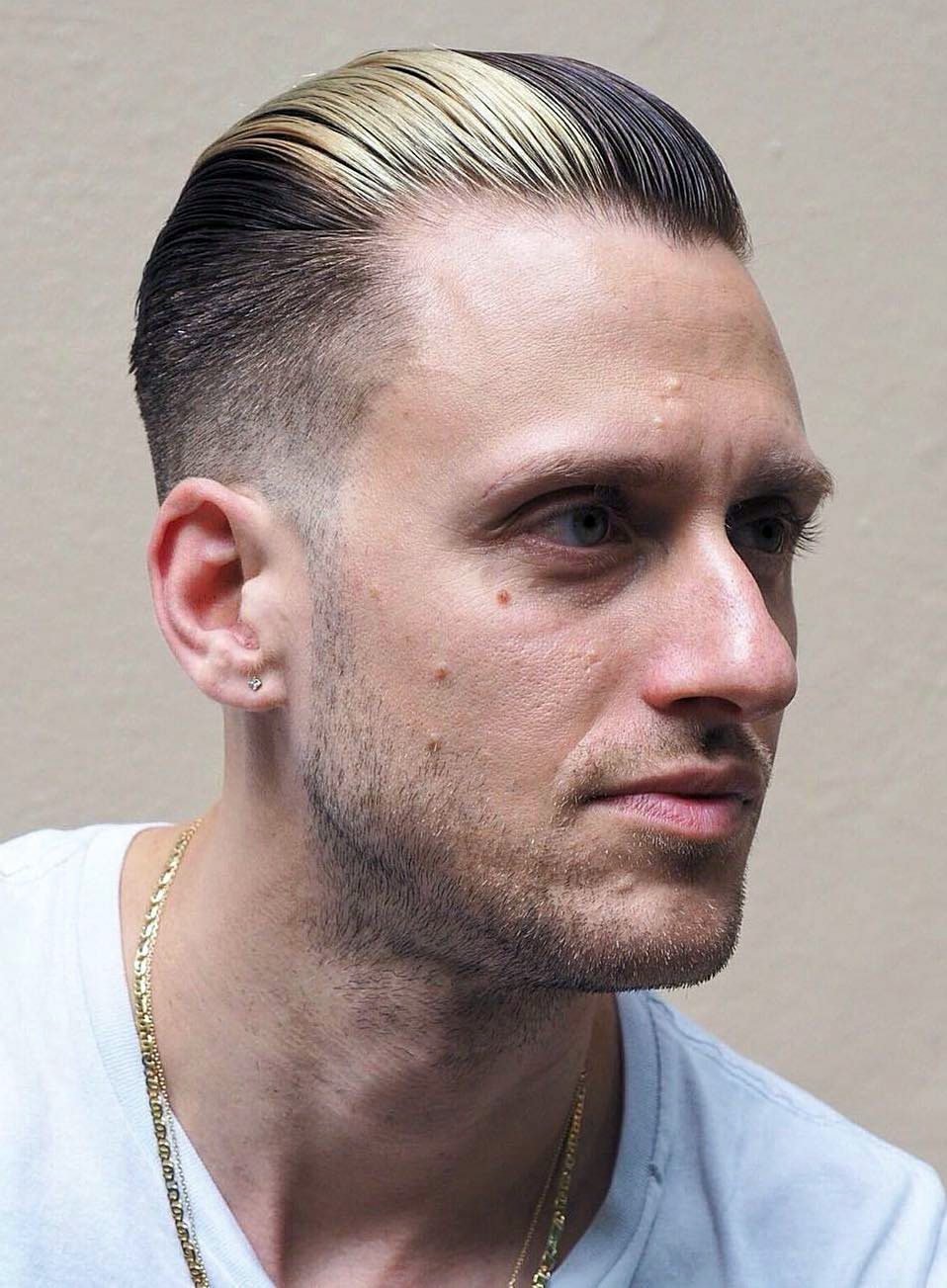
Colorful men’s hairstyles: Dyed Slicked Back
A partial dye like this on a slicked-back style really amps up the sleekness. It’s like a cool rockabilly ‘do but many times edgier.
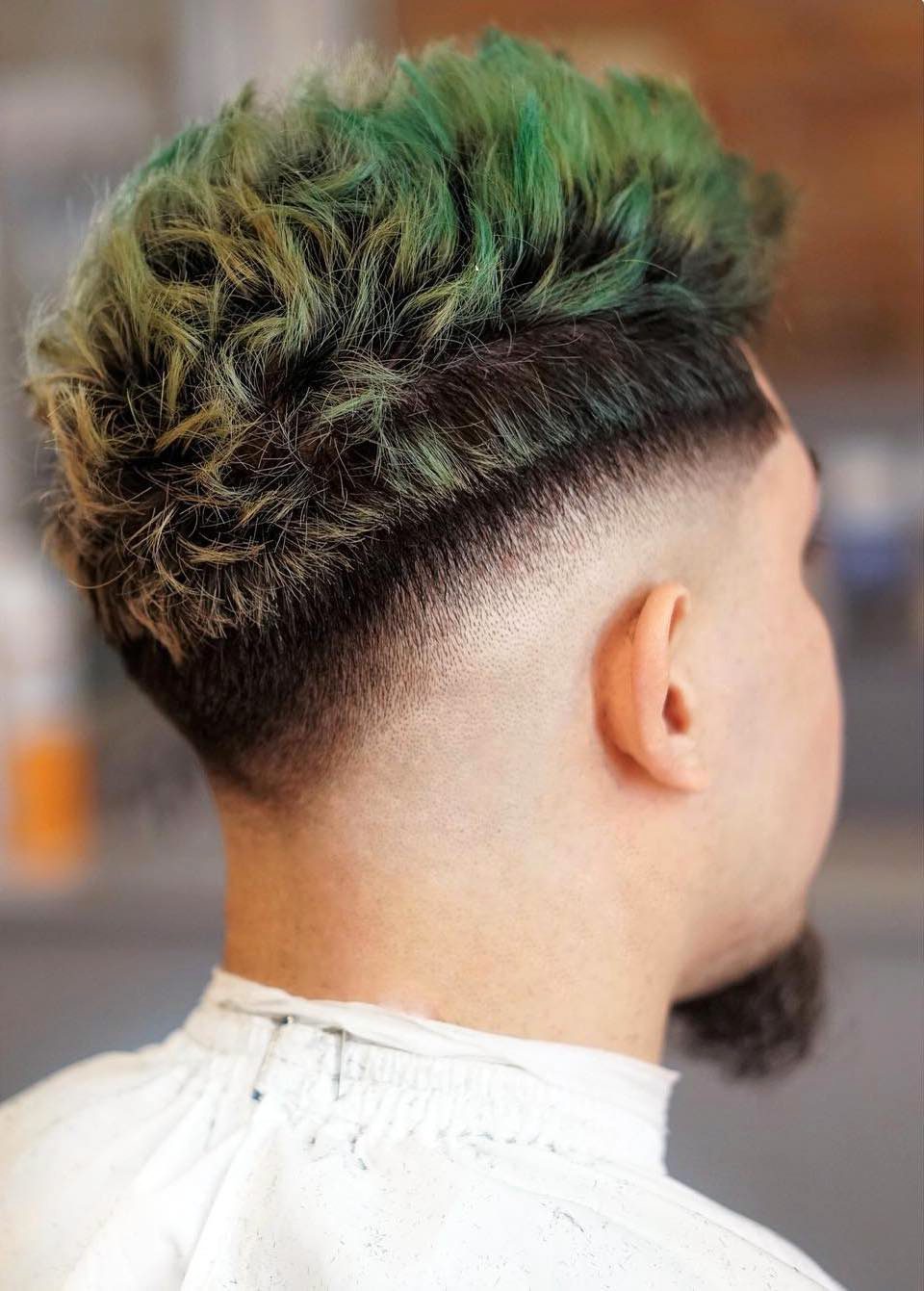
Dyed Hair For Men: Green House Effect
There are dye jobs, and then there are crazy-in-a-good-way dye jobs. This green hairstyle falls in the latter category and is perfect for the adventurous and fearless man who wants to make a bold statement with his look.
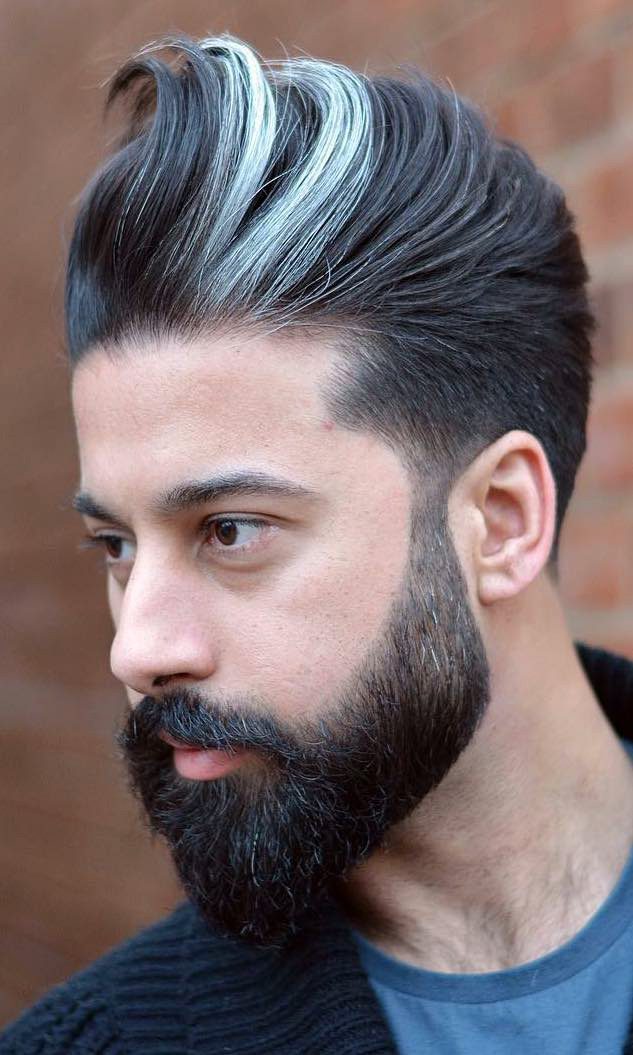
Highlighted Pompadour
If you want to jazz up an already cool pompadour even further, a highlight should do the trick. Opt for a bright color that makes a stark contrast to the rest of your hair.
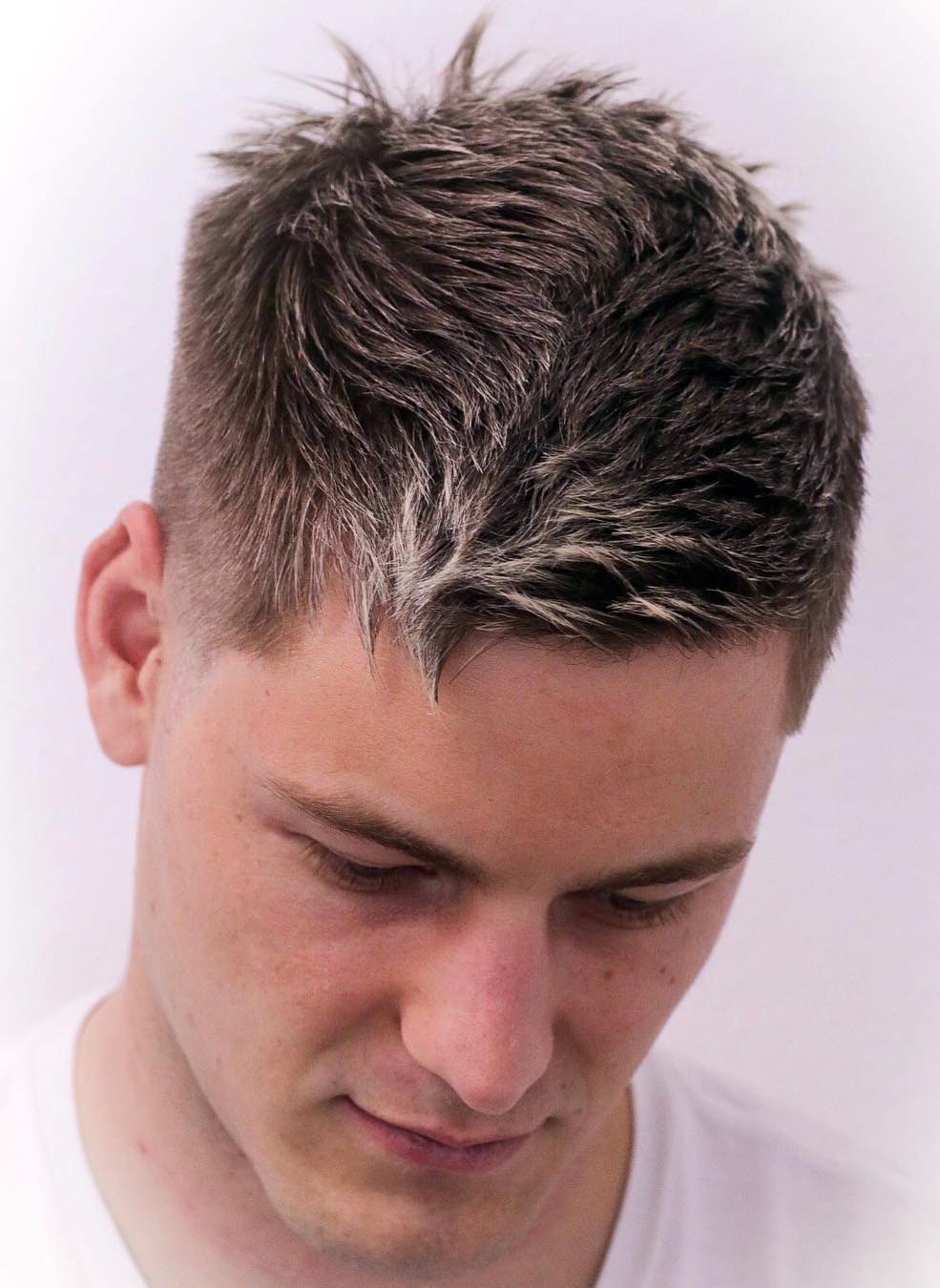
Messy Faux Blonde Hair
Of course, if you want to keep it subtle, a low-contrast highlight like this looks just as stylish. Wear it in a tousled style for added edge.
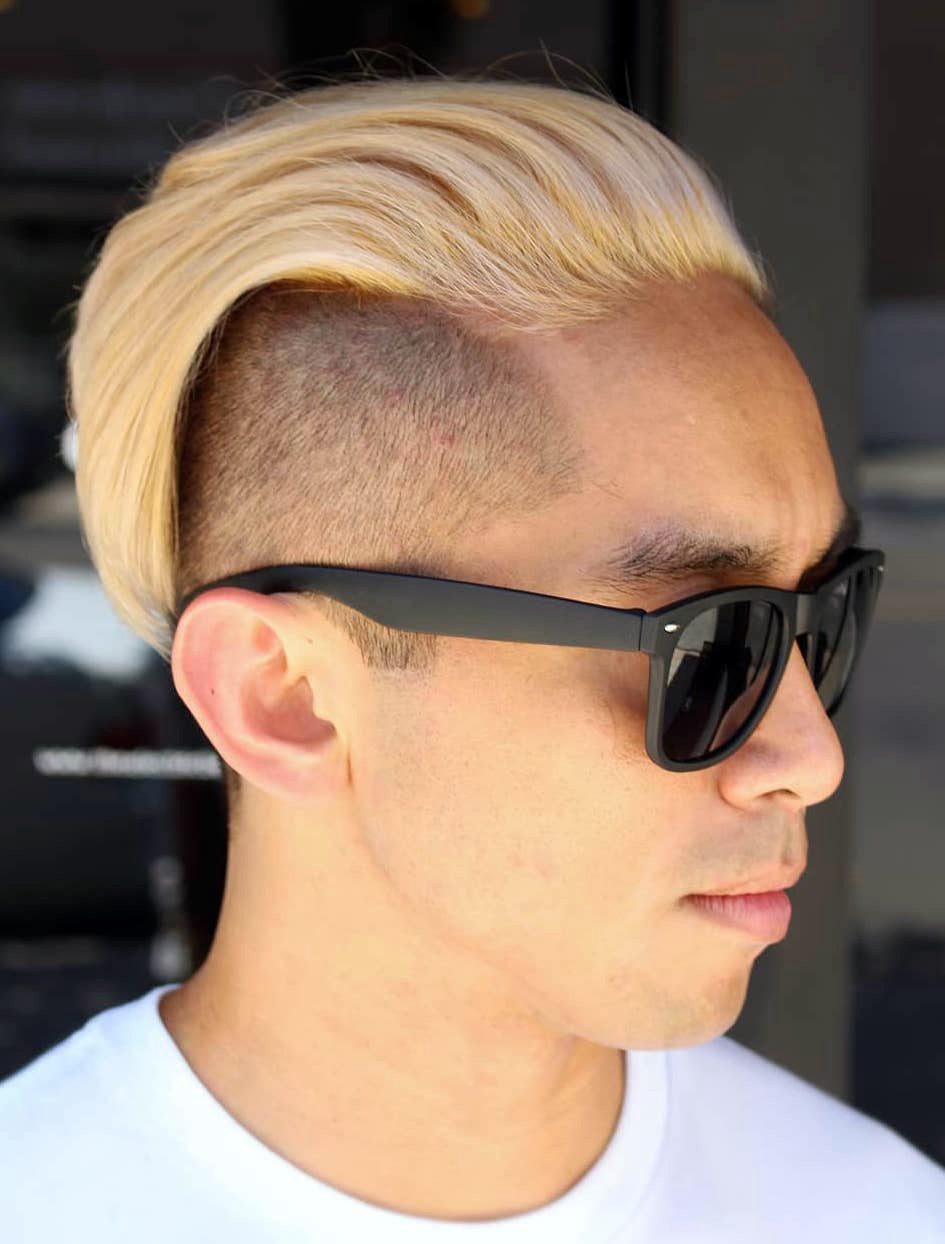
Slicked Back Undercut Blonde Hair
Golden blond isn’t just for Barbie, they’re for manly men, too. See how badass this blond style is with its slicked-back top and undercut?
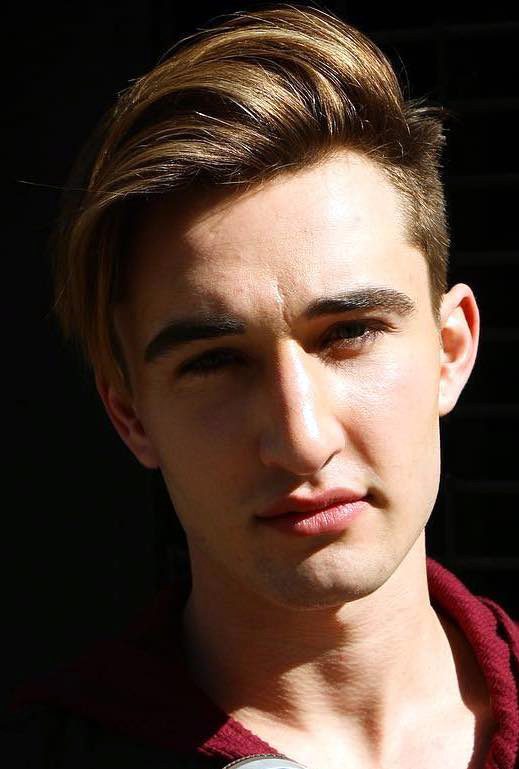
Side Swept Undercut
We think this side swept undercut looks so cool especially with that radiant light brown color with subtle highlights. This is such a natural hue, perfect for those who are not daring enough to try unusual colors.
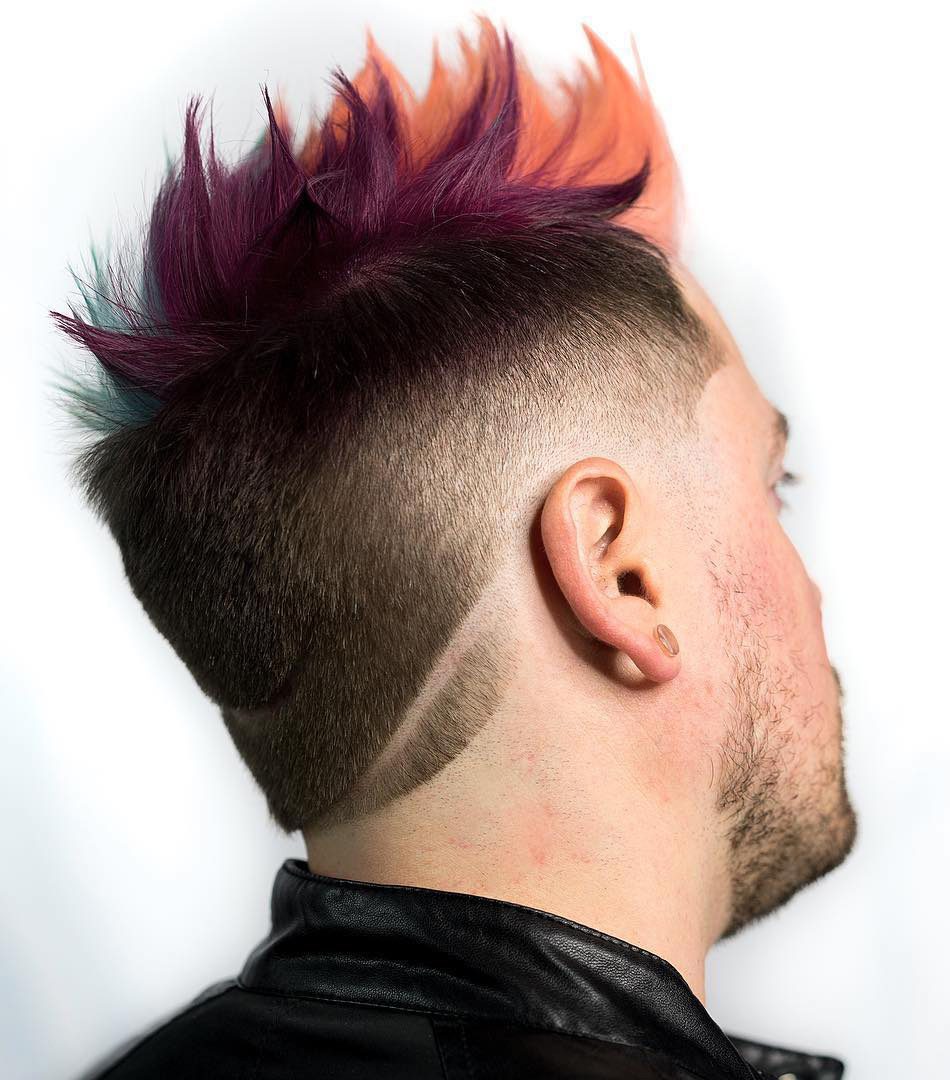
Dyed Top with Temple Fade
Why stick to one or two colors when you can go for more? This combination of orange, purple, and blue looks really avant-garde, especially when styled in a spiky faux hawk with line designs.
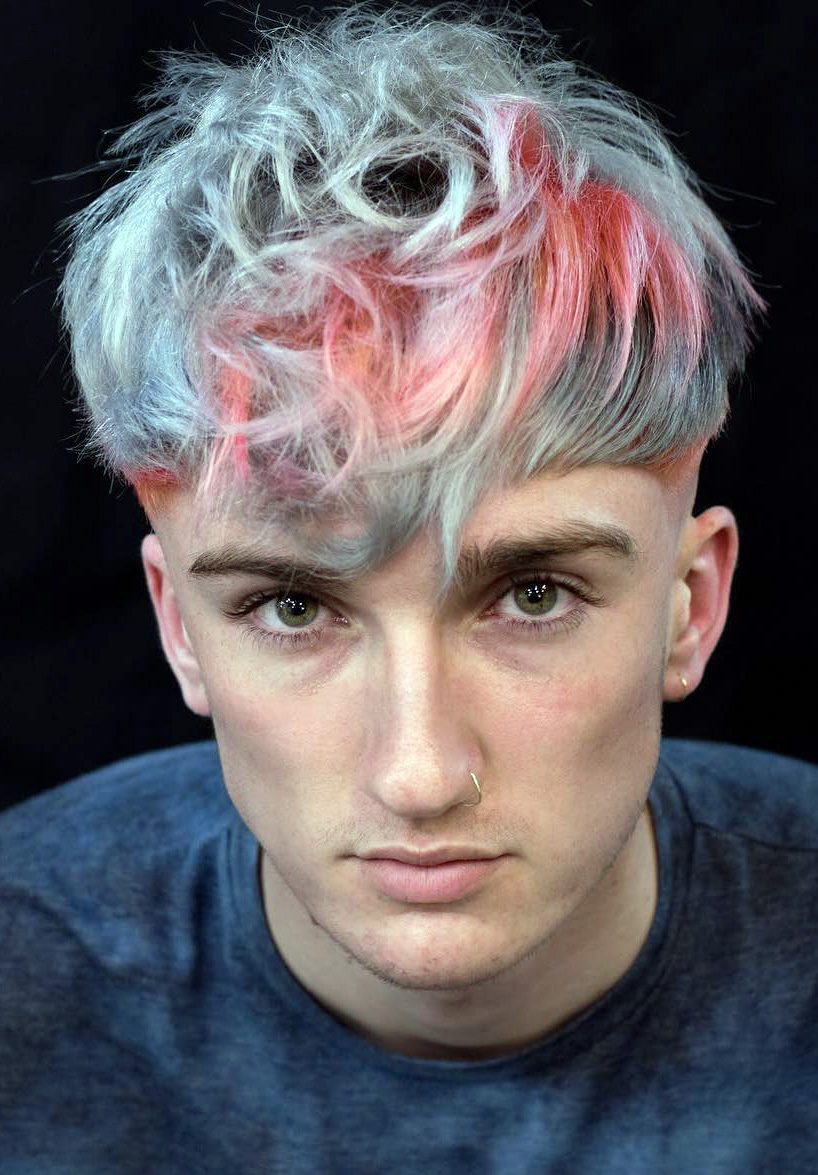
Violet and Pink Modern Mushroom Cut
Don’t be afraid to try unexpected color combos if you really want a hair look that stands out from the rest. Violet, pink, messy and super edgy — why not?
Here are a collection of our best mushroom haircuts for men.
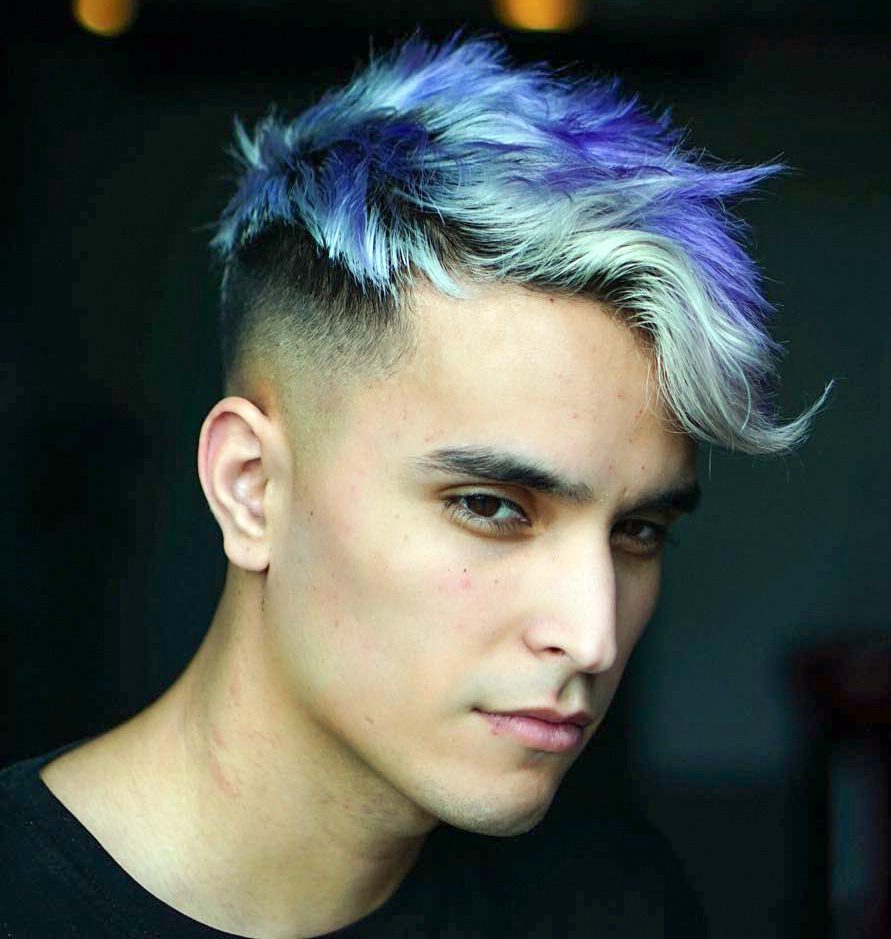
Dyed Purple and Blue With Undercut
On the cool color spectrum, a combination of purple and blue looks really unique, trendy, and easy on the eyes. The mussed-up top blending into the undercut looks really punky, too.
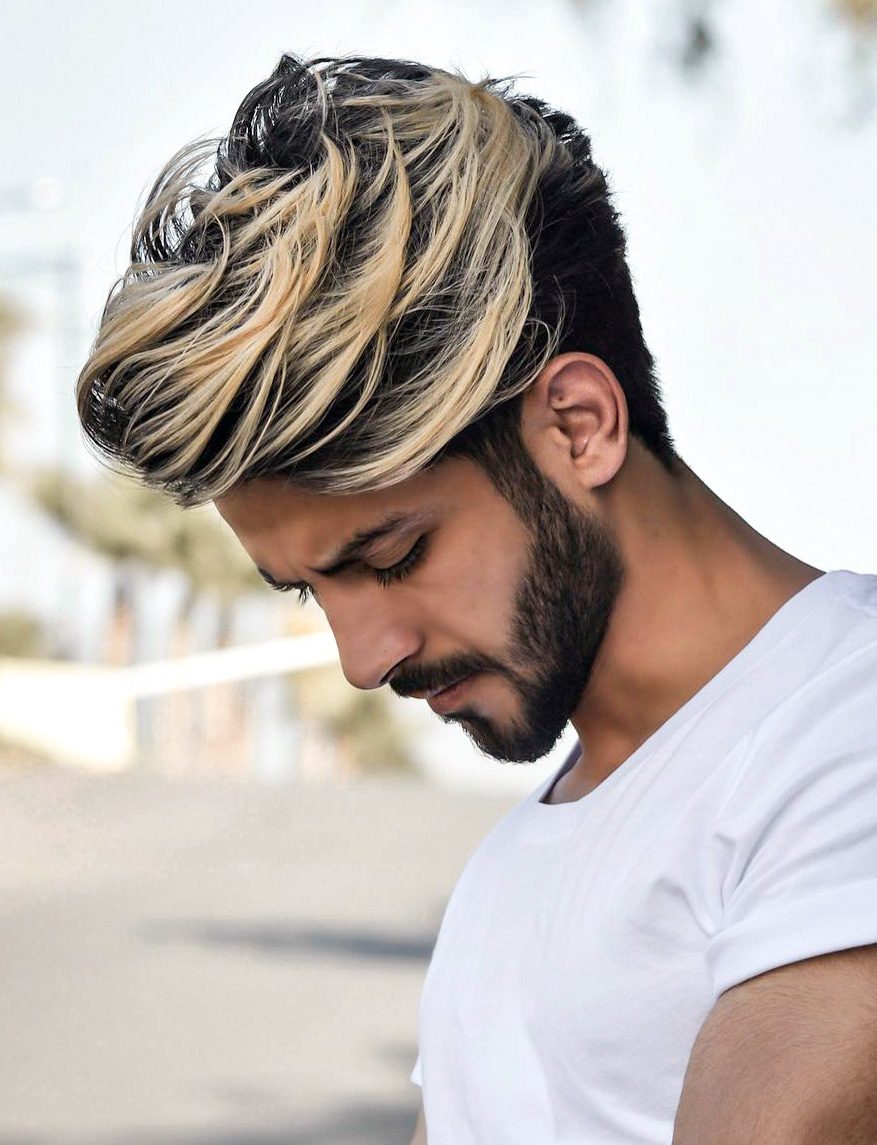
Blonde Highlights on Thick Side-Swept Top
Wow! What a stunning style from the perfectly sculpted side-swept top to the blond highlights. This will have you looking like you just stepped out of GQ!
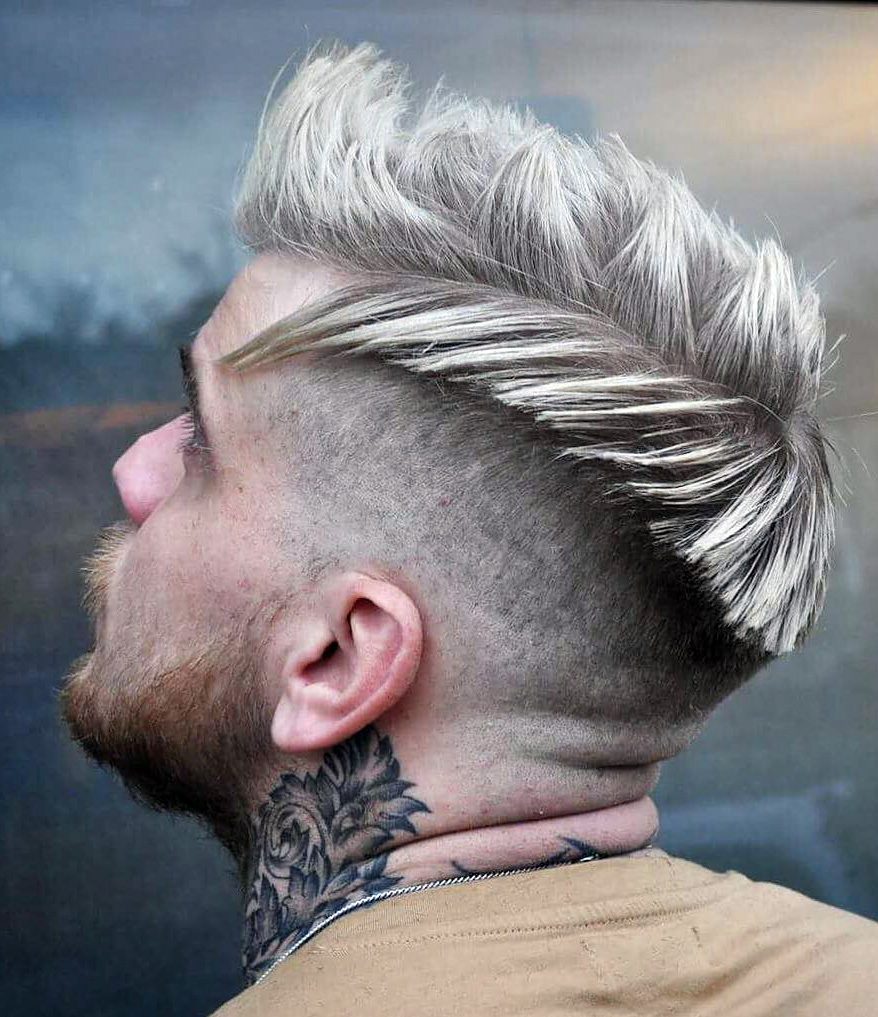
Snowy Mountains Side part and Tapered Undercut
Ice blond is always an eye-popping color. And when you pair it with a side-parted, brushed-up style with a tapered undercut like this, you’re sure to grab attention!
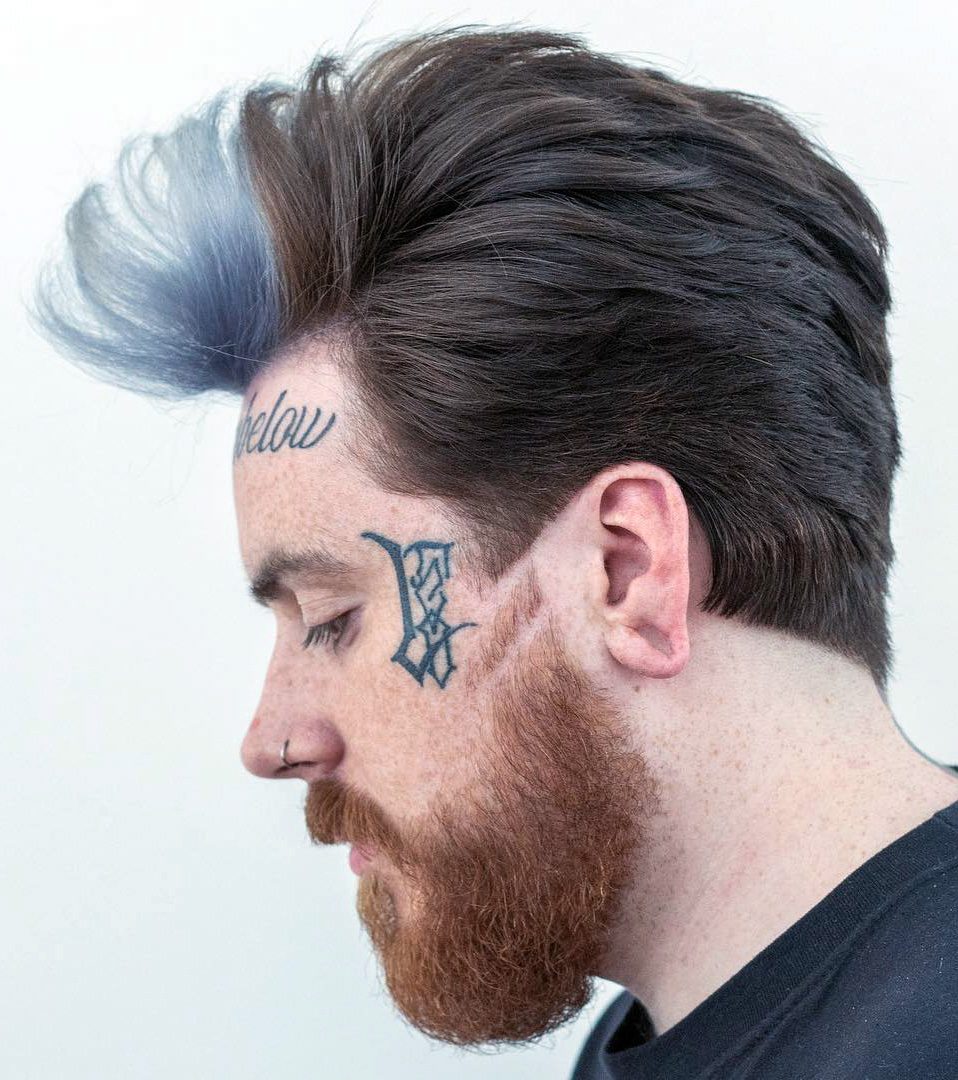
Sky Blue Front Dye
When you don’t want to commit to a full dye job, coloring just the front can still result in a flamboyant look. Try an unexpected color choice like sky blue.
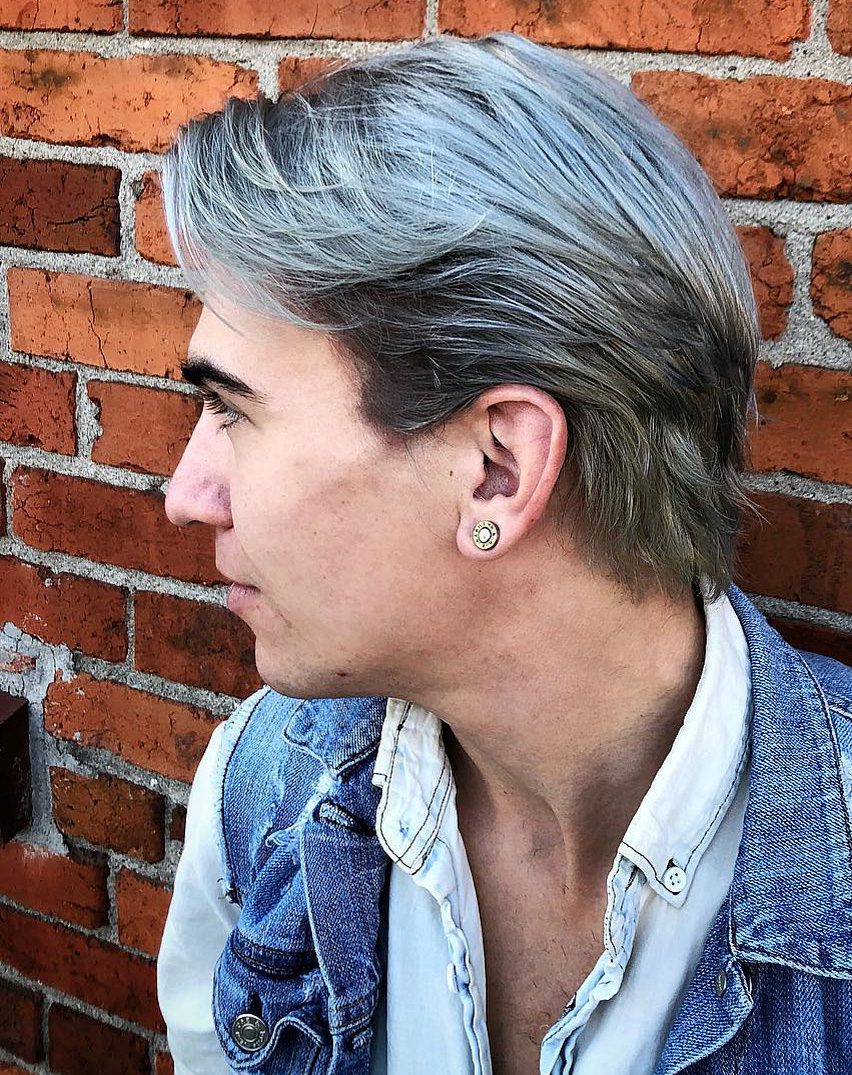
Dyed Hair For Men: Ashy Blue Highlights Men
This hairstyle is all about the color. It’s amazing how such a simple cut can become a showstopper with a daring color choice like ashy blue.
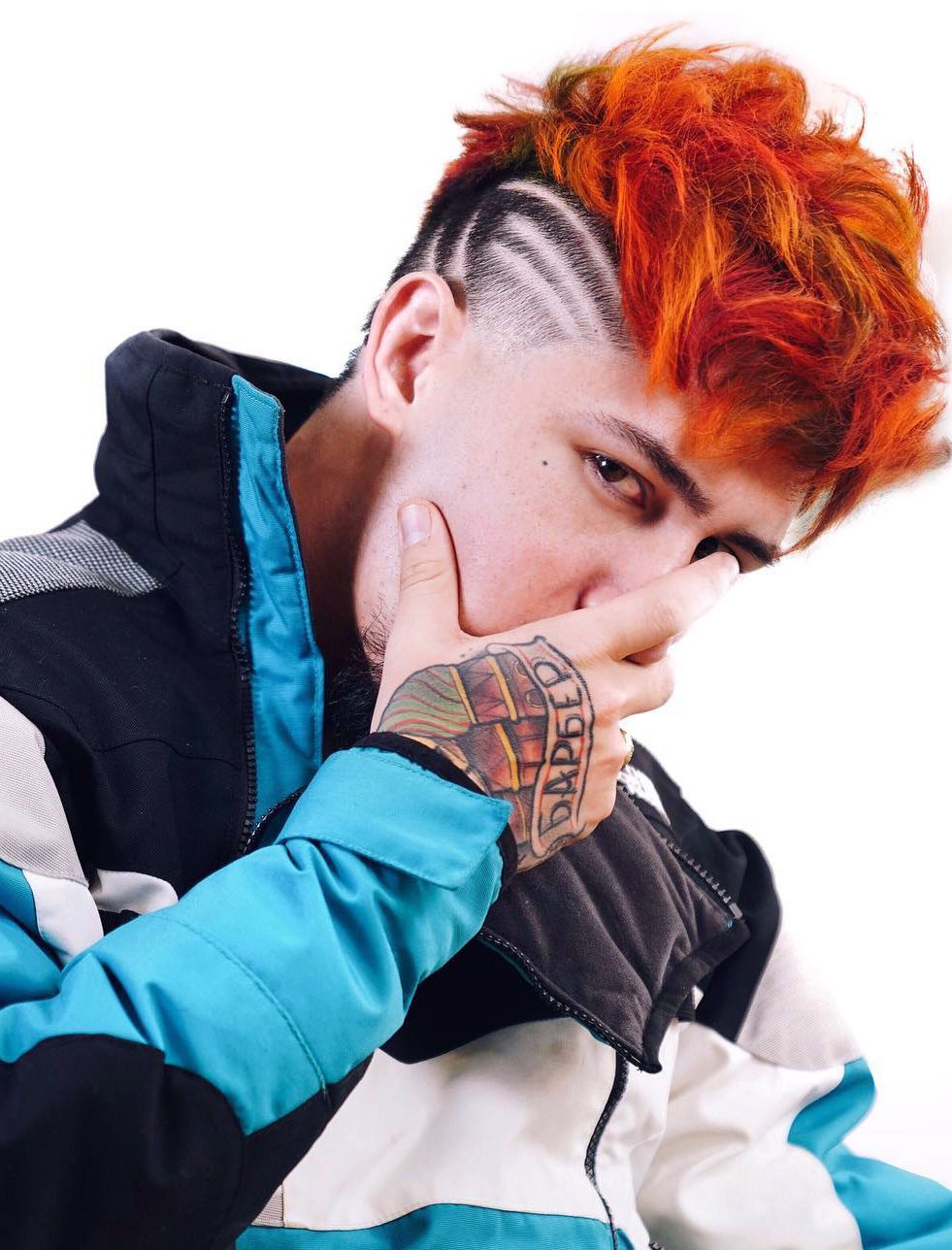
Fiery Top and Shaved Lines Undercut
With a fiery color like this, you’ll be the center of attention as soon as you enter the room. The combination of reds and oranges is spectacular, and we haven’t even gotten to the dark undercut yet, which features shaved lines to complete the funky look.
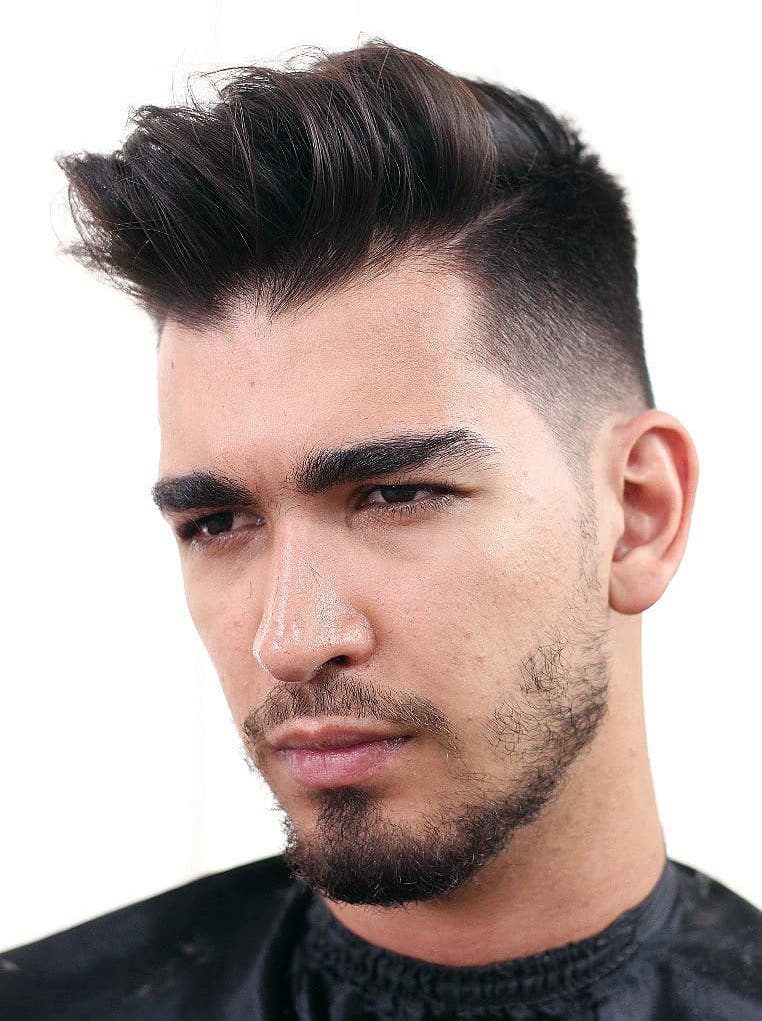
Dyed Hair For Men: Dyed Waved Quiff
When you want to keep it understated, opt for a subtle dye job to accentuate that quiff. The color doesn’t always have to be too obvious, especially if the cut is already dramatic enough.
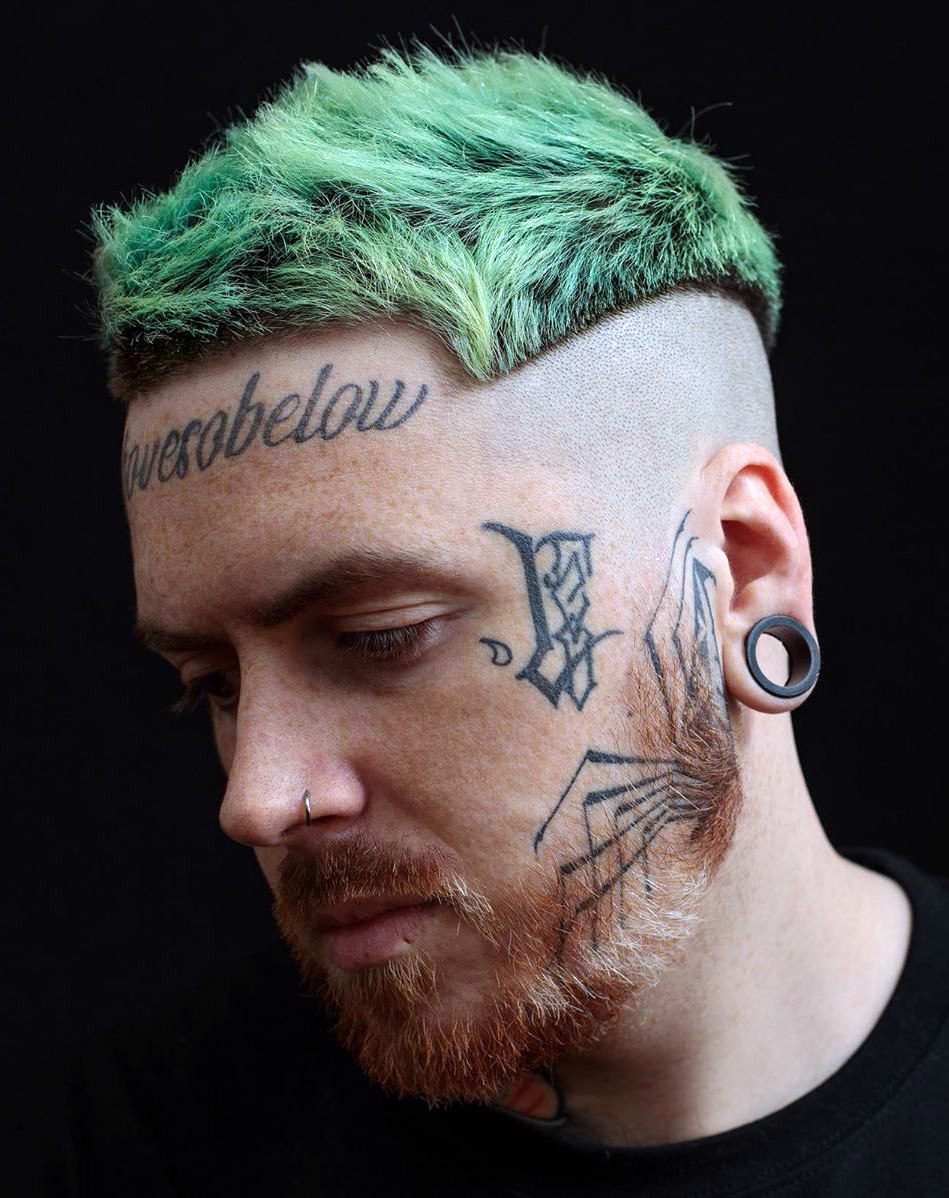
Fancy Crop Top with Undercut
Feeling fancy? Make their eyes pop with by pairing a crazy hair color with an out-of-the-ordinary cut. Here, both the green hue and the blunt crop top with undercut are knockout choices.
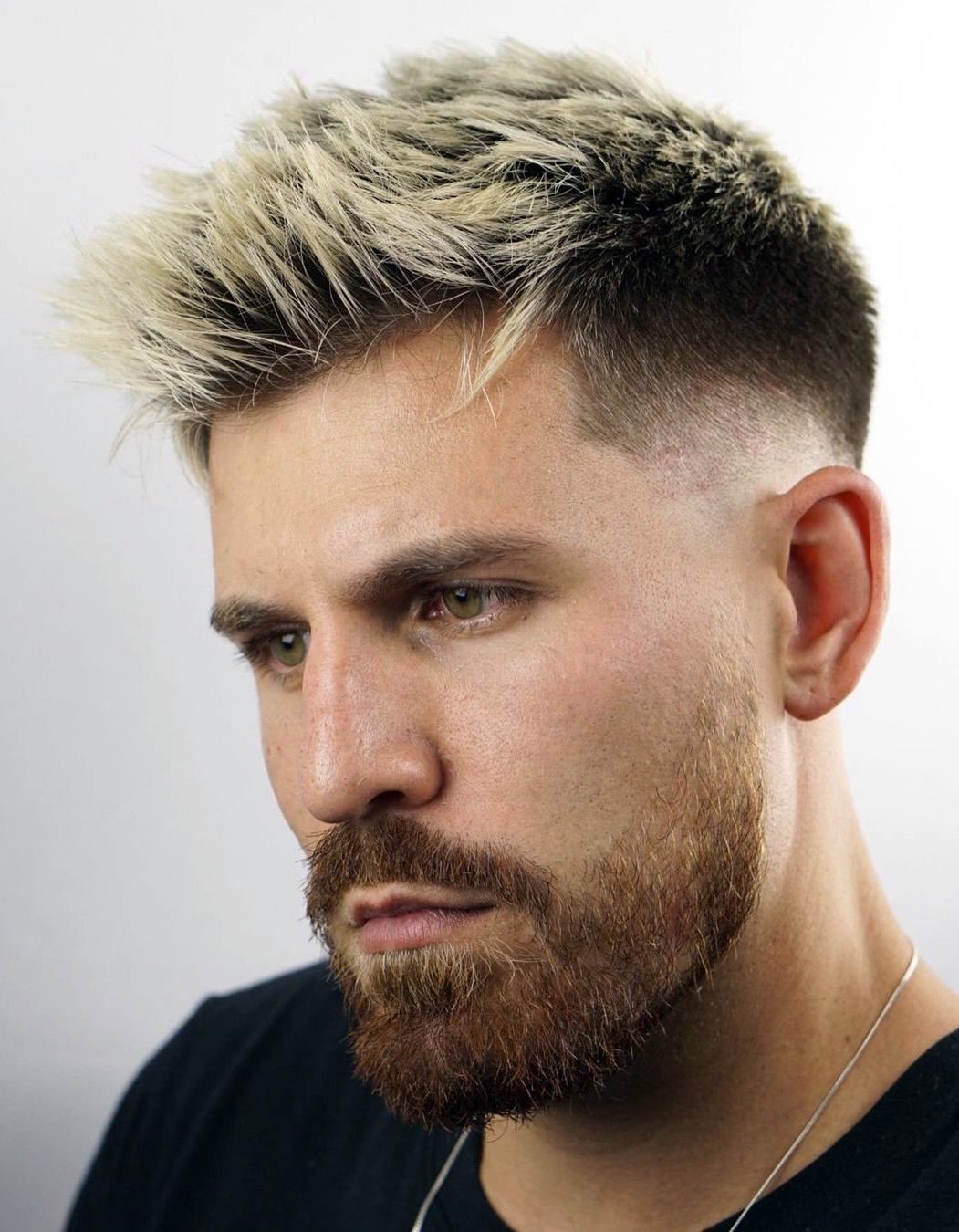
Dyed Brush Up with Mid Fade
Brush Up already is quite fancy but this one is even better, the top has dyed a tad. Plus, the sides are mid-faded for that top-notch look. The casual brush-up also tells that this one goes for a chill look but you can always style it for a classy one.
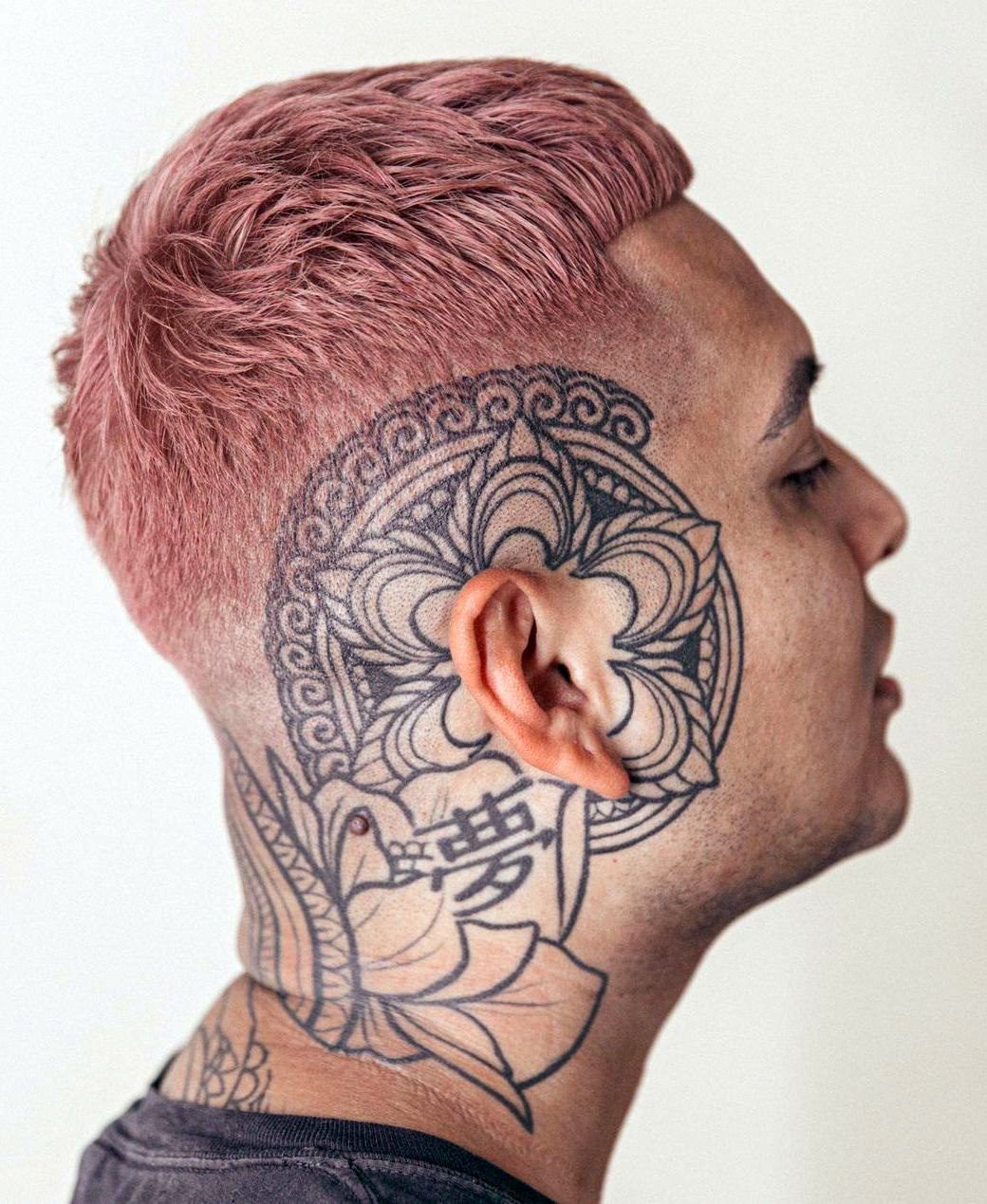
Pastel Pink French Crop with Taper Fade
Pastel pink is a color that we don’t see often plus the addition of the french crop makes it double the fun. Here the sides are taper faded for that tattoo to show up vividly with that tinge of the faded lineup.
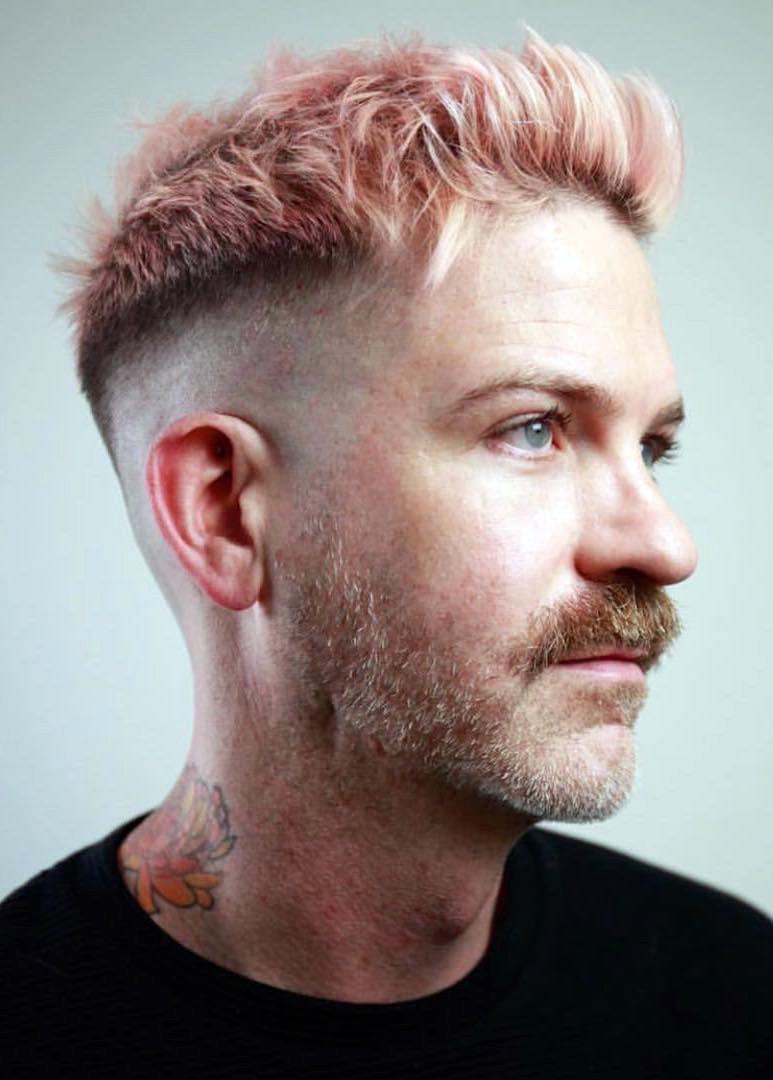
Candy Floss Pink with Black Taper Fade
Dying is not just coloring the hair, it is way deeper than that. The whole mood has to be set which is done here with the help of under-shaded black taper fade with clean sides that totally add up to the aesthetic.
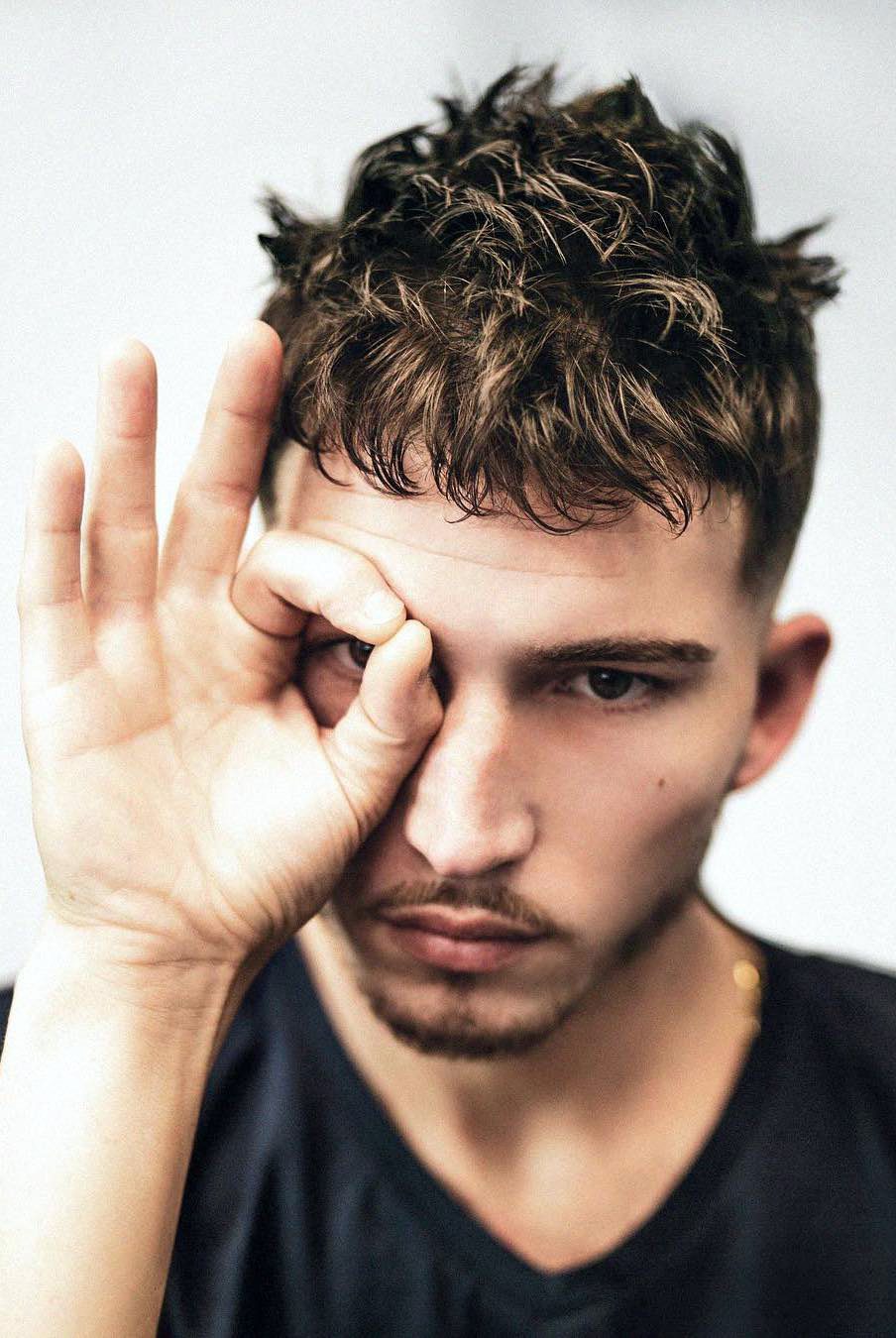
Casual Pocky Top with Highlight Blonde Dye
Pocky casual top with frisked brush up is quite a trend lately. Not to mention, the dye here helps bring out the color even better as it is just highlighted with sides being taper faded.
How to Choose a Hair Color for Men
Choosing the right hair color for men isn’t just about picking the shade that looks coolest in a photo. The best color depends on several factors, including your natural hair color, skin tone, haircut, hair texture, lifestyle, and how much maintenance you’re willing to handle.
Some men want a subtle change that adds dimension to their existing hairstyle, while others want a bold color that completely transforms their appearance. From blonde highlights and platinum hair to blue, pink, purple, green, and multicolor styles, there are plenty of ways to experiment with dyed hair.
Before choosing a color, consider the following factors.
Start With Your Natural Hair Color
Your natural hair color is one of the most important things to consider when choosing a dye. The same shade can look completely different depending on whether it is applied to naturally blonde, brown, or black hair.
If you have blonde or light brown hair, you already have a relatively light base for experimenting with many colors. Pastel shades, platinum blonde, silver, pink, lavender, and light blue can be easier to achieve on naturally light hair.
If you have medium or dark brown hair, richer colors such as burgundy, dark red, deep purple, navy blue, and chocolate brown can work well without completely changing your natural base. You can also add blonde or colorful highlights for contrast.
If you have black hair, bold colors can still work, but very bright shades generally require the hair to be lightened first. Blue, purple, red, green, and platinum can all create dramatic results when applied over a properly prepared base.
You don’t necessarily have to dye your entire head. Highlights, streaks, colored tips, a dyed fringe, or a lighter top can give you a noticeable change while leaving some of your natural hair visible.
Choose a Color That Complements Your Skin Tone
Your skin tone can help narrow down which hair colors will complement your appearance.
Men with warm undertones often look good with warmer shades such as golden blonde, honey blonde, copper, auburn, warm brown, and certain shades of red. These colors can create a cohesive, natural-looking appearance.
Men with cool undertones may prefer cooler shades such as platinum blonde, ash blonde, silver, blue, violet, and cool-toned purple. These shades can create stronger contrast and work particularly well with modern, high-contrast haircuts.
If you have a neutral undertone, you have more flexibility because both warm and cool shades can work. This makes neutral skin tones particularly versatile when experimenting with unconventional colors.
Don’t treat skin tone as a strict rule, though. Personal style matters just as much. A bold color is supposed to stand out, so choosing a shade that deliberately contrasts with your complexion can also create an eye-catching look.
Think About How Much Contrast You Want
One of the easiest ways to choose a men’s hair color is to decide how much contrast you want between your hair and your natural appearance.
For a subtle look, choose a shade that is relatively close to your natural color. Blonde highlights, caramel accents, dark red, subtle copper, and ash-brown tones can add dimension without completely changing your hairstyle.
For a medium-contrast look, try noticeable highlights, a lighter fringe, colored ends, or a two-tone hairstyle. This approach works particularly well if you want dyed hair to be visible without making the color the only thing people notice.
For a high-contrast look, go for vivid shades such as electric blue, bright pink, purple, neon green, silver, or combinations of several colors. Pairing an intense color with a clean fade or sharply textured haircut can make the contrast even stronger.
Match Your Hair Color to Your Haircut
Your haircut plays a major role in how dyed hair looks.
Short hairstyles with fades, tapers, crops, and undercuts can make color look particularly sharp because the shorter sides create contrast with the longer hair on top. A dyed top combined with a natural fade is one of the easiest ways to make a bold color feel intentional rather than overwhelming.
A French crop or textured crop works well with highlights and a dyed fringe. The texture allows different shades to catch the light and gives the color more depth.
A quiff or pompadour provides more surface area for highlights, streaks, and two-tone colors. Lighter sections can emphasize the movement and volume of the hairstyle.
For curly or wavy hair, color can emphasize the natural movement of the hair. Highlights and lighter sections can make curls look more dimensional, while a single vivid shade can create a dramatic overall effect.
Longer hairstyles offer even more opportunities for experimentation. You can combine multiple colors, create gradients, dye only the ends, or use contrasting sections throughout the hair.
Best Hair Colors for Men
The right hair color can completely change the appearance of a men’s hairstyle. Some shades add subtle dimension, while others create a bold statement. Your natural hair color, skin tone, haircut, and desired level of maintenance can all influence which shade works best.
If you’re looking for men’s hair color ideas, these are some of the most popular options to consider.
Blonde Hair for Men
Blonde is one of the easiest ways to create a noticeable change without necessarily choosing an unconventional color. It can range from subtle highlights to an all-over platinum transformation.
Golden blonde and honey blonde can give darker hair a warmer, more natural appearance. Ash blonde offers a cooler, understated look, while platinum blonde creates a much more dramatic result.
Blonde works particularly well with fades, textured crops, quiffs, slicked-back styles, and medium-length hairstyles. If you don’t want to bleach your entire head, blonde highlights can add contrast while preserving your natural base.
Platinum Blonde Hair for Men
Platinum blonde is a high-impact choice that can make even a simple haircut stand out. The nearly white shade works particularly well with short, structured hairstyles such as fades, crops, undercuts, and textured cuts.
Because achieving a very light base can require significant lightening, platinum hair generally requires more maintenance than darker colors. Regular toning and attention to hair condition can help keep the shade looking its best.
For an even more distinctive style, platinum can also be used as a base for pastel pink, blue, purple, or other fashion colors.
Blue Hair for Men
Blue is a versatile fashion color because it can be adjusted from subtle to extremely bold.
Dark navy and midnight blue can create a relatively understated look, particularly when applied to naturally dark hair. Royal and electric blue produce much stronger contrast, while sky blue and pastel blue offer a lighter, softer appearance.
Blue hair works well with modern fades, textured crops, fringes, undercuts, and longer layered hairstyles. Combining blue with purple, silver, or black can also create a distinctive two-tone effect.
Pink Hair for Men
Pink hair is a bold option for men who want their hairstyle to attract attention. The shade can be customized considerably, from pale pastel pink to vibrant hot pink and magenta.
Pastel pink tends to create a softer appearance and works particularly well with lightened hair. Brighter pink can create dramatic contrast when paired with a short fade or darker natural roots.
Pink can also be combined with purple or blonde for a multicolor or gradient hairstyle.
Purple Hair for Men
Purple is another versatile choice because it can range from deep and subtle to bright and experimental.
Dark violet and plum can work well if you want a richer color without an extremely bright appearance. Lavender and pastel purple create a softer look, while vivid purple makes the color the main focus of the hairstyle.
Purple can be especially effective on textured hair because the different angles of the hair allow the shade to appear slightly different throughout the style.
Green Hair for Men
Green offers some of the most distinctive dyed hairstyles for men. Depending on the shade, it can look natural, muted, or extremely bold.
Forest green and dark emerald can create a deeper appearance, while bright green and neon shades provide maximum contrast. Mint and pastel green offer a lighter alternative.
A clean fade or undercut can help balance an intense green shade by keeping the sides neat and structured.
Red Hair for Men
Red can work across a wide range of hairstyles and intensity levels. Burgundy and dark red are relatively subtle options, while bright red creates a much more dramatic appearance.
Burgundy hair works particularly well with naturally dark hair because the darker base can complement the richness of the color. Copper and auburn offer warmer, more natural-looking alternatives.
Bright red can be paired with short fades, textured crops, spiky hairstyles, and longer cuts when you want the color to become the centerpiece of your look.
Silver and Gray Hair for Men
Silver hair has become a popular choice for men who want a modern, high-contrast appearance. Silver, metallic gray, and icy shades can create a clean, futuristic look.
Silver works especially well with short haircuts where the lighter color contrasts with a fade or taper. It can also be combined with darker roots for a more dimensional appearance.
As with platinum blonde, achieving a very light silver shade often requires the hair to be lightened considerably, so maintenance and hair condition are important considerations.
Brown Hair and Natural-Looking Color
Not every hair color transformation needs to be dramatic. Brown shades can add warmth, depth, or dimension while keeping the overall appearance natural.
Chocolate brown, dark brown, chestnut, caramel, and warm brown can all be used to subtly change the appearance of naturally lighter or darker hair.
Natural-looking color is particularly useful if you want a hairstyle that works in a variety of settings while still looking noticeably different from your original hair.
Men’s Hair With Highlights
Highlights are one of the easiest ways to experiment with color without completely changing your hairstyle.
Blonde highlights can brighten dark hair, while caramel and copper highlights can create warmth. For a more adventurous look, colored highlights in blue, pink, purple, red, or green can add vivid accents.
The placement of highlights also changes the result. Concentrating color around the fringe creates a face-framing effect, while adding highlights throughout the top can emphasize texture and volume.
Two-Tone Hair Colors for Men
Two-tone hairstyles combine two distinct shades to create more contrast and visual interest.
One of the simplest approaches is to keep the sides natural while coloring the longer hair on top. More adventurous combinations can pair shades such as blue and purple, pink and violet, green and blue, or blonde and a vivid fashion color.
Two-tone color can work particularly well with fades, undercuts, disconnected cuts, and longer hairstyles because the haircut naturally creates separate areas for each shade.
Multicolor Hair for Men
If one color isn’t enough, a multicolor hairstyle can combine several shades into one look. This can involve distinct sections of color, blended gradients, highlights, or rainbow-inspired combinations.
Multicolor hair tends to work best when the haircut has enough length and texture to show the different shades. Longer fringes, layered cuts, curls, and textured hairstyles can all provide more room for creative color placement.
Which Hair Color Should You Choose?
There isn’t one universally best hair color for men. The ideal shade depends on how noticeable you want the change to be and how much maintenance you’re prepared to handle.
For a subtle transformation, consider blonde highlights, caramel, copper, brown, or a shade close to your natural hair. For a modern but relatively versatile change, platinum, silver, burgundy, dark blue, or deep purple can work well.
If your goal is to make your hairstyle stand out, bright blue, pink, purple, green, red, or multicolor hair can create a much stronger visual impact.
Whatever shade you choose, consider the haircut alongside the color. A great dyed hairstyle isn’t just about the shade—it’s about how the color, haircut, texture, and contrast work together.
Final Thoughts
Dyed hair is one of the easiest ways to give a familiar haircut a completely new personality. Whether you prefer subtle blonde highlights, platinum hair, rich burgundy, or bold blue, pink, purple, and green, there’s a color combination to suit almost every style.
The key is to choose a shade that works with your natural hair color, skin tone, haircut, hair texture, and lifestyle. If you’re new to hair dye, highlights, colored tips, or a semi-permanent shade can be a great way to experiment without making a major commitment. If you’re ready for a bigger change, an all-over color or two-tone hairstyle can create a much more dramatic result.
Your haircut matters just as much as the color. Fades, tapers, crops, undercuts, curls, fringes, and longer textured styles can all provide different ways to showcase dyed hair.
Most importantly, don’t feel limited to traditional hair colors. The best dyed hairstyle is one that fits your personality and makes you feel confident. Use the ideas in this guide as inspiration, find a color you love, and work with a professional stylist when your desired look requires significant lightening or bleaching.
FAQs
What is the most popular dyed hair color for men?
There isn’t one color that works for everyone, but blonde, platinum, blue, silver, and vivid fashion colors are popular choices for men’s dyed hairstyles. Highlights are also a popular option because they add color and dimension without requiring an all-over transformation.
What is the easiest hair color to maintain?
Colors that are close to your natural hair color are generally among the easiest to maintain. Highlights and dyed ends can also be relatively low-maintenance because new hair growth creates a less noticeable transition. Very light blonde and vivid fashion colors usually require more upkeep.
What are the best temporary hair colors for men?
Temporary and semi-permanent colors are useful if you want to experiment before committing to a longer-lasting change. Depending on the product, you can try shades such as blue, pink, purple, red, or green. These options can be particularly useful for testing whether you like a bold color before choosing a permanent dye.
What haircut looks best with dyed hair?
Almost any haircut can work with dyed hair. Fades, tapers, textured crops, fringes, undercuts, quiffs, curls, mullets, and longer layered hairstyles all provide different ways to showcase color. Shorter cuts can create strong contrast, while longer hairstyles offer more space for highlights, gradients, and multiple colors.
What is the best dyed hairstyle for men?
The best dyed hairstyle is one that fits your natural hair, haircut, lifestyle, and personal style. If you’re new to hair color, start with highlights or subtle color. If you want a statement look, experiment with bold shades such as blue, pink, purple, green, or a multicolor combination.