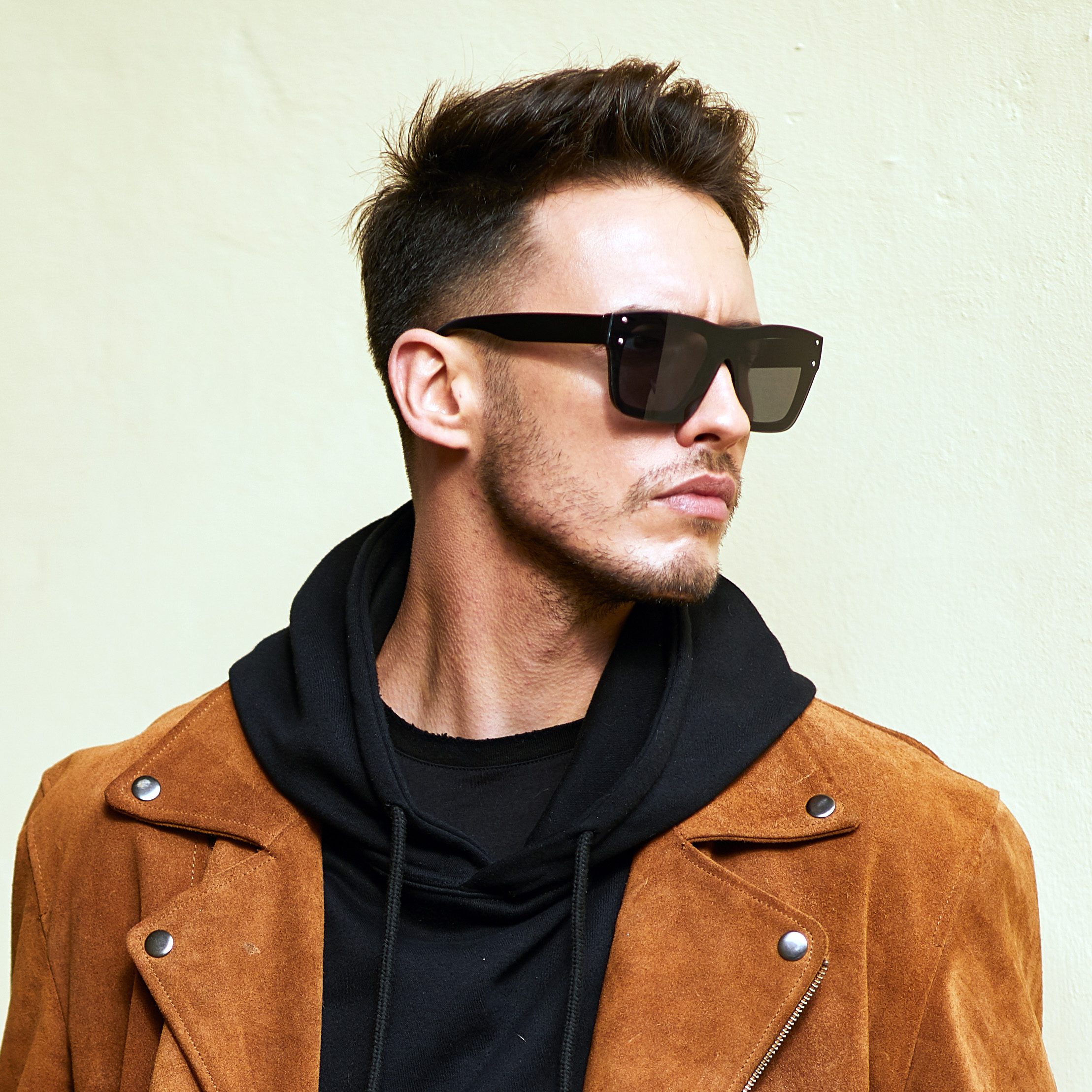
32 Types of Fade Haircuts (With Pictures): Low, Mid, High & More [2026 Guide]
Blending in a new look
The fade haircut has become one of the most popular men’s hairstyles in the world—and for good reason. It’s clean, versatile, and works with nearly every hair type, face shape, and personal style. Whether you’re after a professional office look or a bold, fashion-forward haircut, there’s a fade that fits.
Unlike traditional haircuts, a fade gradually transitions from longer hair on top to shorter hair on the sides and back. The exact point where that transition begins creates different fade styles, such as the low fade, mid fade, or high fade. Modern barbers have expanded the classic fade into dozens of variations, including skin fades, burst fades, drop fades, temple fades, shadow fades, and more.
This guide explains every major type of fade haircut, how they differ, who they suit best, and how to choose the perfect fade for your lifestyle.
Read the full article on different types of fades to get inspired!
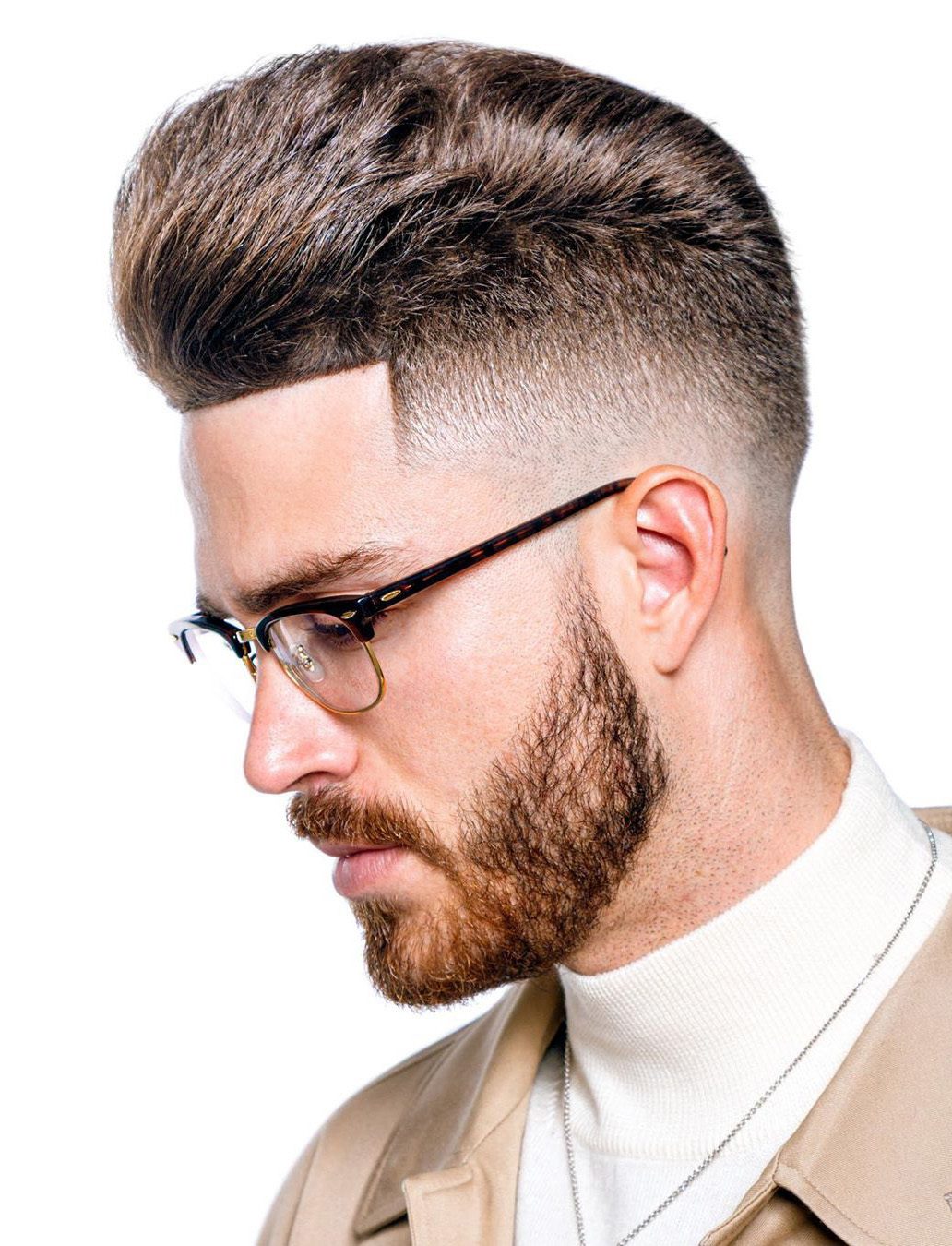
Line Up and Medium Fade
A line up in the world of fashion is not when a bunch of suspects get in front of a reflective glass panel to be scrutinized by LA’s finest. In the world of hair, a line up is to create a sharp transition boundary between an area of full-bodied hair and a place without.
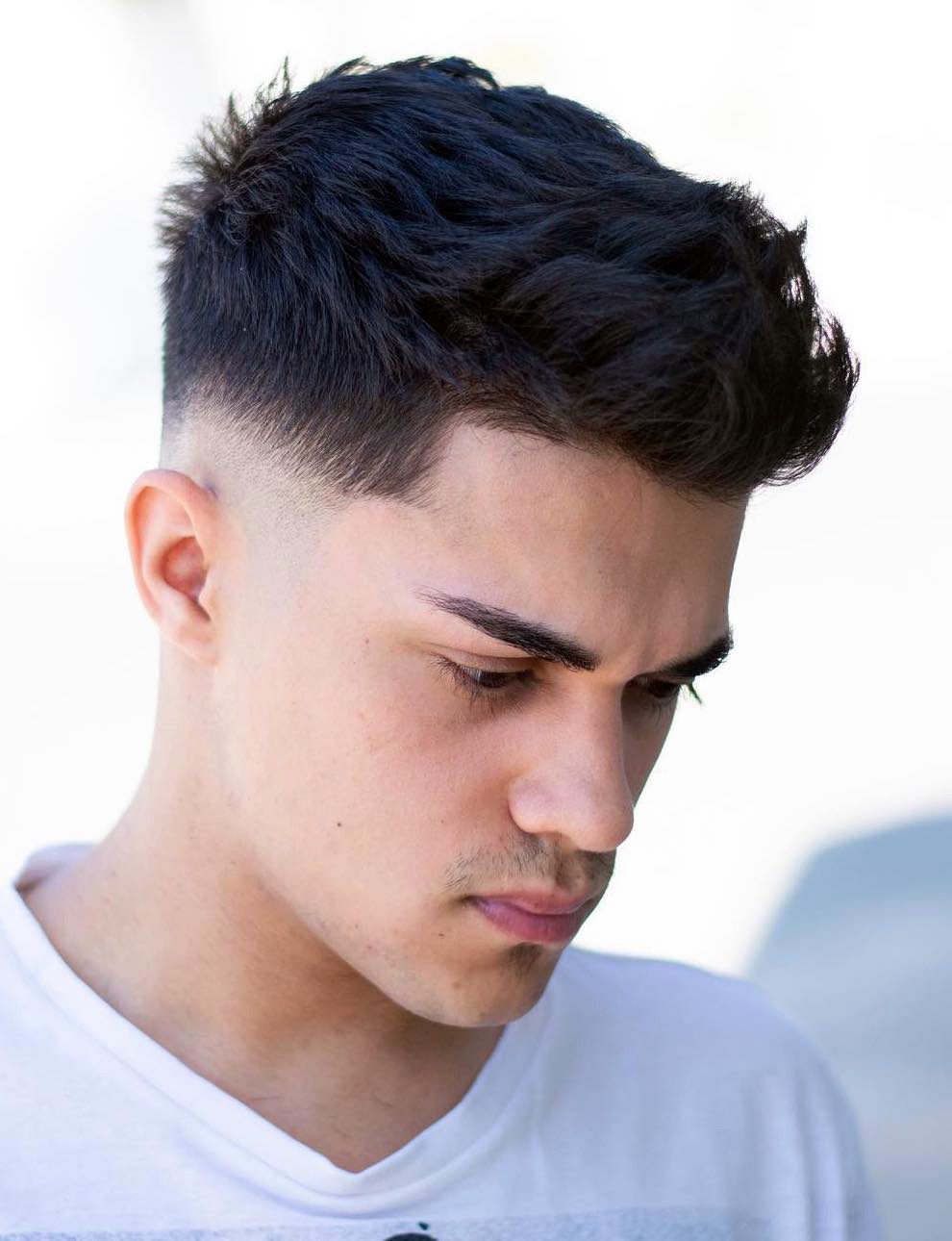
Casual Brush Up with Low Fade
The brush-up look is a look that’s primary objective is to turn heads. That being said, if you are looking for a more subtle, toned-down version then this shorter variation might be the one for you.
Balanced nicely with a mid-fade, it projects the same feeling, just a bit more casual.
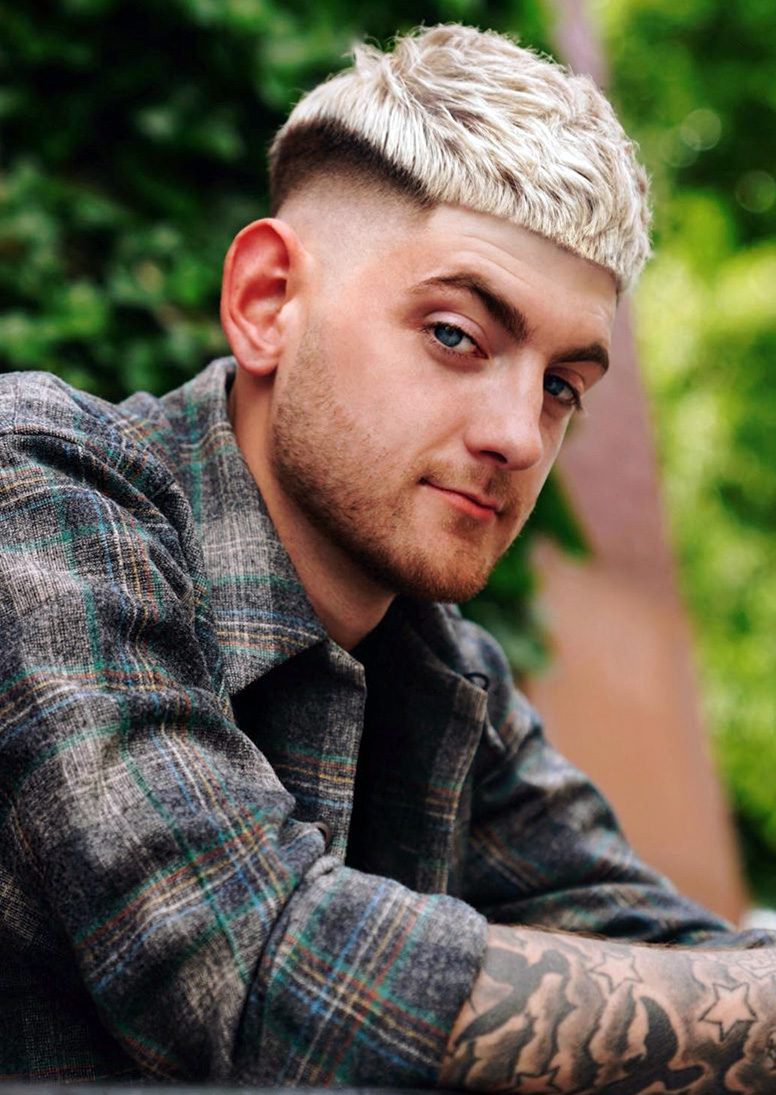
Blonde and Brown High Fade
A contrast of shades and a contrast of fades; here we see the sharpest the two can be, sun-bleached from the summer of ’69. Whether you ask for a bald fade or a high taper from your barber, both pair well with this look.
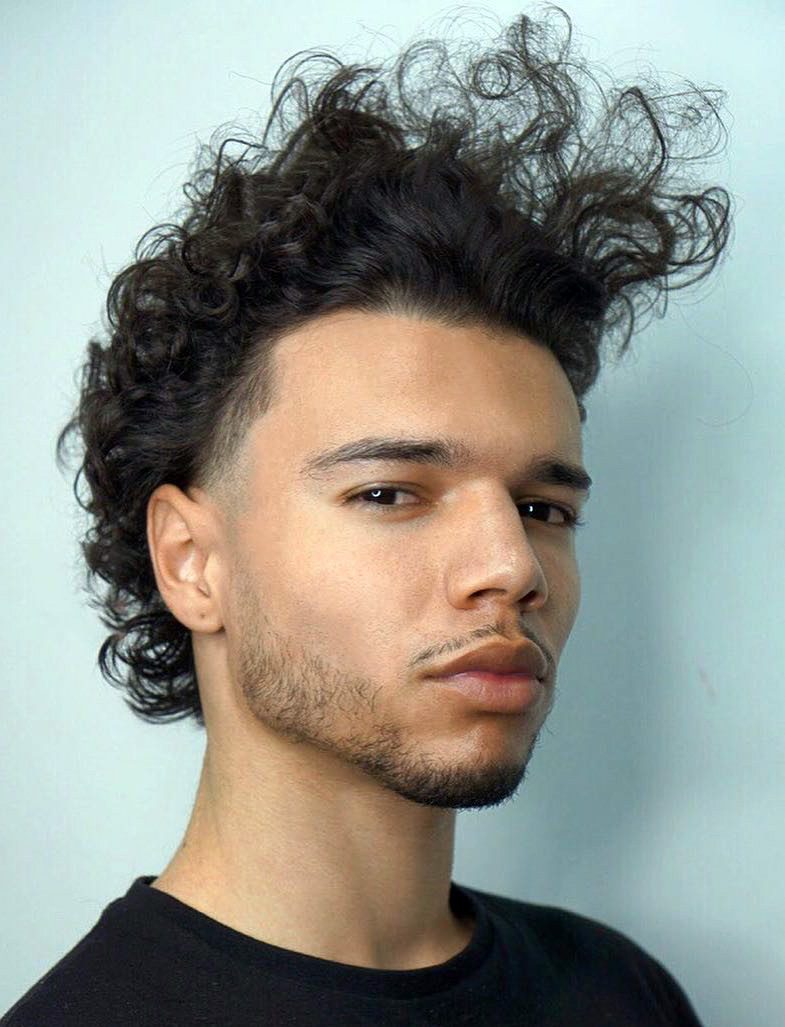
Subtle Taper Temple with Curly Long Strands
Let’s say you happen to be blessed with long, flowing hair and would like to know how to keep it out of your face without having to cut it off then this next fade might be the secret weapon you need in your arsenal.
This temple fade ensures that the hair is pushed back just enough to stay out of your way while allowing it to freely flow and twist in the wind to its heart’s content.
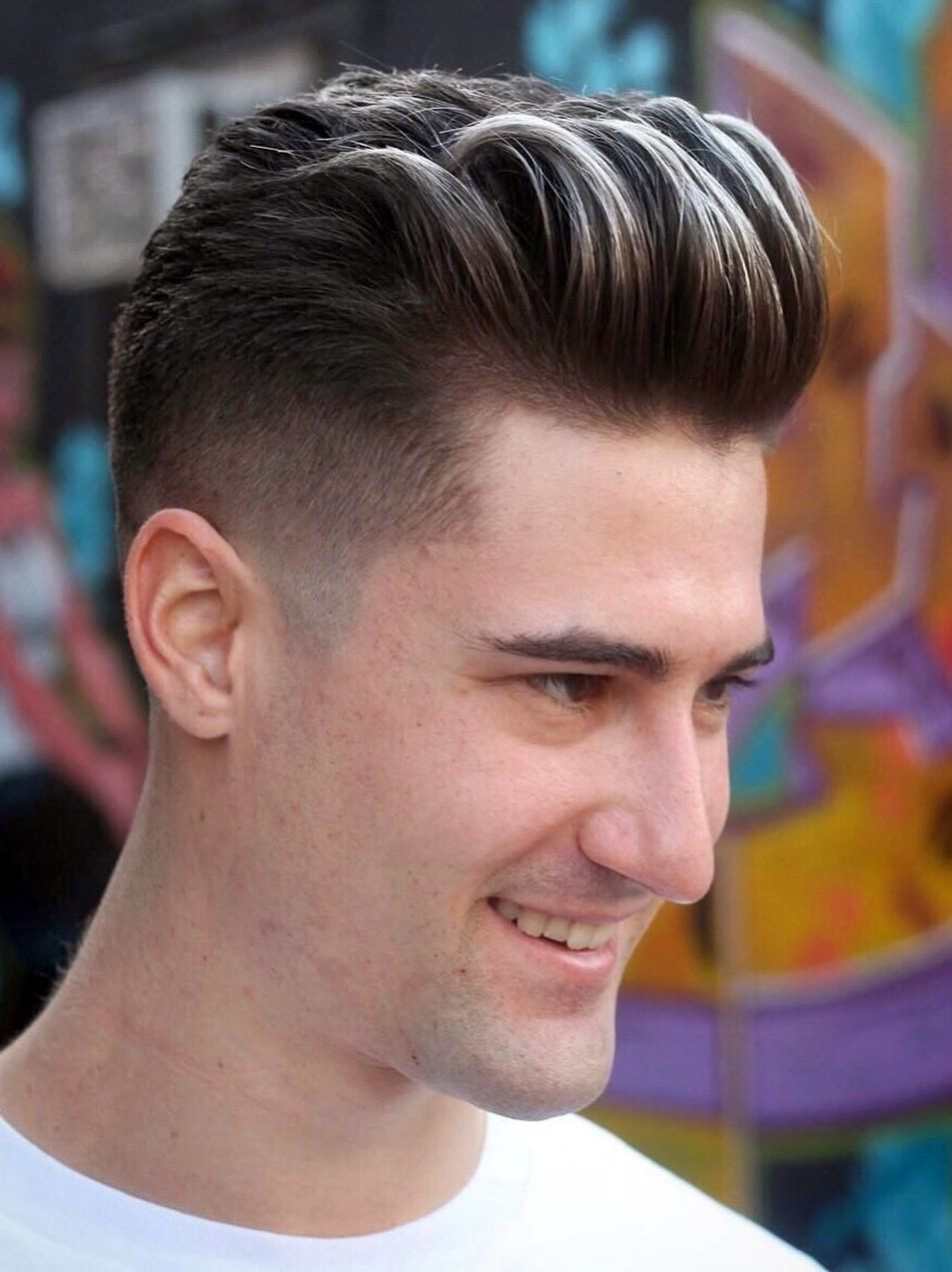
Fine Taper Fade with Clipped Temple
This undercut fade, a temple fade looks super cool when paired with these, albeit dyed, strikes of gray. Who says you have to wait to see yourself as a gray fox?
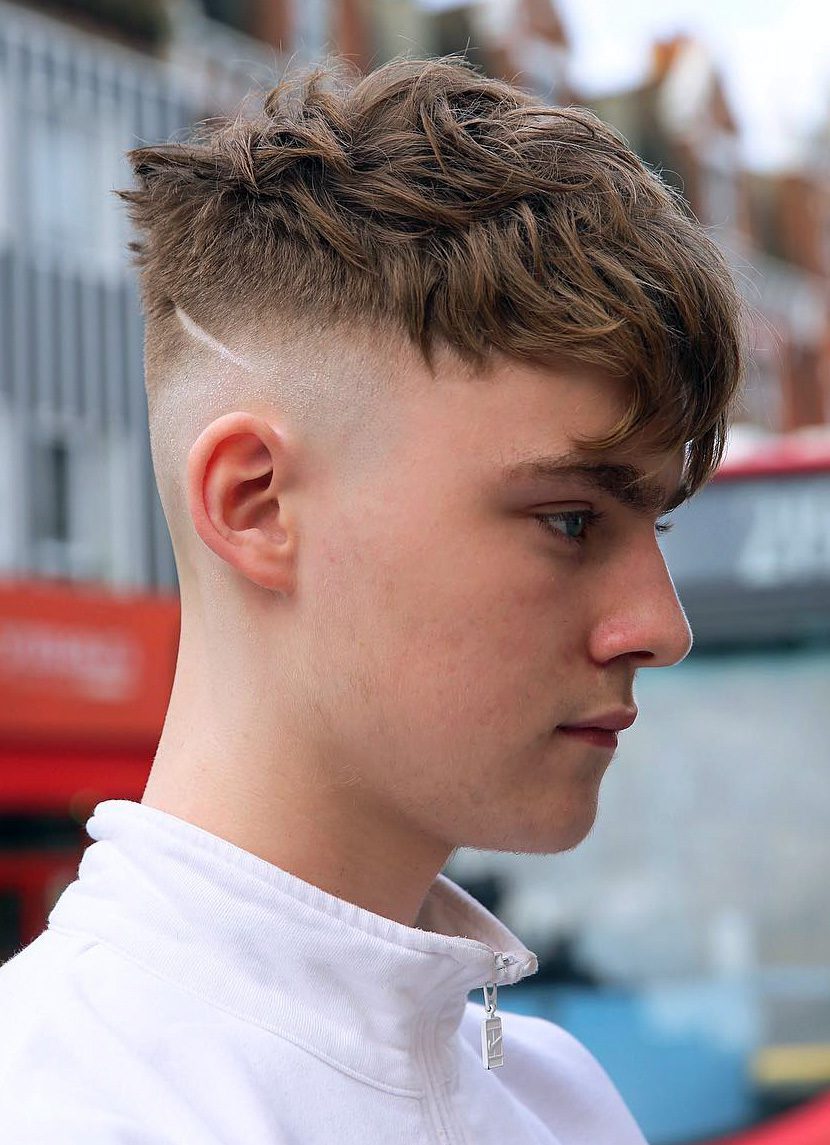
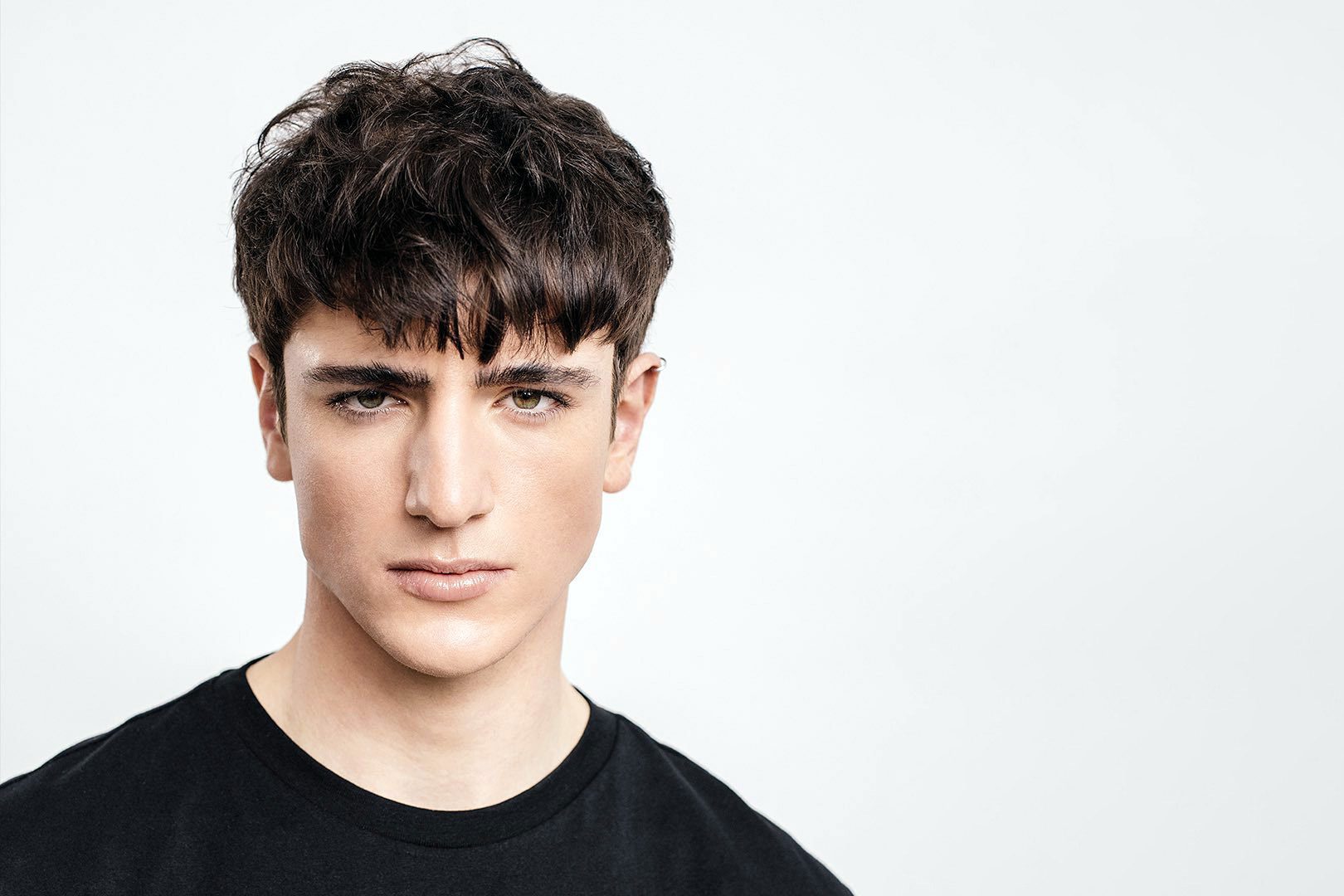
French Messy and Skin Fade
Newer forms of the french crop have been taken place all over, and I’m here for it. You can overhaul it and get something pretty exciting like this messy texture and the perfectly smooth skin fade.
Related
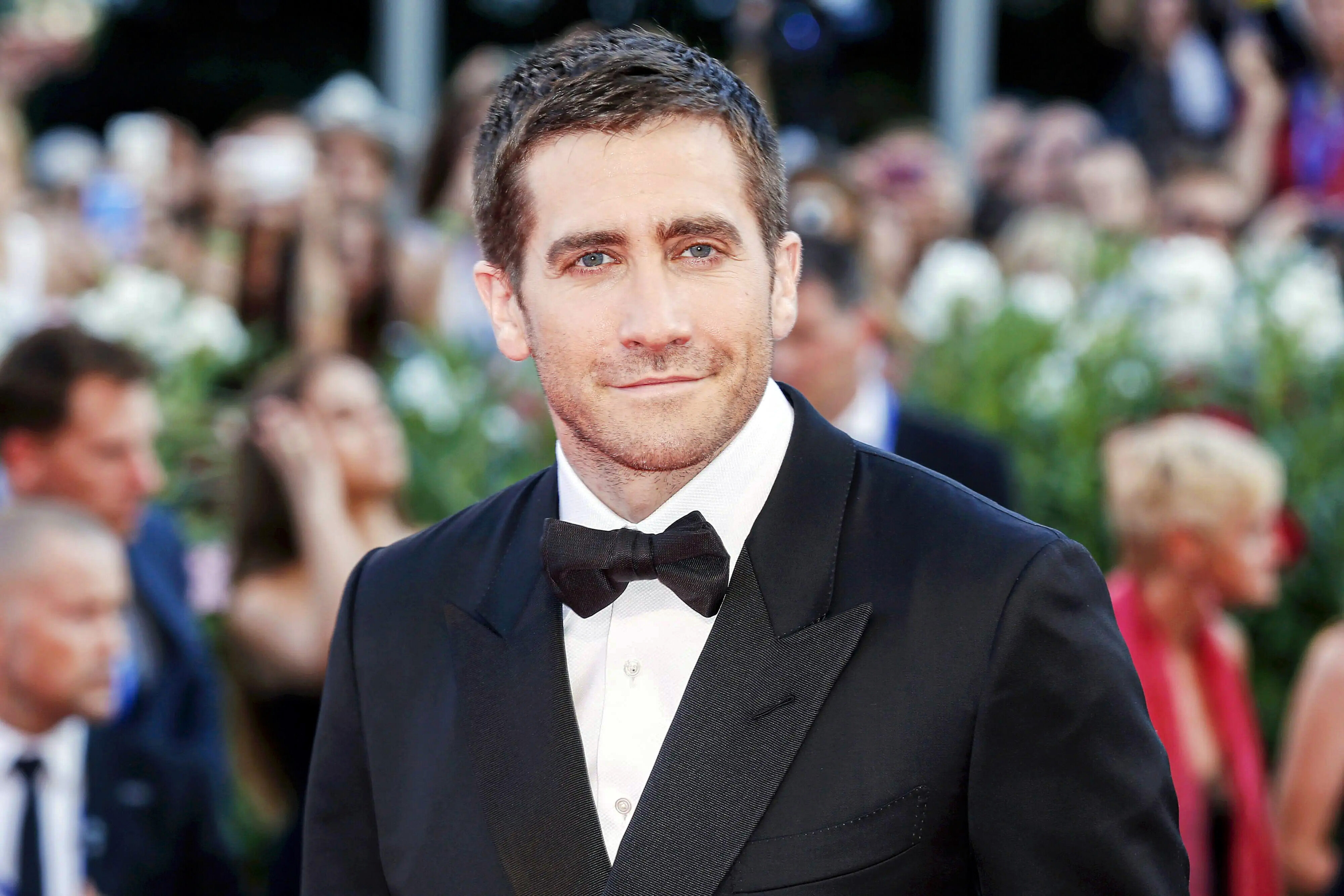
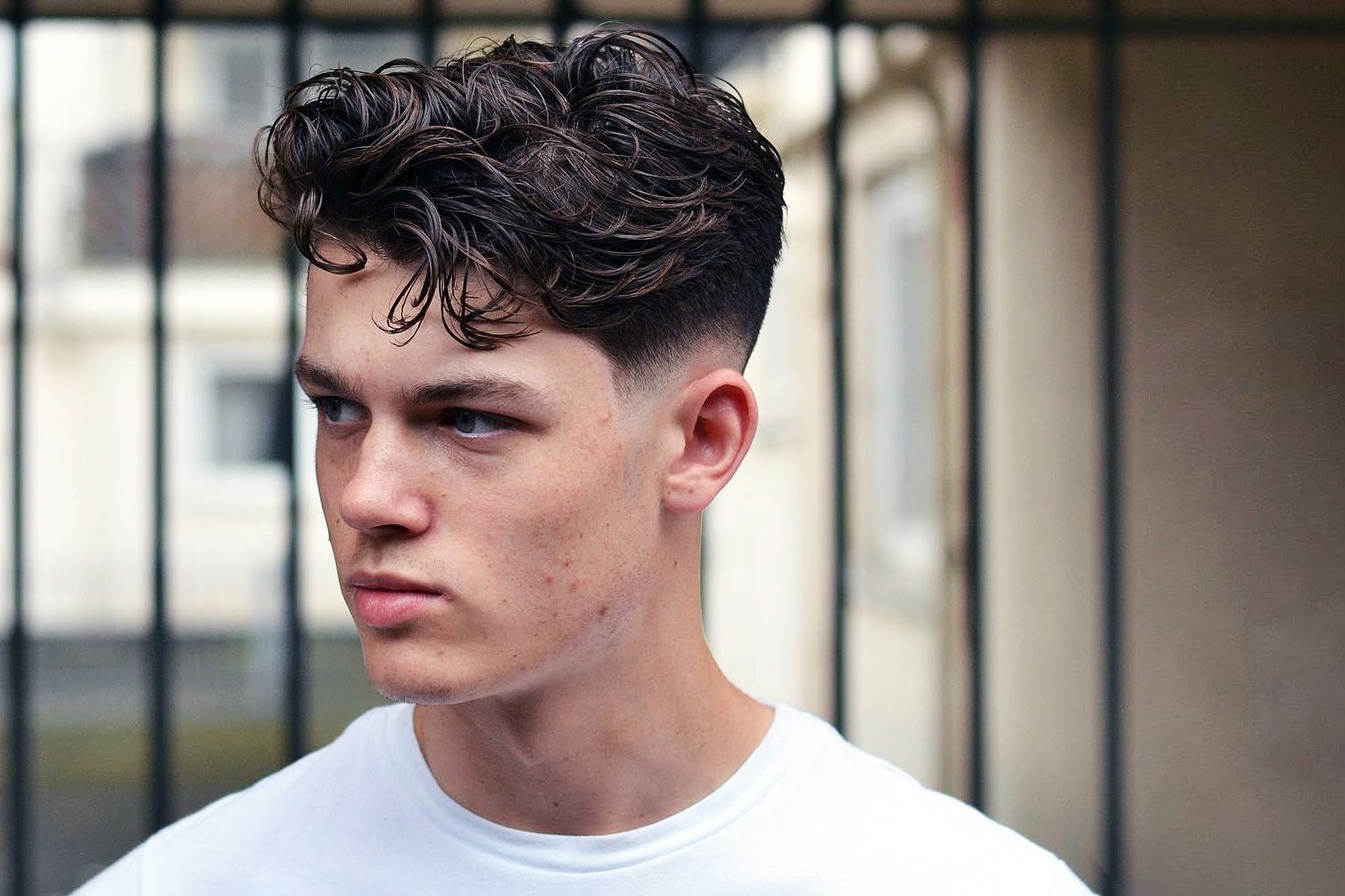
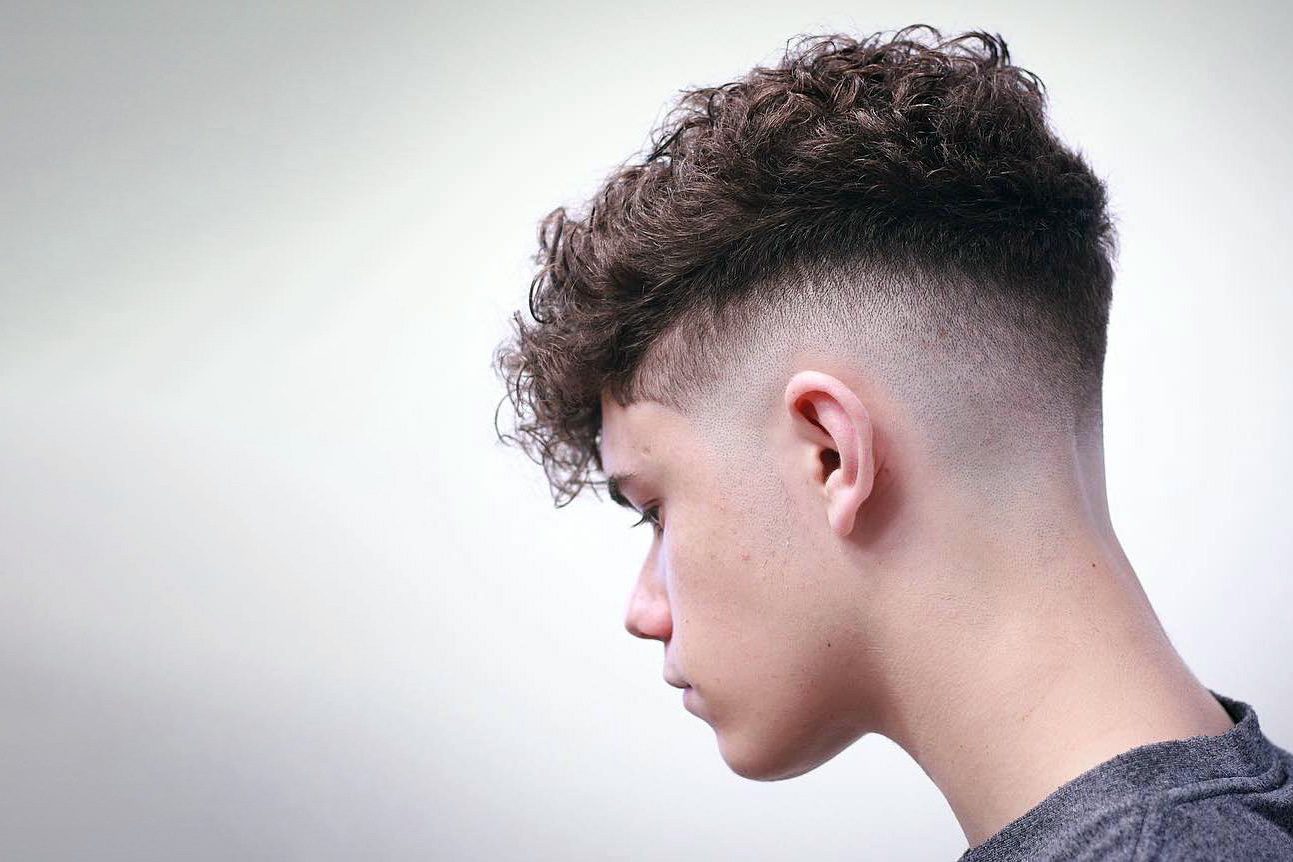
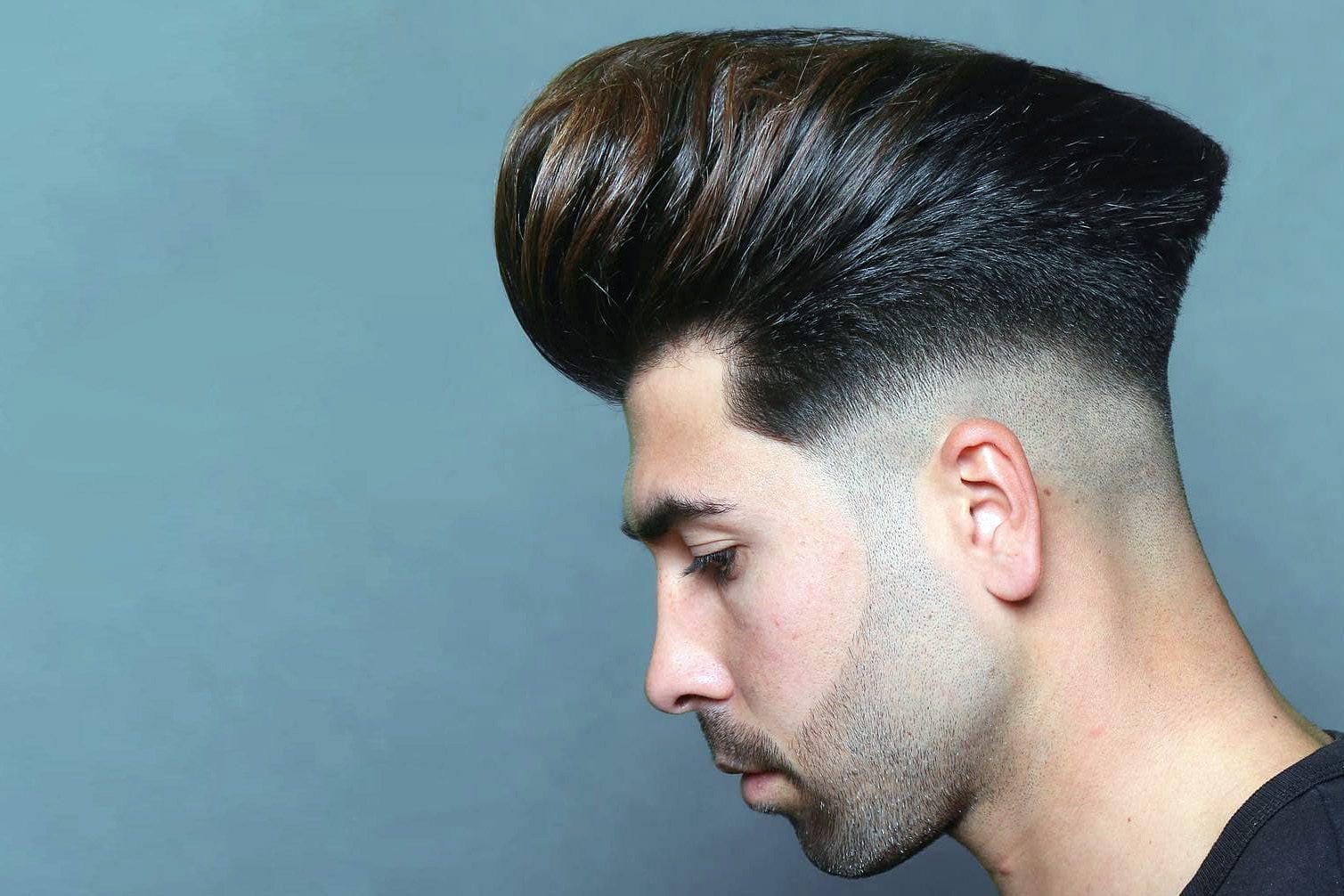
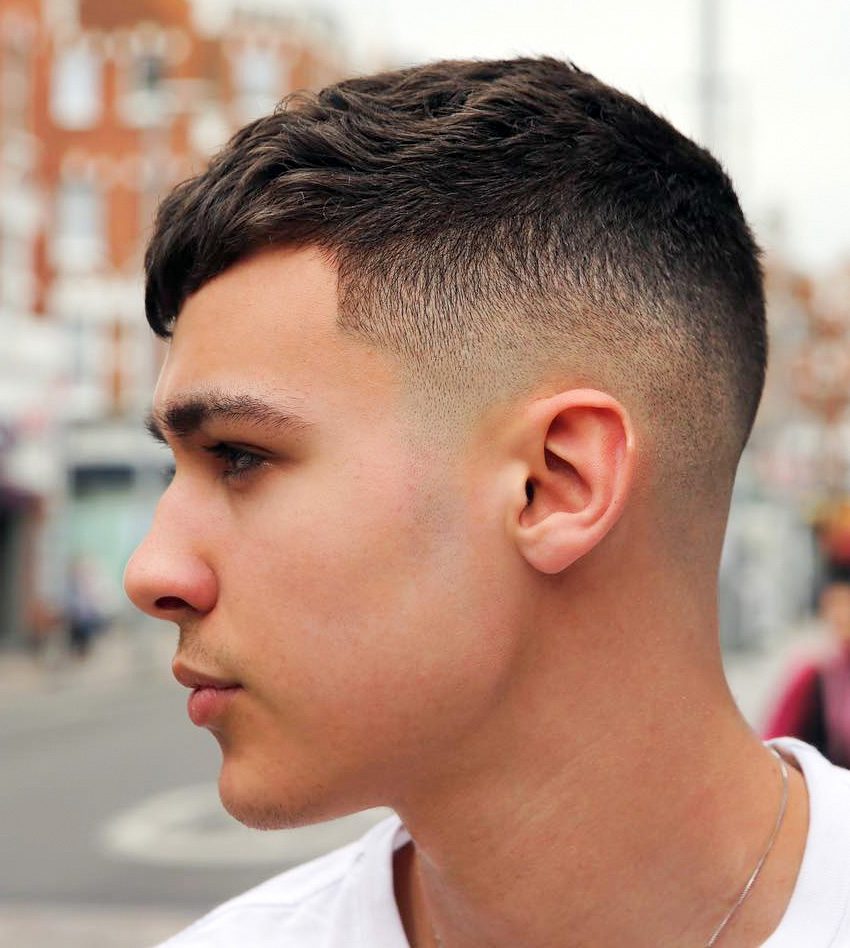
Short Crop and Medium Fade
This medium fade also hits the temples shaping them down along with it. A straightforward crop with wavy hair becomes a super low-maintenance way of staying fly.
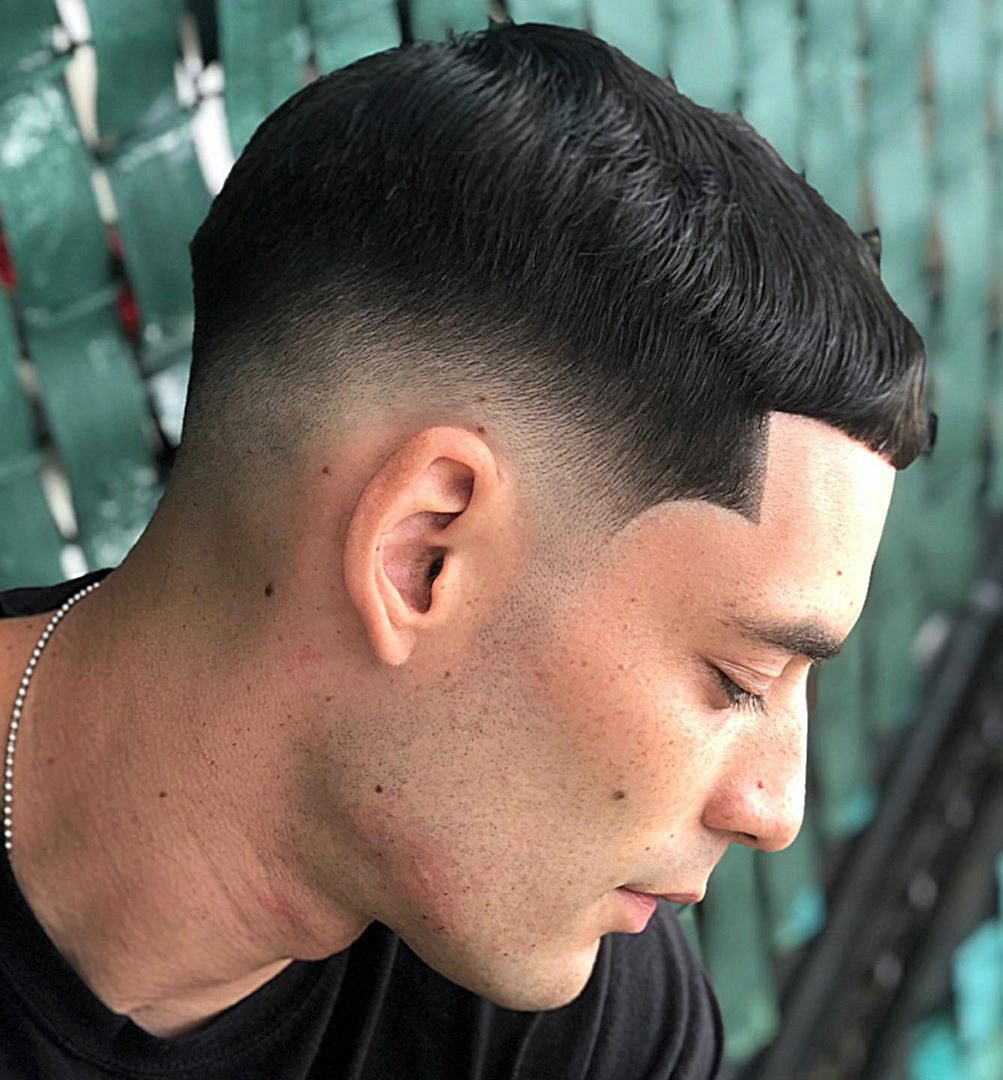
Short Crop and Burst Fade
If you’ve got a thing for defined lines, this hard angle line up is for you. Pair it with a super smooth fade and you’ll feel as satisfied with it as is it satisfactory to look at for everyone with an eye for haircuts.
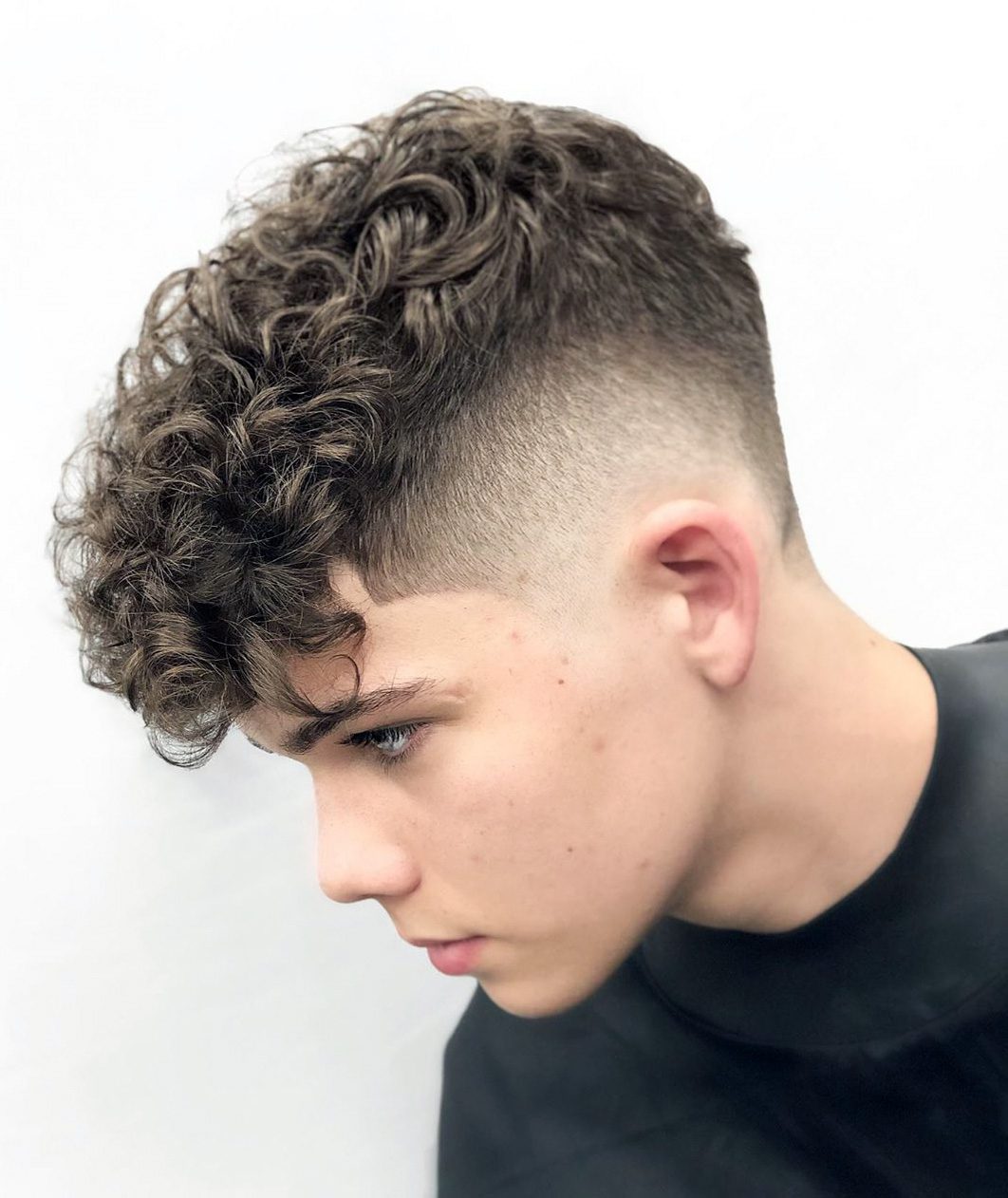
Burst Fade and Curls
Curls look extremely cool if cut into a faux-hawk or a drop fade like they do here.
It’s true you have to consider the amount of volume you want to deal with in order to choose a length but leaving it shorter in the back is done quite often for this hairstyle.
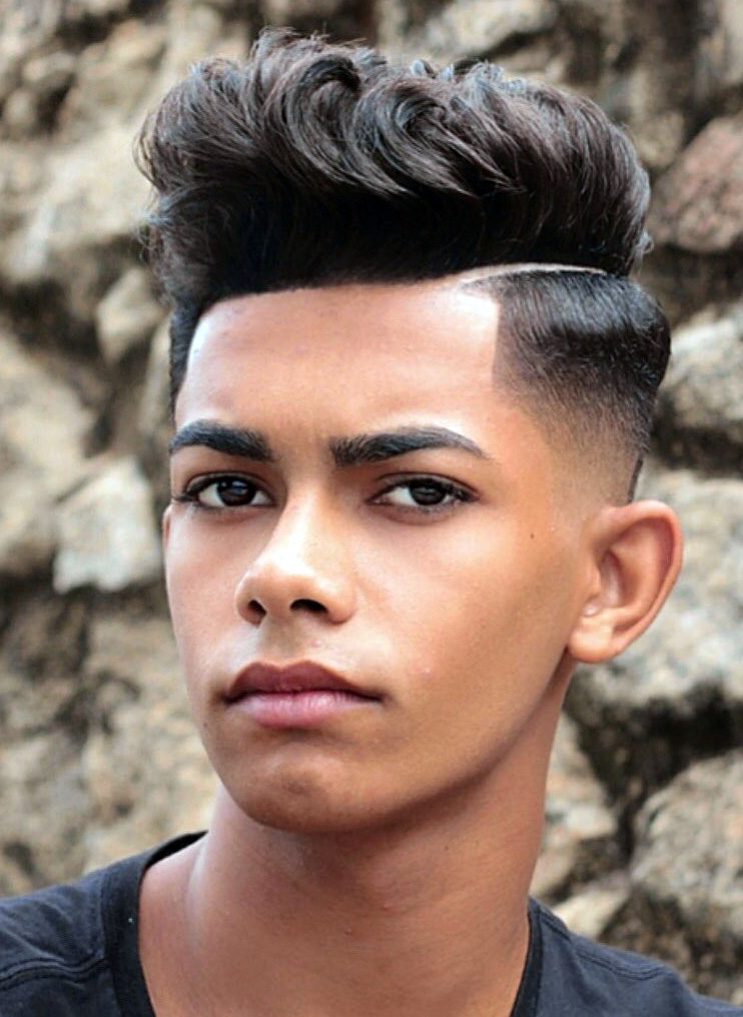
Medium Fade and Heavy Waves
These heavy waves are giving me all the correct vibes! Love to see thick hair properly styled and with a thin hard part like that the medium fade can be properly appreciated.
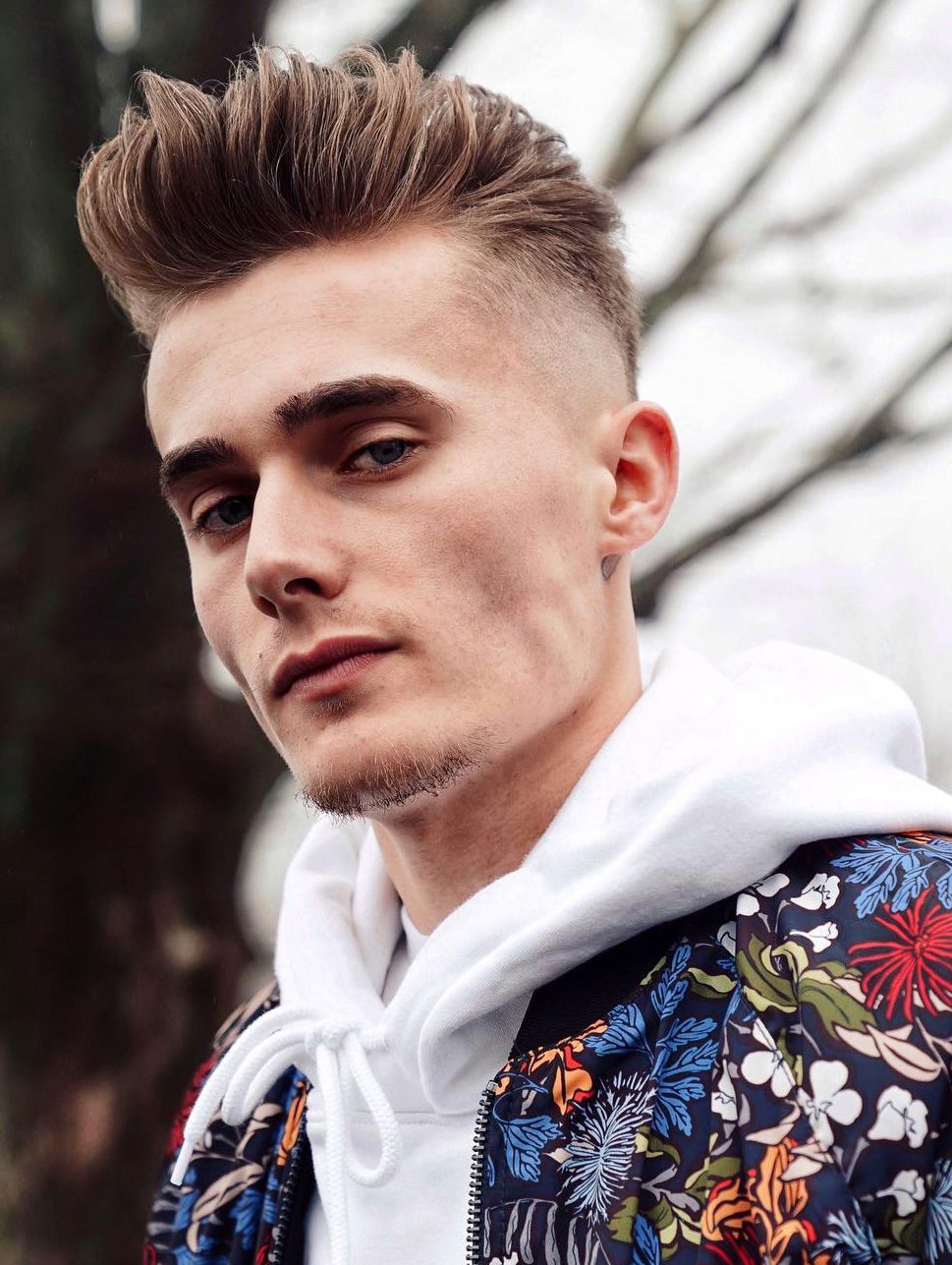
Classic Brush Up and Burst High Fade
Burst high fades can be super fun to pair with almost any crop on the top. In this case with the brush-up and texture the fade has elevated the look.
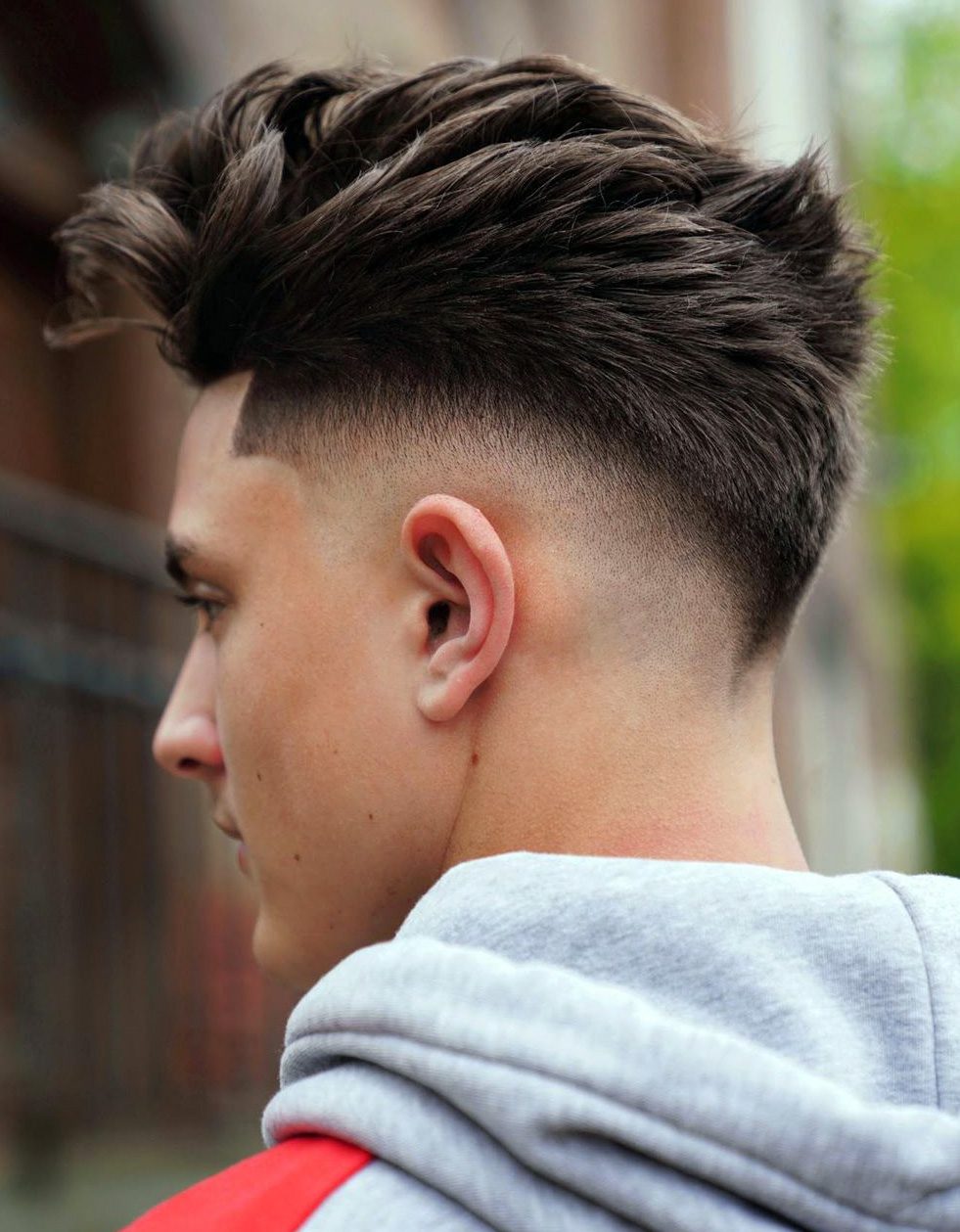
Pointy Drop Fade and Medium Crop
Drop fades can vary in the ways you choose to drop it (see what I did there?) and in this case the ‘pointy’ V shape goes in accordance with the type of styling done here.
See how there’s sort of a ducktail situation happening in the back? Getting those shapes right!
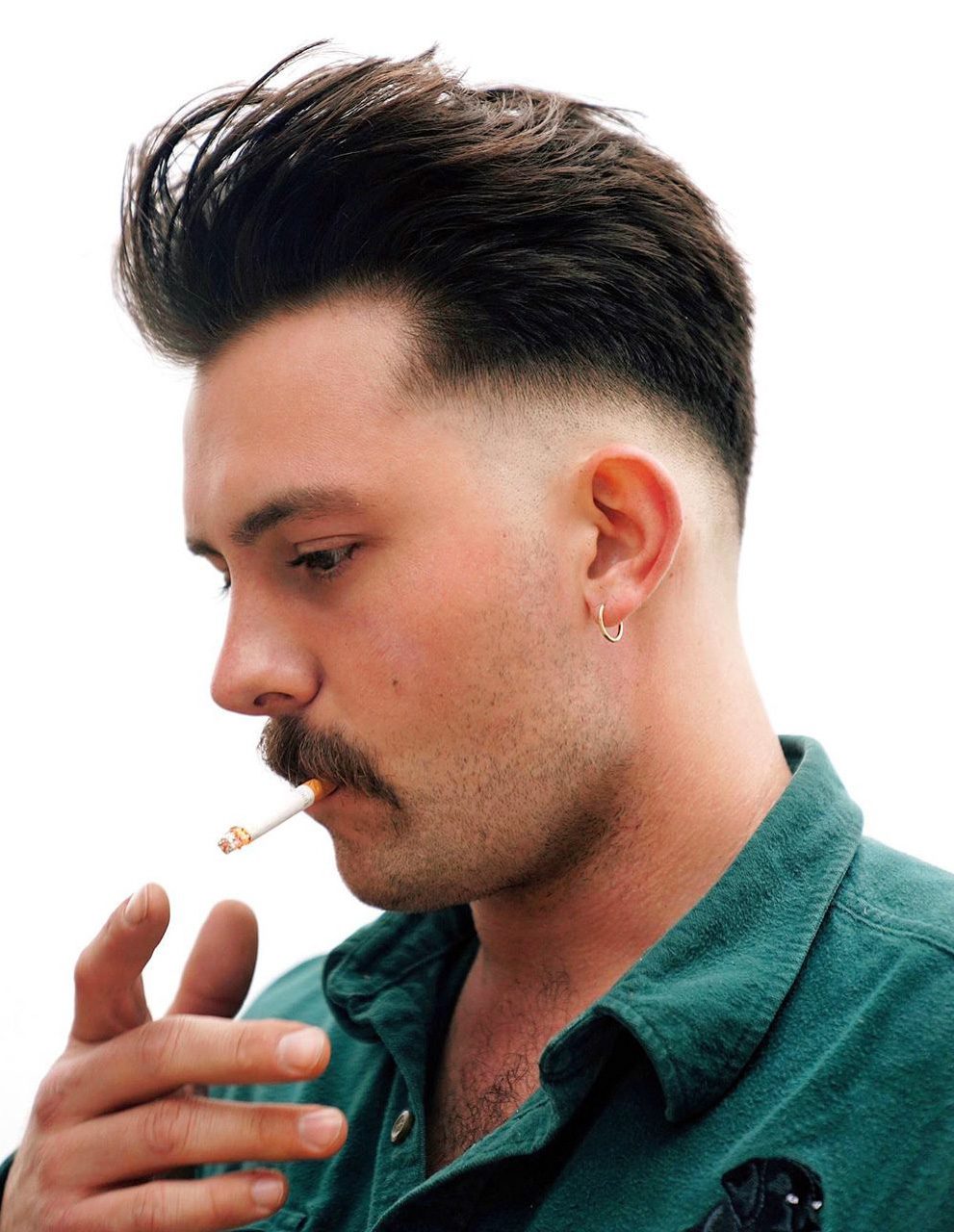
The last on the list of types of fades: Burst Fade and Blow-Back
The blow-back hairstyle can be as dramatic as you want it to be as long as you have the hair length and hairspray to support it!
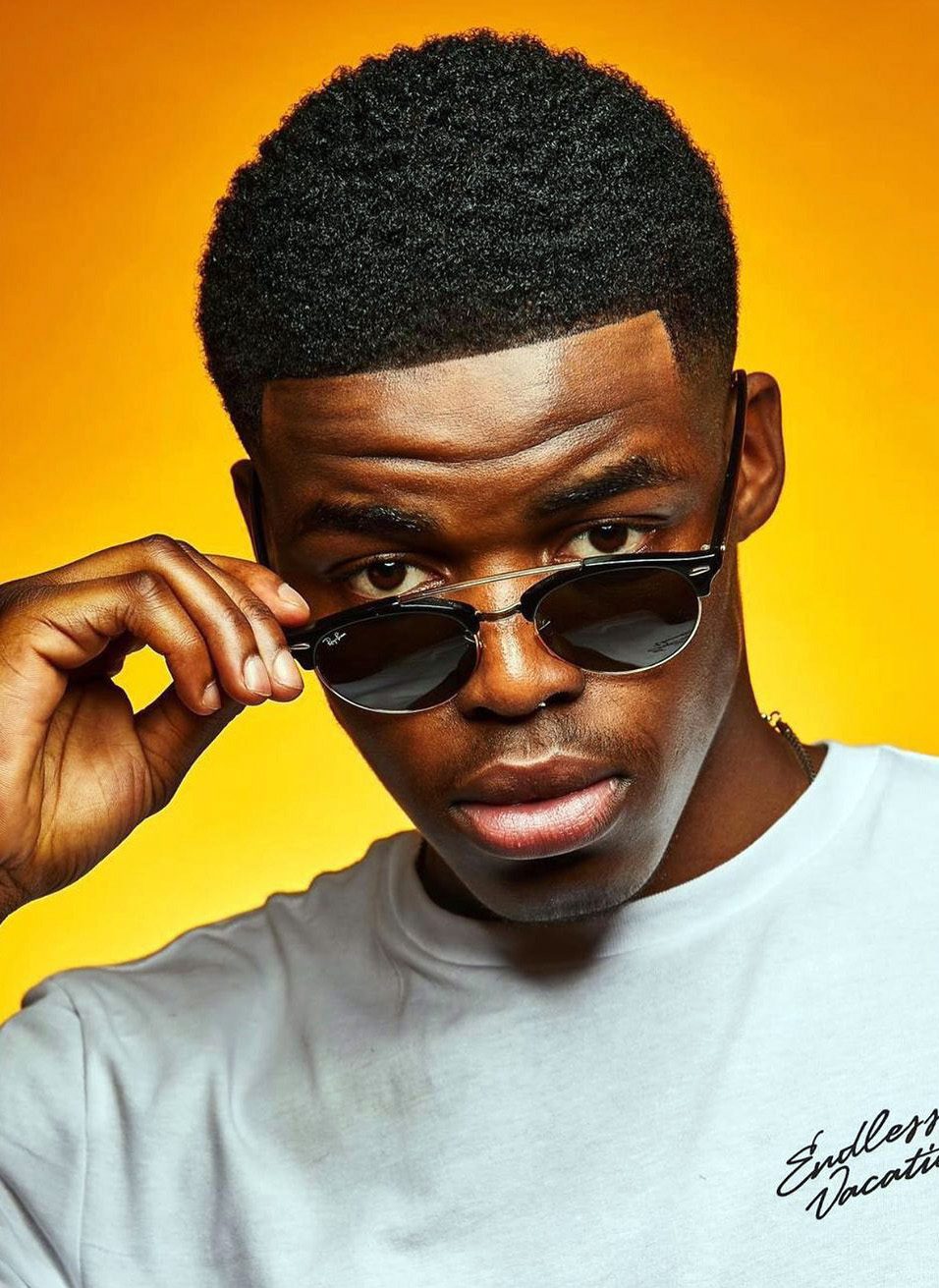
Types of fade cut - Lineup and Low Fade
If your hairstyle has got a lot going on, then the low fade might well be your weapon of choice. In a low fade, the sides will taper down more towards the bottom, drawing attention evenly across your entire look, and giving you that special aura from a distance.
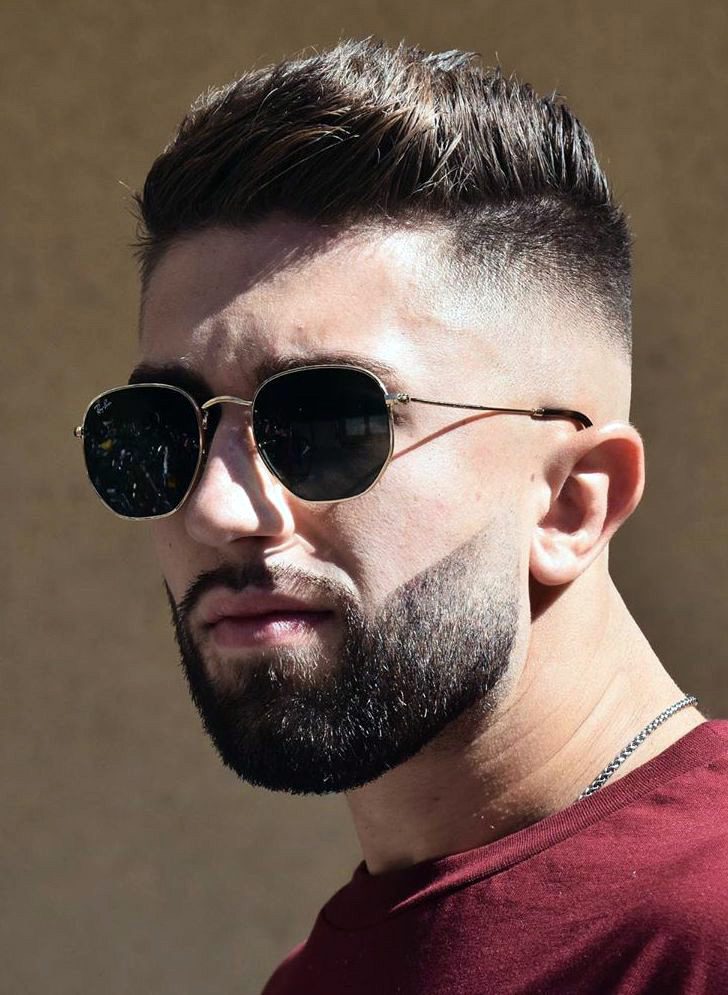
Sharp Mid Fade with Thick Top
The mid fade brings our focus as we observe more towards the top, emphasizing the hairstyle above the temples. As a result, you can create a modest contrast between the bottom and top of your look.
This look really lends itself well to accessories such as sunglasses, earrings, and in the age of Flashdance…. headbands!
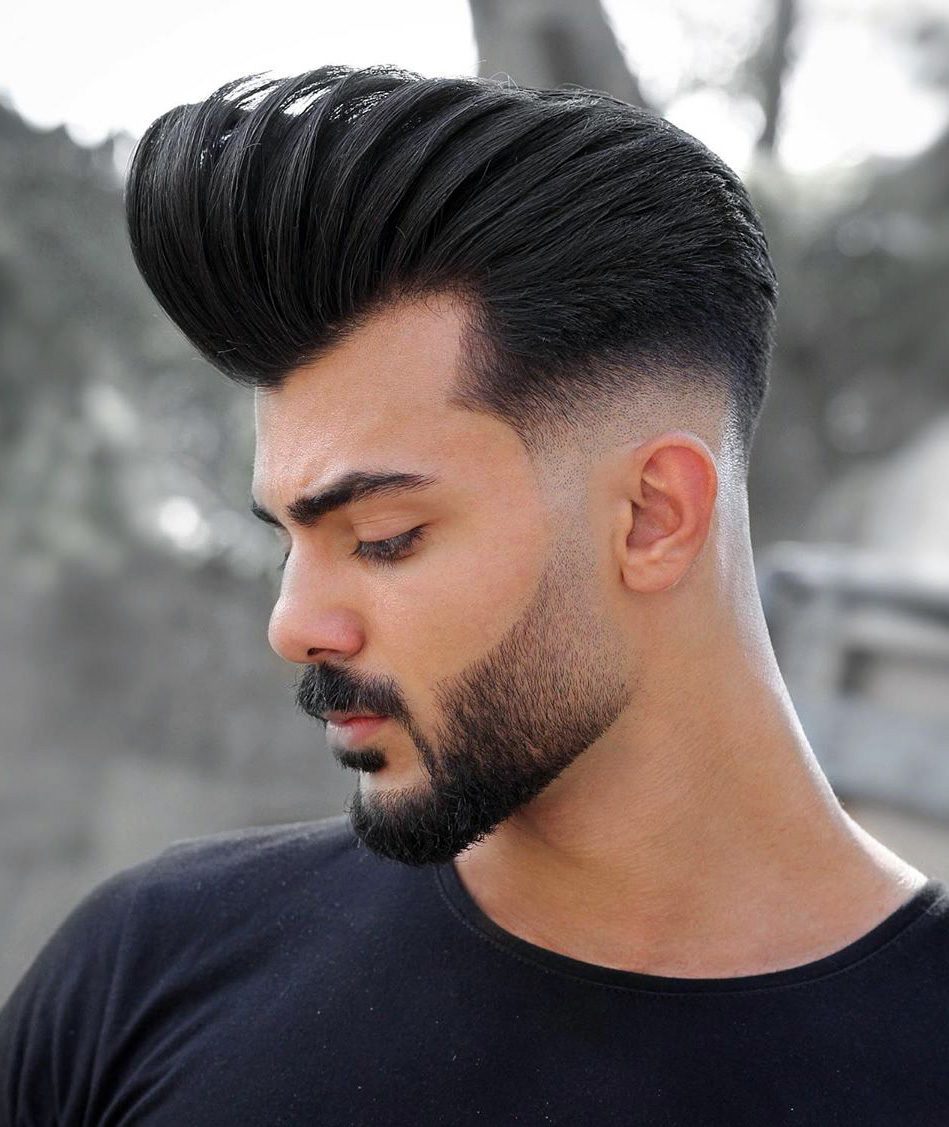
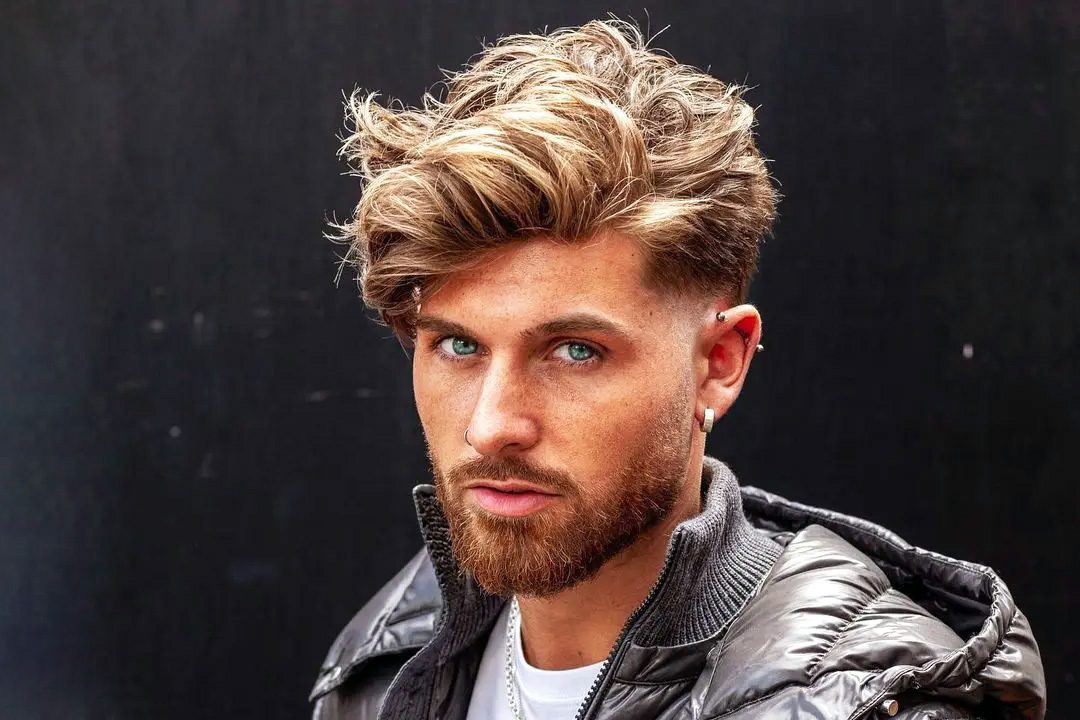
Designer Faded Beard and Pompadour
As we see with this look, fades are not only restricted to the top and can be applied to beards as well. Although more of a fringe design, sometimes being bold and trying new ideas styles can lead to a fantastic, truly original look.
Always be a trendsetter, and you see your ideas immortalized in the iconic look that defines a decade; The ultimate form of flattery is an imitation.
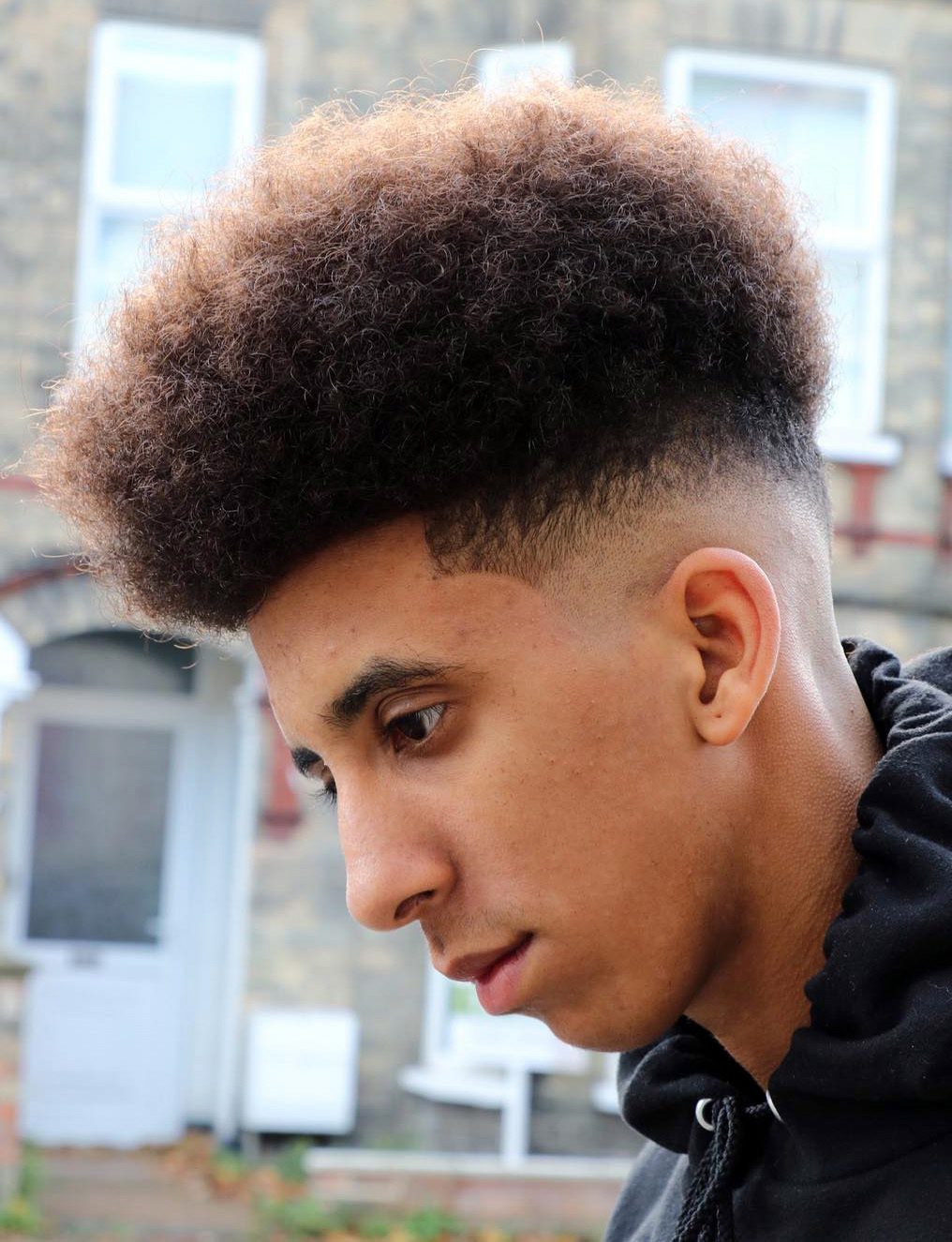
Type of fades - Loose Curls and Burst Fade
A burst fade is when the fade line follows the curve of your skull; it tapers around the ear line and down the back of your head. This is great for following the direction of a mohawk or fro-hawk, but generally, you can use it on any hairstyle you’d like as we can see in this fine example.
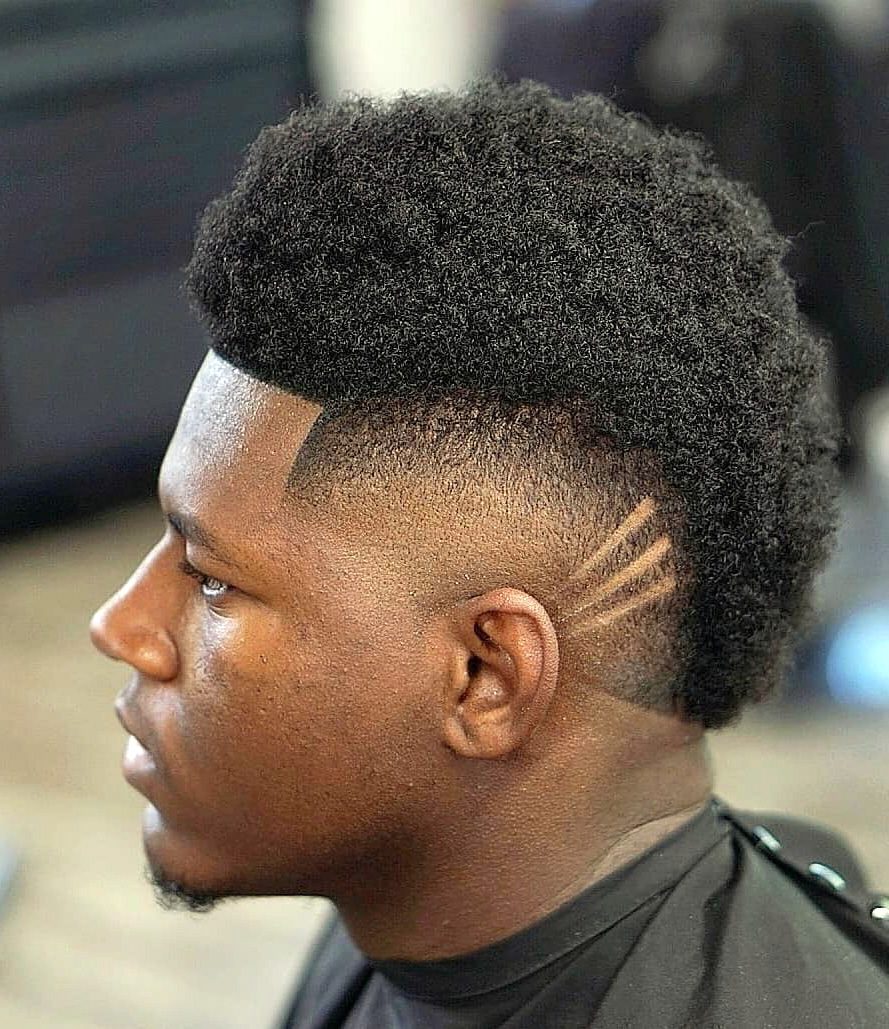
Line Up and Drop Fade 'Fro
Like was stated before, if you see more than a single, deliberate hardline then you know you are looking at someone who’s on a first-name basis with their stylist; A true hairstyle connoisseur.
Here we see a high temple fade with a line-up marking the end of the skin fade. A line-up is a way to get an even cleaner look, by creating an artificial line instead of allowing the hair’s natural lines to dictate the ends.
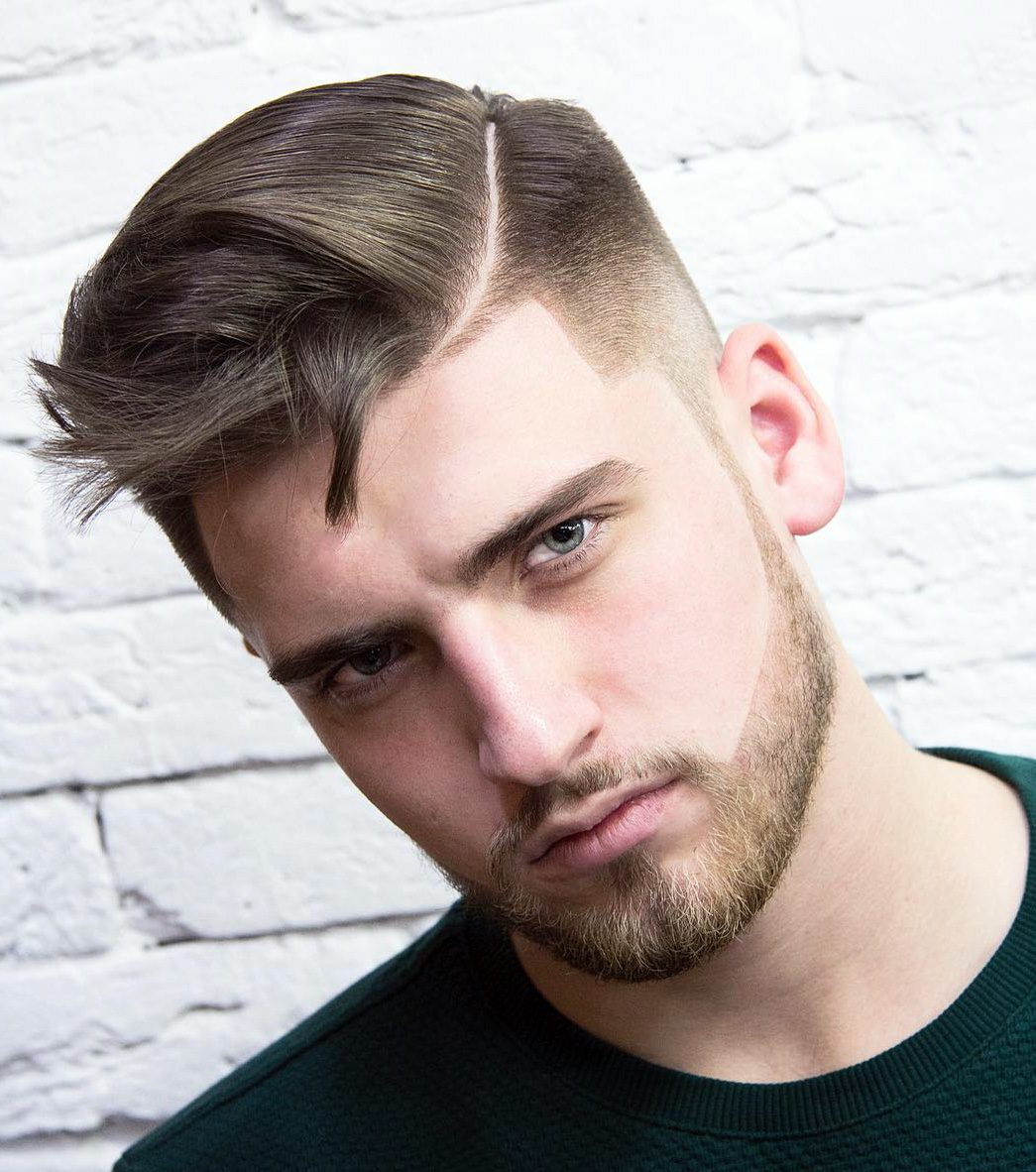
Messy Side-Comb and Taper Fade
The clean-cut, side-comb look was a style that ushered in a new era of corporate America(at least in the US.) Fan’s of the series Mad Men will recall Don Draper’s icon 50’s hairstyle.
Flash forward to today, and a not so clean-cut variation of this style adds a mixture of retro classic and nouveau avant-garde.
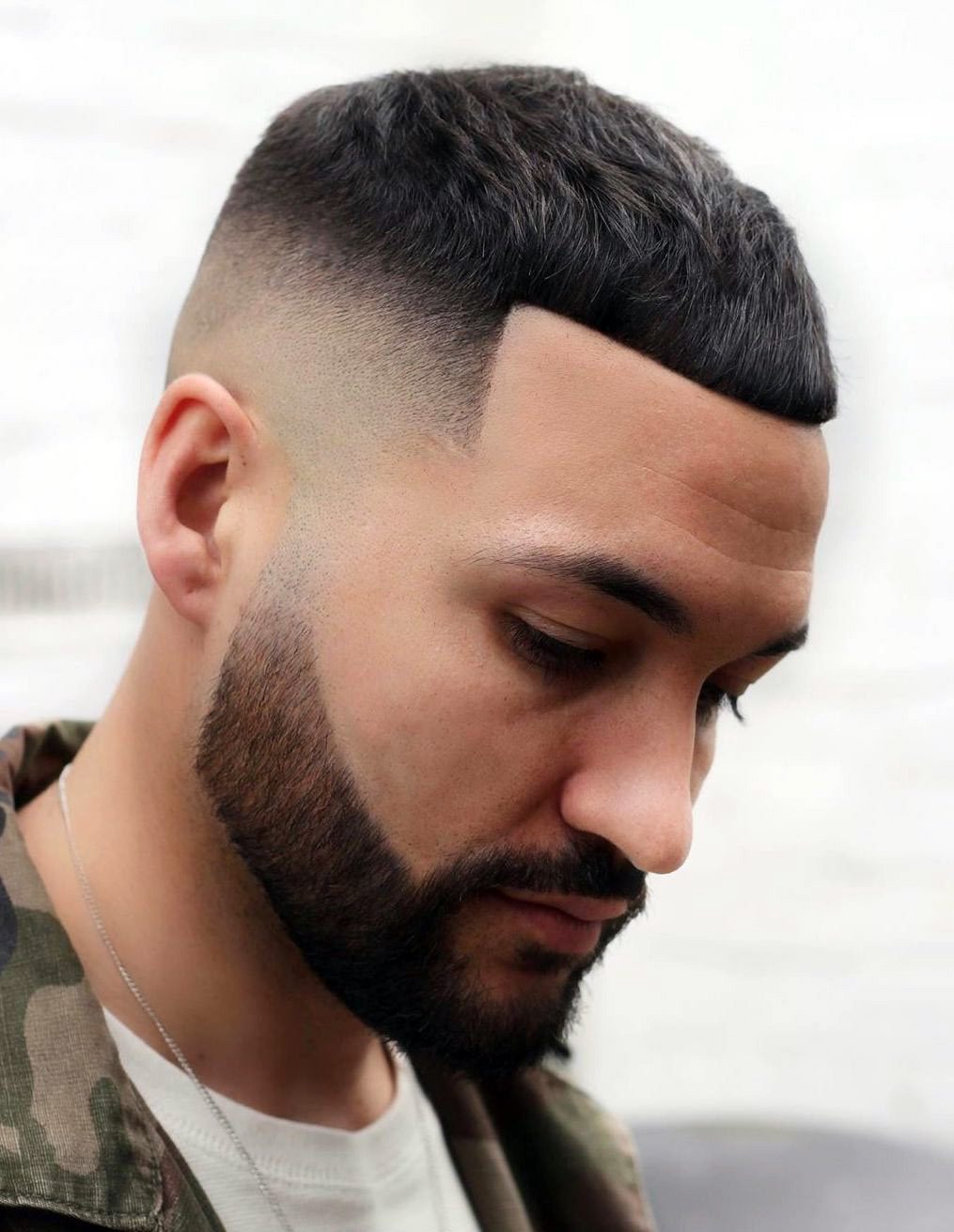
Neat Low Volume Top with Taper Fade
If you find that the very idea of being able to count all the hairs on your head is becoming more and more of an achievable feat, then you may want to consider a low volume top.
Flatter, less volumetric hair is a great look if you are experiencing hair loss as it makes hair loss a lot less noticeable. Add a taper fade for an even cleaner, more professional look.
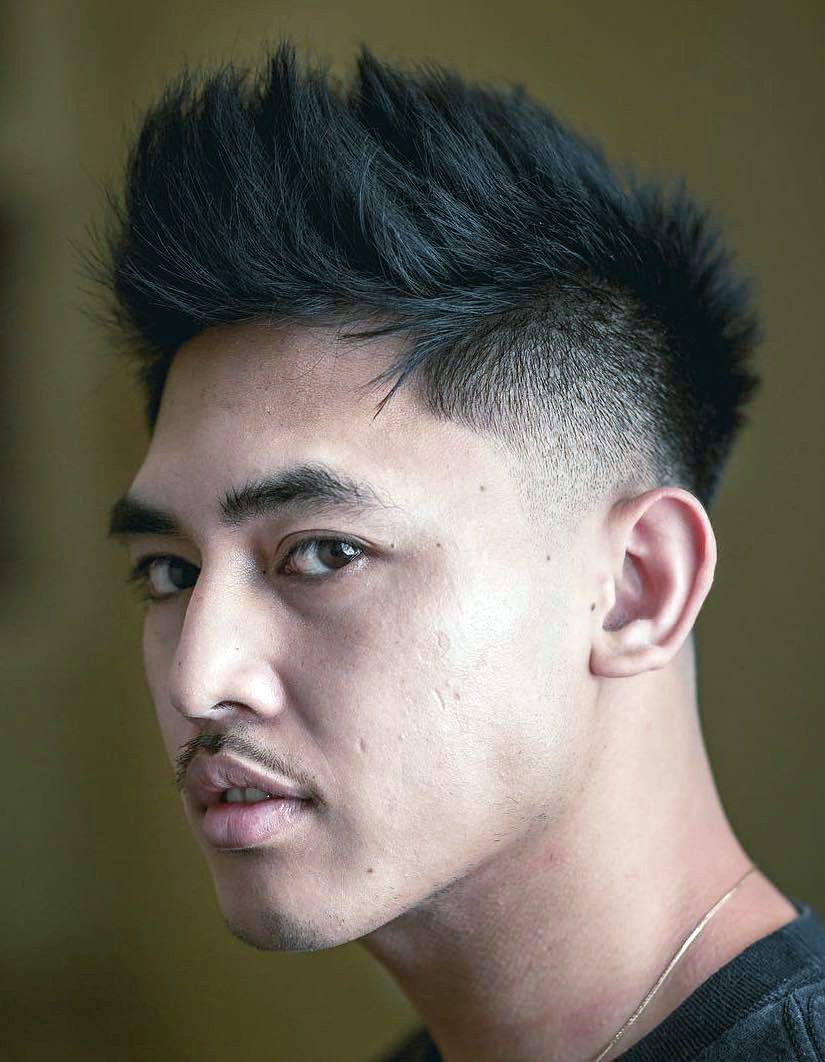
Thin Haired Brush Up with Faded Temple
The brush-up look is a look that many racers and bad boy types like to sport, even as far back as the 1950s with James Dean in rebel without a cause.
It takes work to maintain and generous amounts of hair gel for most, but if you can pull it off its a very stylish, masculine look. The mid-fade is the perfect way to balance the focus between the top and the sides.
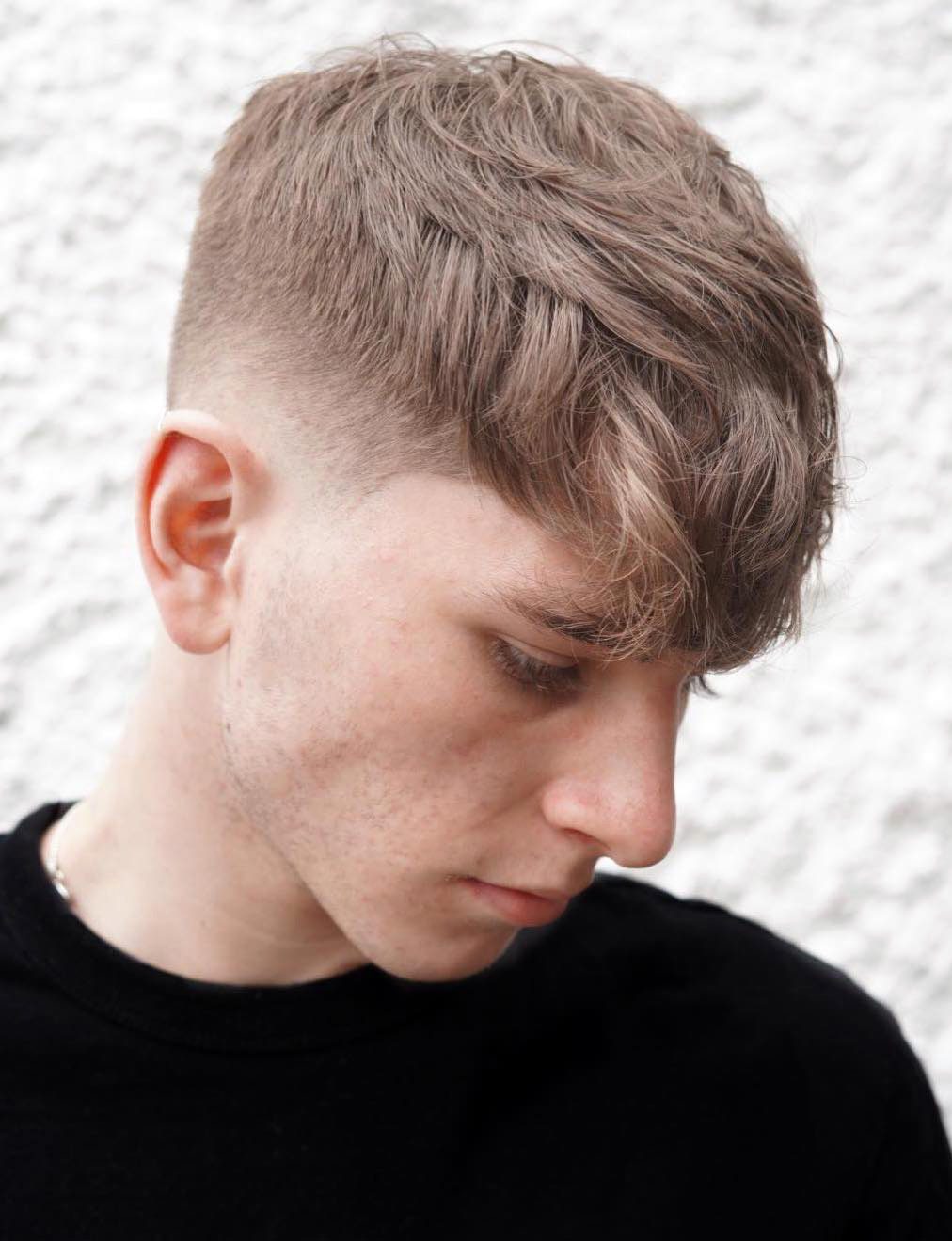
Long Stranded Top with Taper Fade
This one style has the “I woke up like this” feel to it yet the taper fade takes the crown. Exquisitely executed technique.
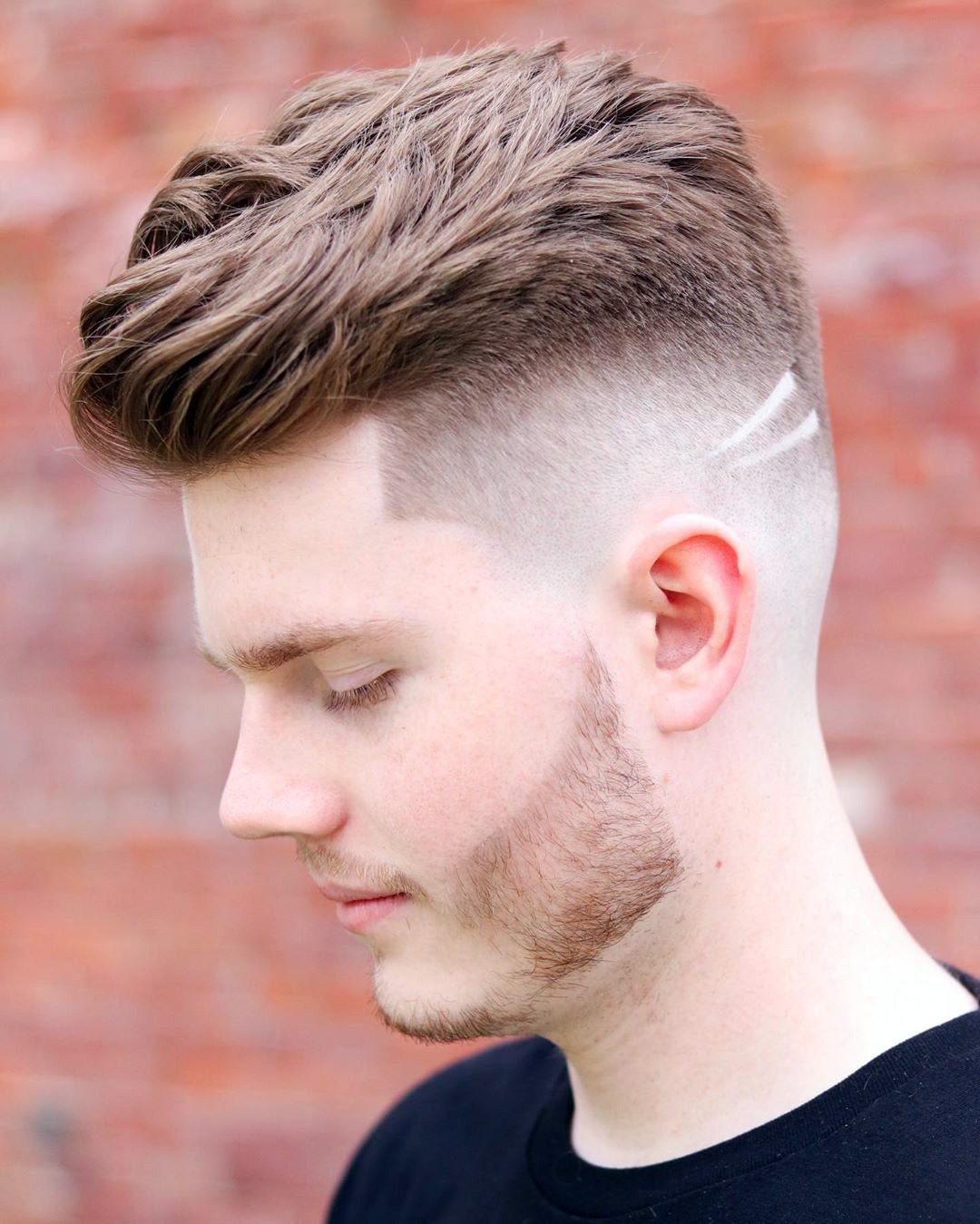
Elegant High Fade with Tapered Line Up
The composition here of the style stays pretty conservative in terms of the kind of fade it’s going for, but if you turn your head just a little, you’ll see the two sharply shaved strikes.
Shaving the beard in this manner also plays an important role in completing the look. Check out how its lines follow and complete the fade’s path.
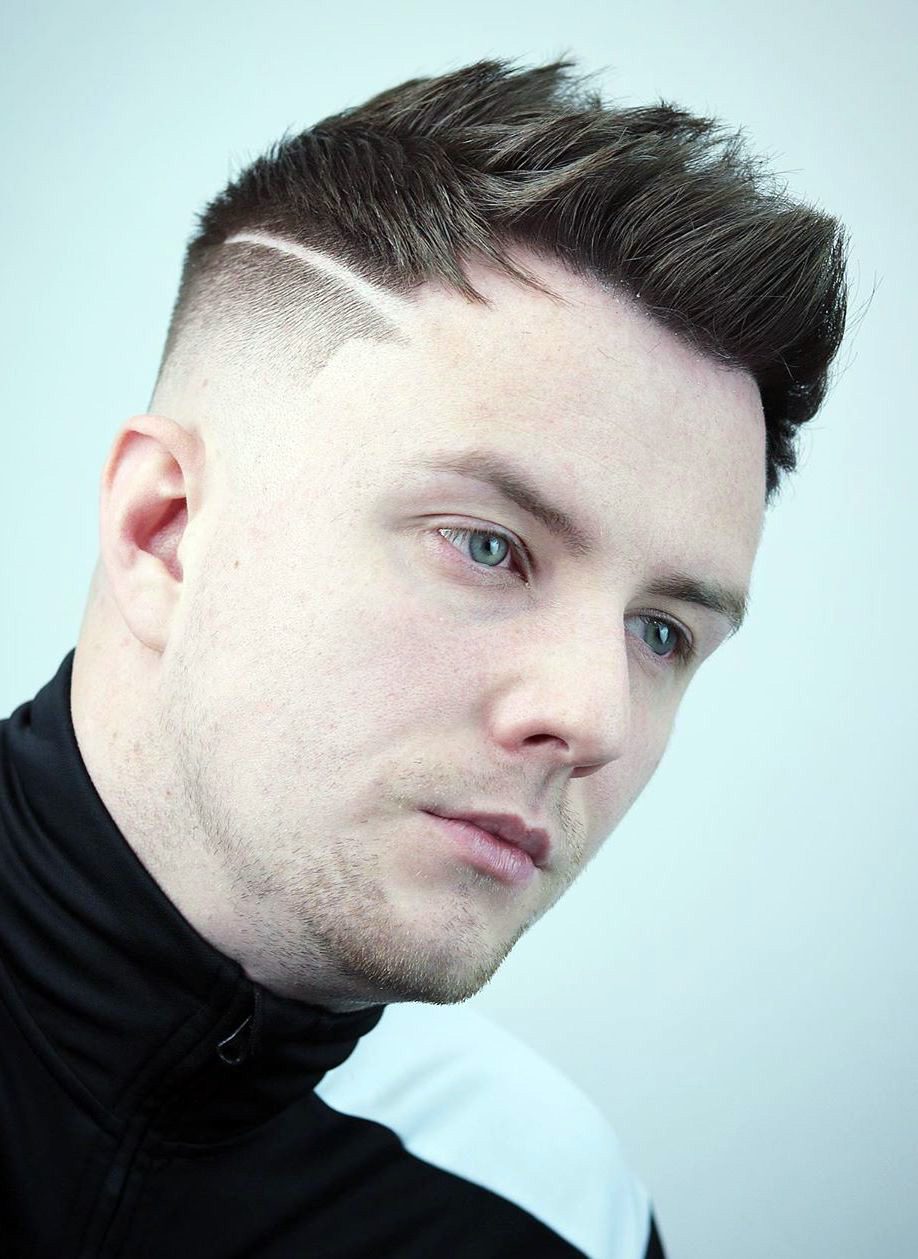
Crisp Undercut with Brush Up Top
Brush up and brush down! This is a pretty awesome way of styling an otherwise pretty standard hairstyles nowadays.
The shaved hardline adds another dimension to it by separating this amazing medium skin fade.
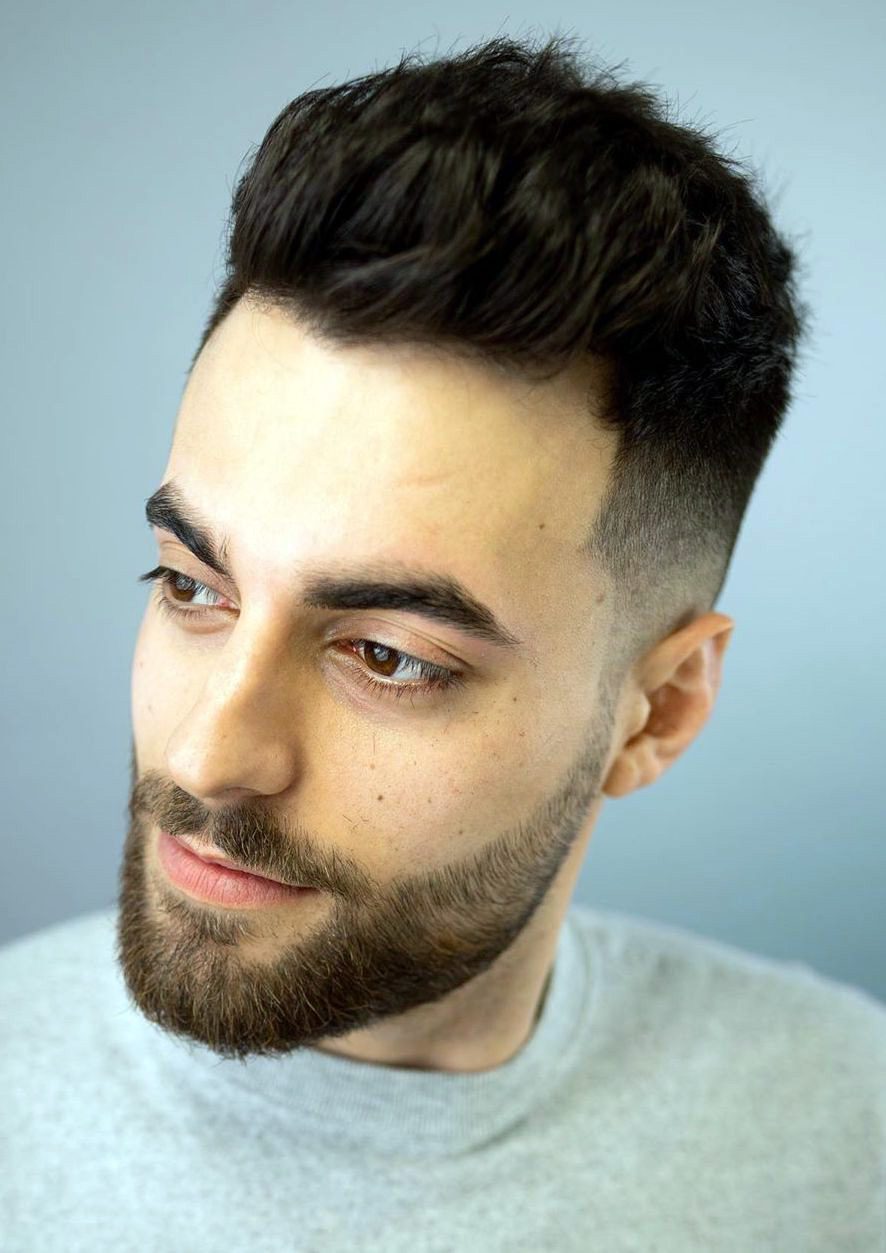
Casual Taper with Brush Up Top
The taper is like the fade’s more conservative cousin for the most part. A lot of people like to connect the hairline with the beard by fading it in together.
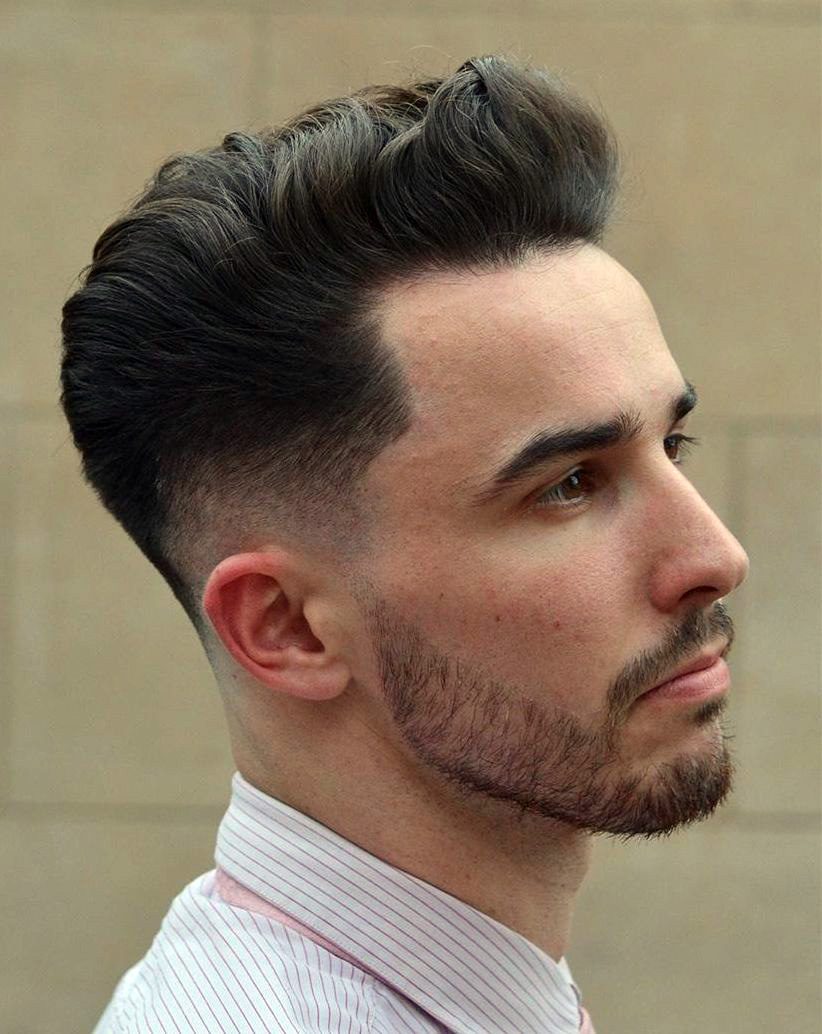
Wavy Pompadour with Drop Mid Fade
A pompadour, especially cut this length can become the perfect pairing for almost anything! The way this close cut drop fade goes around is perfect.
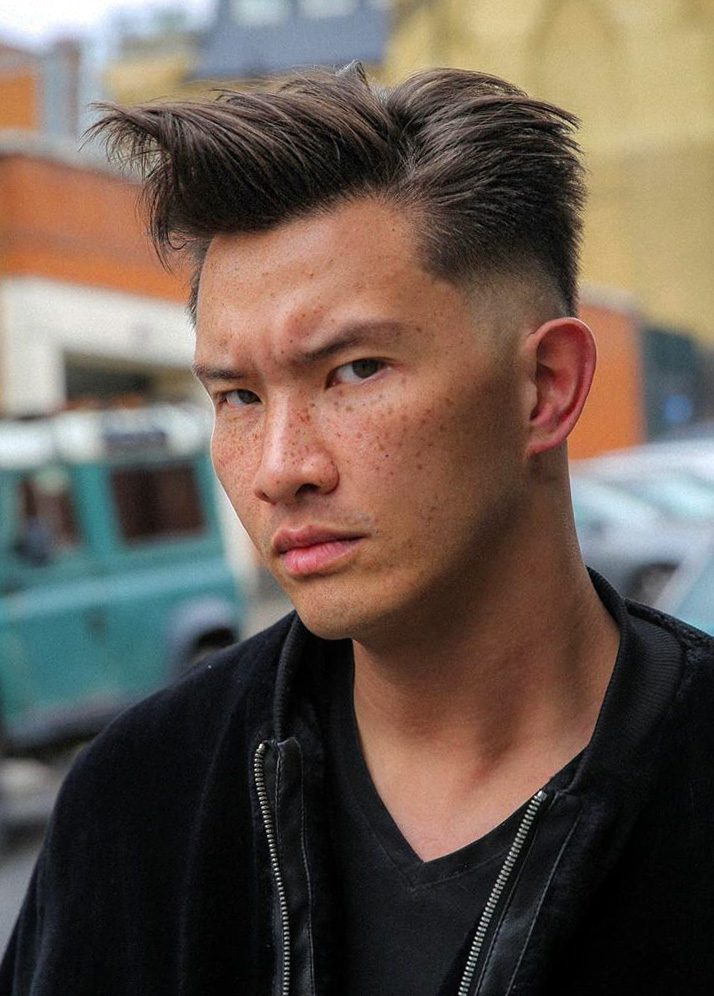
Medium Fade and Tapered Top Crop
With thinner hair like this, a taper can absolutely get some movement action in there. Medium hair always makes a bigger eye impression when it’s working with a shorter skin-fade.
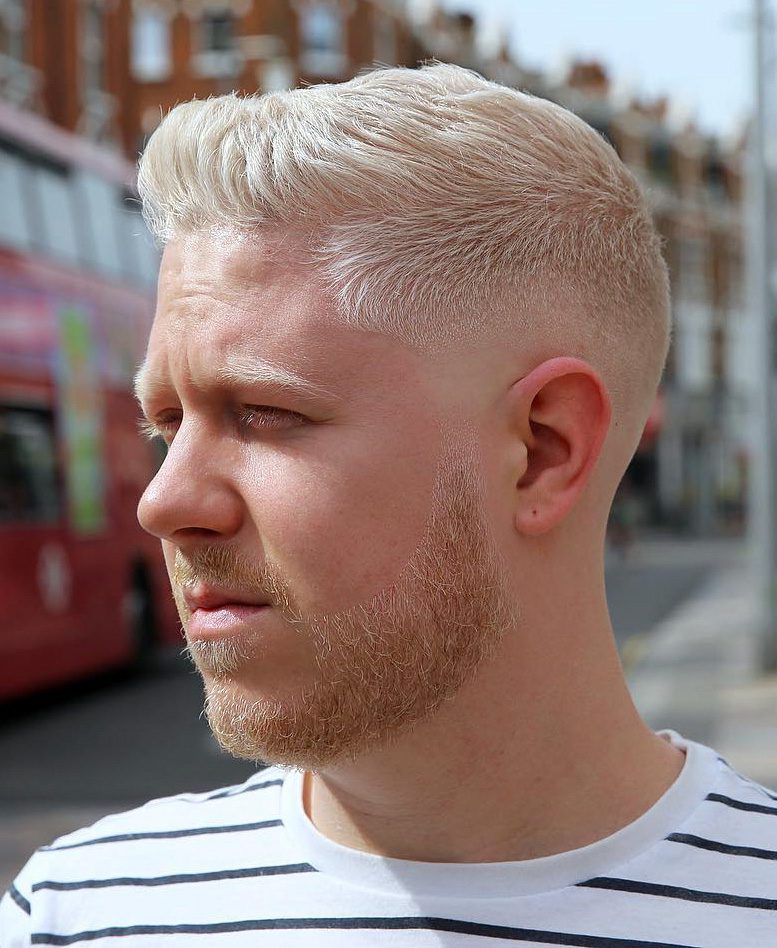
Temple Fade and Front Brush Up
The front brush up manages to look like a super cool wave at the top. The great part about it is you can decide who big the wave becomes by how long you wanna leave it to grow. The fade’s ability to match anything will help a lot.
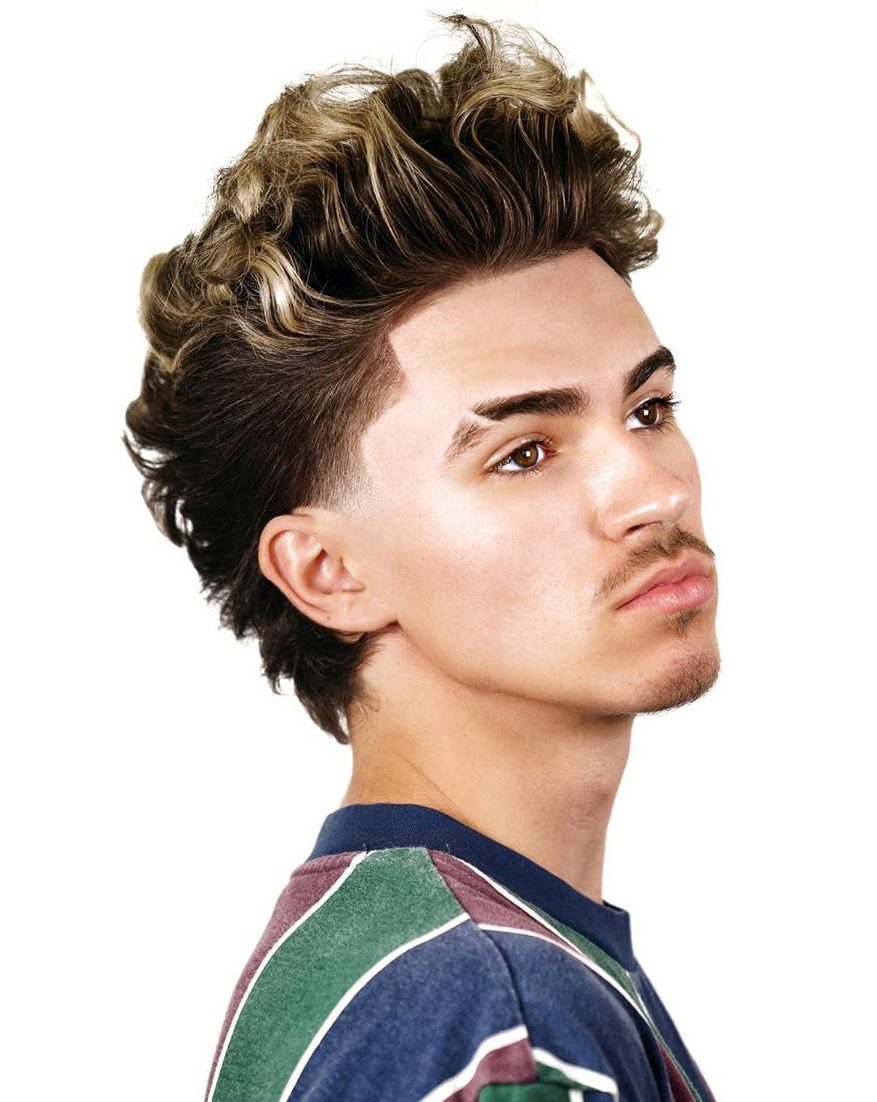
Balayage and Temple Fade
The balayage technique is great if you’ve got longer hair, just because the stylist has more room to work with. That’s why it’s such a great idea to follow with a shorter kind of fade like the temple fade.
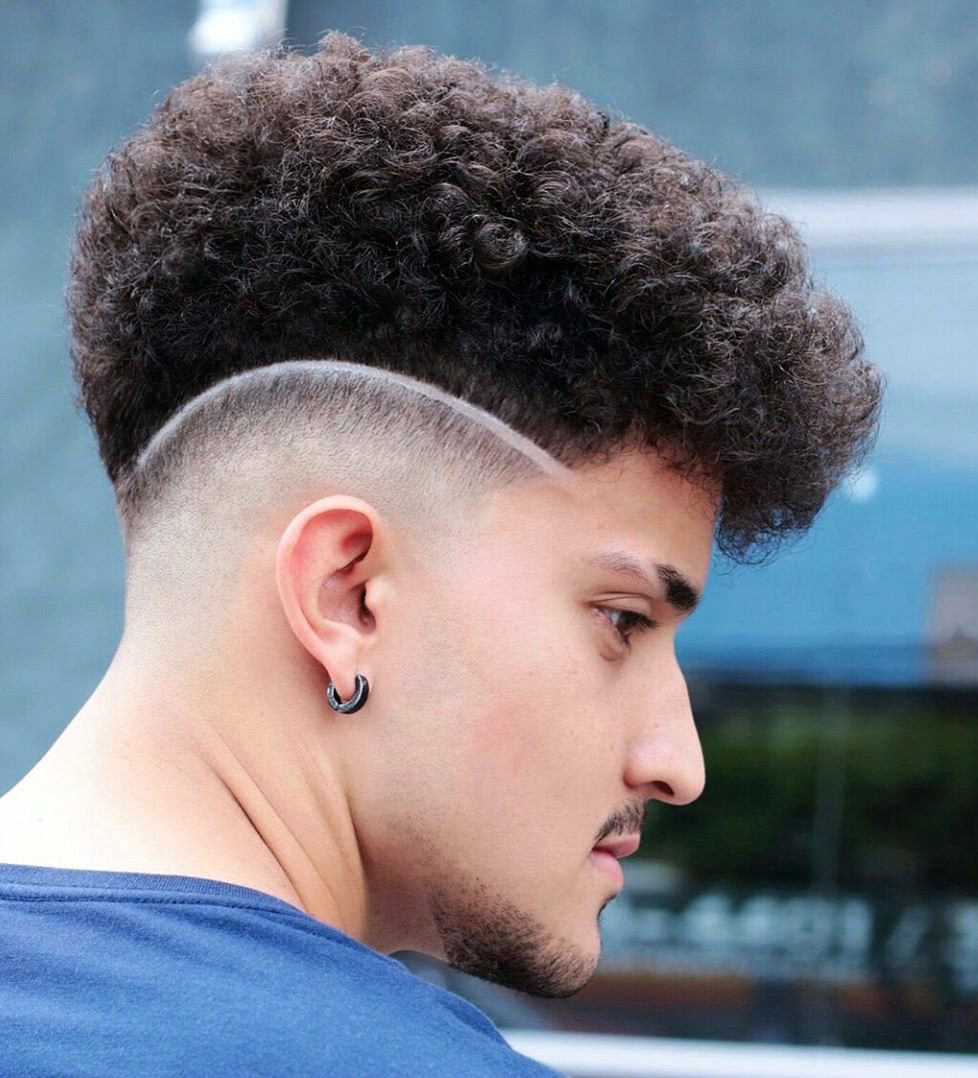
Burst Fade and Curly Top
A shaved line design here is the finishing touch for this very disconnected undercut. If you have tight curly hair, the best thing you can do go get a similar texture is to comb your curls!
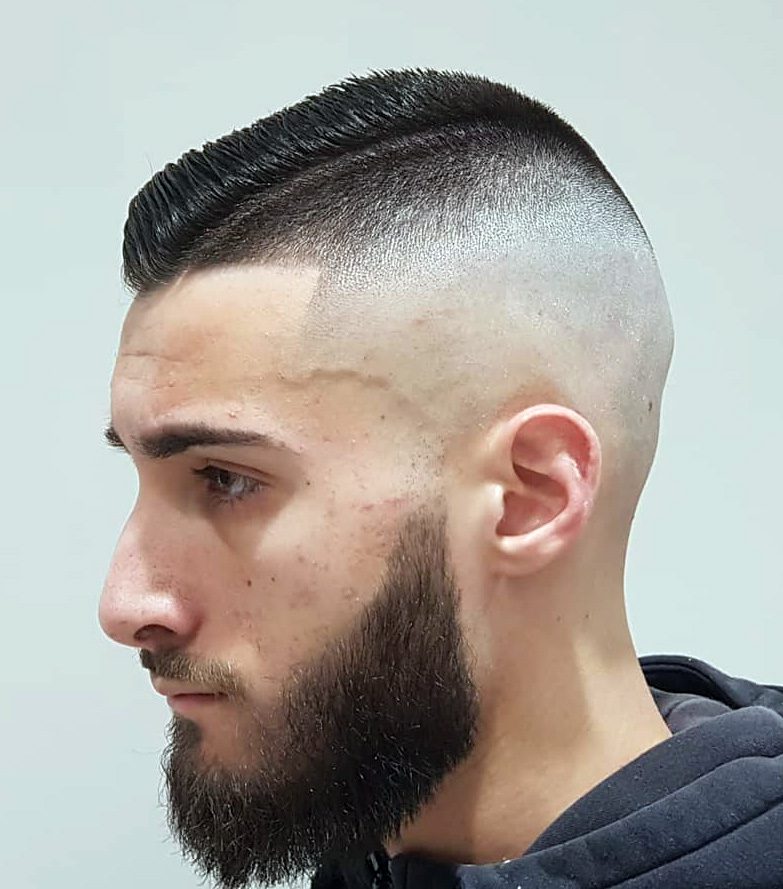
High Fade and Disconnected Part
Keeping things pretty fresh and hustle free might be just the right way to go for you! Check out this high fade and the way it just sits right with this kind of part styling!
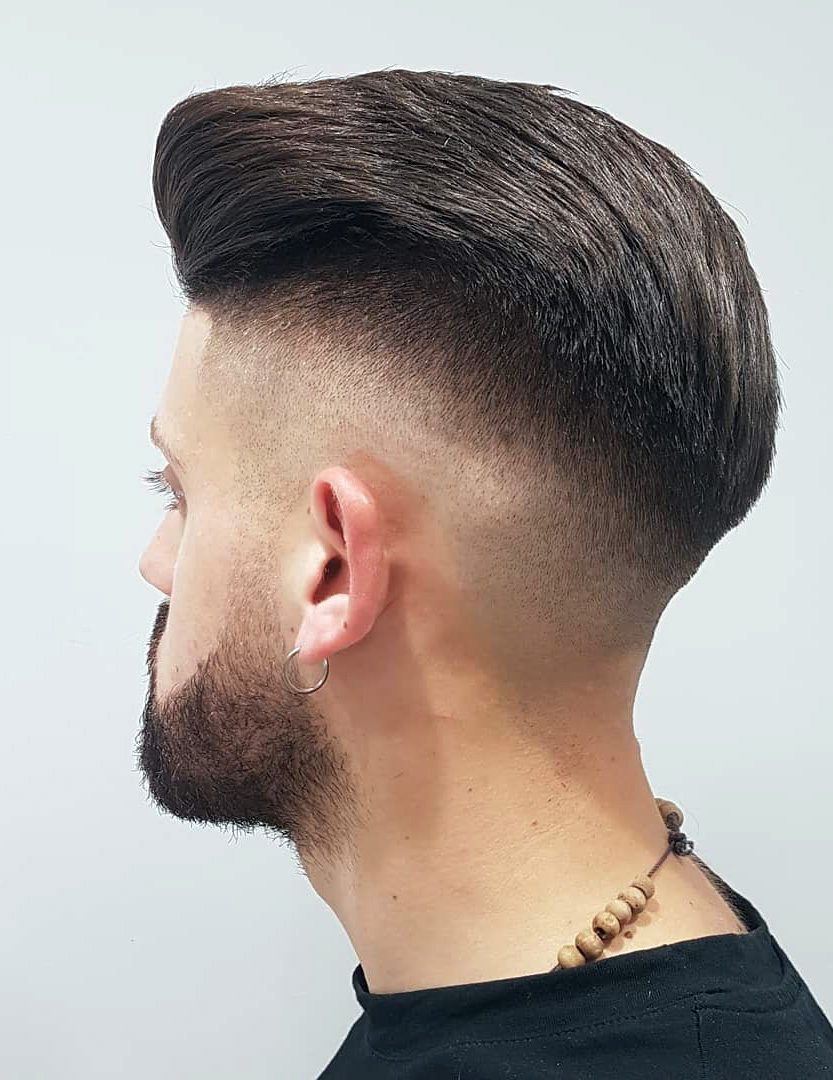
High Fade and High Volume Brush Back
This is a pretty neat high fade! With a fade you’ll want consistency and this hairstyle is all about it.
What Is a Fade Haircut?
A fade haircut is a haircut where the hair gradually becomes shorter from the top of the head toward the neckline. Instead of a sharp line between lengths, the transition is blended smoothly using clippers and barbering techniques.
The word “fade” comes from the way the hair appears to disappear—or fade—into the skin.
Most fades combine three different clipper lengths:
- Longer hair near the top
- Medium length through the middle
- Very short or skin-level hair around the ears and neckline
The quality of a fade depends on how smooth the transition appears. A skilled barber creates an almost invisible blend between each section.
Best Fade by Hair Type
Best Fade by Hair Type
Straight Hair
Recommended:
- Low Fade
- Mid Fade
- Skin Fade
- Taper Fade
Thick Hair
Recommended:
- High Fade
- Skin Fade
- Burst Fade
- Razor Fade
These styles remove excess bulk and make thick hair easier to style.
Thin Hair
Recommended:
- Low Fade
- Shadow Fade
- Taper Fade
Avoid extremely high skin fades, as they can make thinning hair appear more noticeable.
Wavy Hair
Recommended:
- Mid Fade
- Drop Fade
- Burst Fade
These fades enhance natural texture while keeping the sides clean.
Curly Hair
Recommended:
- Burst Fade
- Temple Fade
- Drop Fade
- Skin Fade
Curly hair pairs exceptionally well with fades because the contrast highlights curl definition.
Afro-Textured Hair
Recommended:
- Temple Fade
- Burst Fade
- Box Fade
- South of France Fade
These styles preserve natural texture while creating clean, defined edges.
How to Ask Your Barber for the Perfect Fade
Walking into a barbershop and asking for “a fade” usually isn’t enough. There are dozens of fade variations, and being specific helps your barber understand exactly what you want.
Before your appointment, decide on four things:
1. Choose the Fade Height
Tell your barber whether you want a:
- Low fade
- Mid fade
- High fade
- Temple fade
- Burst fade
- Drop fade
The height of the fade has the biggest impact on the final look.
2. Decide How Short You Want the Bottom
Options include:
- Skin fade
- Bald fade
- Zero fade
- #0.5 fade
- #1 fade
- #2 fade
If you don’t like seeing your scalp, ask your barber to leave a little length instead of taking it down to the skin.
3. Explain Your Hairstyle on Top
The fade is only one part of the haircut.
Tell your barber if you want:
- Textured crop
- Crew cut
- Buzz cut
- Quiff
- Pompadour
- Slick back
- Side part
- Faux hawk
- Curly top
- Fringe
Showing a reference photo is often the easiest way to communicate your expectations.
4. Mention Beard Blending
If you have facial hair, ask whether you’d like the fade blended into your beard. A seamless transition between the sideburns and beard creates a polished, cohesive look.
How to Maintain a Fade Haircut
A great fade starts in the barber’s chair, but proper maintenance keeps it looking its best.
Wash Your Hair Regularly
Clean hair is easier to style and prevents product buildup. Choose a shampoo and conditioner suited to your hair type rather than washing with harsh cleansers every day.
Use Quality Styling Products
The right product depends on your hairstyle.
- Matte clay for textured crops
- Pomade for slick backs
- Paste for natural styles
- Sea salt spray for volume
- Curl cream for curly hair
- Styling cream for medium-length hair
Avoid using more product than necessary, as excess product can weigh hair down and make it harder to achieve the desired finish.
Protect Your Hair
Heat styling, excessive sun exposure, and harsh chemical treatments can damage hair over time. If you regularly use a blow dryer, consider applying a heat protectant beforehand.
Brush or Comb Daily
Even short hairstyles benefit from regular brushing. It distributes natural oils, helps train the hair into place, and keeps your style looking neat.
Common Fade Haircut Mistakes
Avoid these common mistakes when choosing a fade.
Choosing the Wrong Fade Height
A high fade can look dramatic, but it doesn’t suit everyone. Consider your face shape, hair density, and personal style before deciding.
Ignoring Hair Growth Patterns
Cowlicks, strong crowns, and uneven growth can affect how a fade looks. An experienced barber can adjust the fade to work with your natural growth pattern.
Waiting Too Long Between Haircuts
Fades lose their crisp appearance as the hair grows. Scheduling regular appointments keeps the haircut looking clean.
Copying Every Trend
Some fade styles are highly fashionable but may not complement every face shape or hair type. Choose a haircut that works for you rather than simply following trends.
Final Thoughts
A fade haircut remains one of the most versatile and enduring men’s hairstyles. Whether you prefer the subtle refinement of a low fade, the balanced look of a mid fade, or the bold contrast of a skin fade, there’s an option to suit every hair type, face shape, and lifestyle.
Choosing the right fade starts with understanding how each style differs. Consider your maintenance routine, professional environment, and styling preferences before making a decision. If you’re unsure, a low or mid fade is an excellent starting point that can be adapted as you discover what works best for you.
Most importantly, communicate clearly with your barber. Bringing reference photos, discussing your desired fade height, and explaining how you style your hair each day will help ensure you leave the chair with a haircut you’ll enjoy wearing.