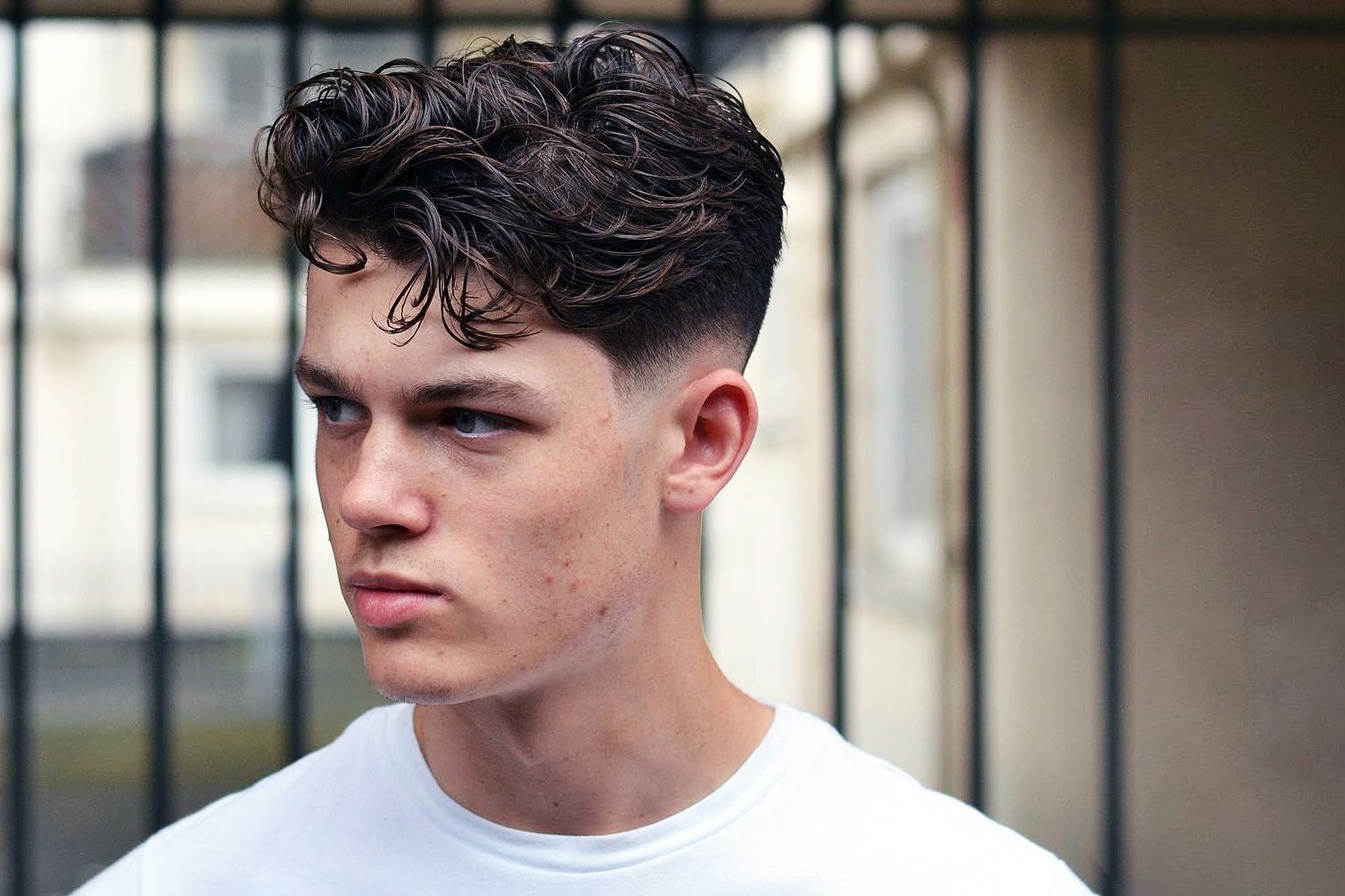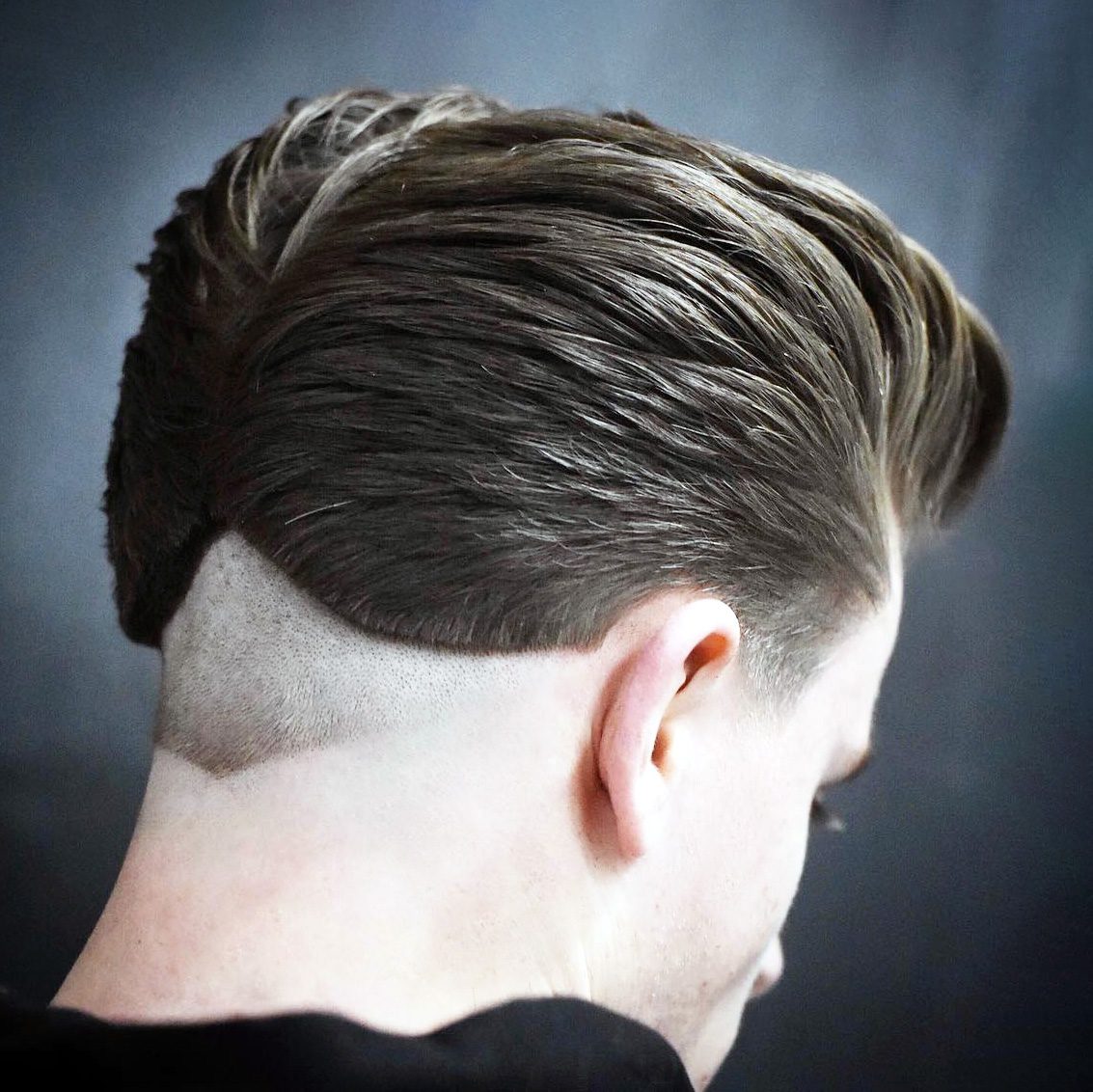
19 Best Ducktail Haircuts for Men: Classic & Modern Styles
Who doesn't love old school cool?
The ducktail haircut is a classic men’s hairstyle defined by hair that is combed or styled backward from both sides to meet at a distinctive line down the center of the back. Also known as a duck’s tail or DA, the style became closely associated with 1950s men’s fashion, rockabilly, greaser culture, and retro grooming.
Today, the ducktail has evolved far beyond its original slicked-back form. You can wear a classic high-shine ducktail with a pompadour, a shorter ducktail with a taper, a textured modern version, or even combine the signature shape with a fade or undercut.
We’ve collected the best ducktail haircuts for men to give you inspiration for your next cut. You’ll also find tips on choosing the right variation, growing the necessary length, styling the signature shape, and giving this vintage haircut a modern finish.
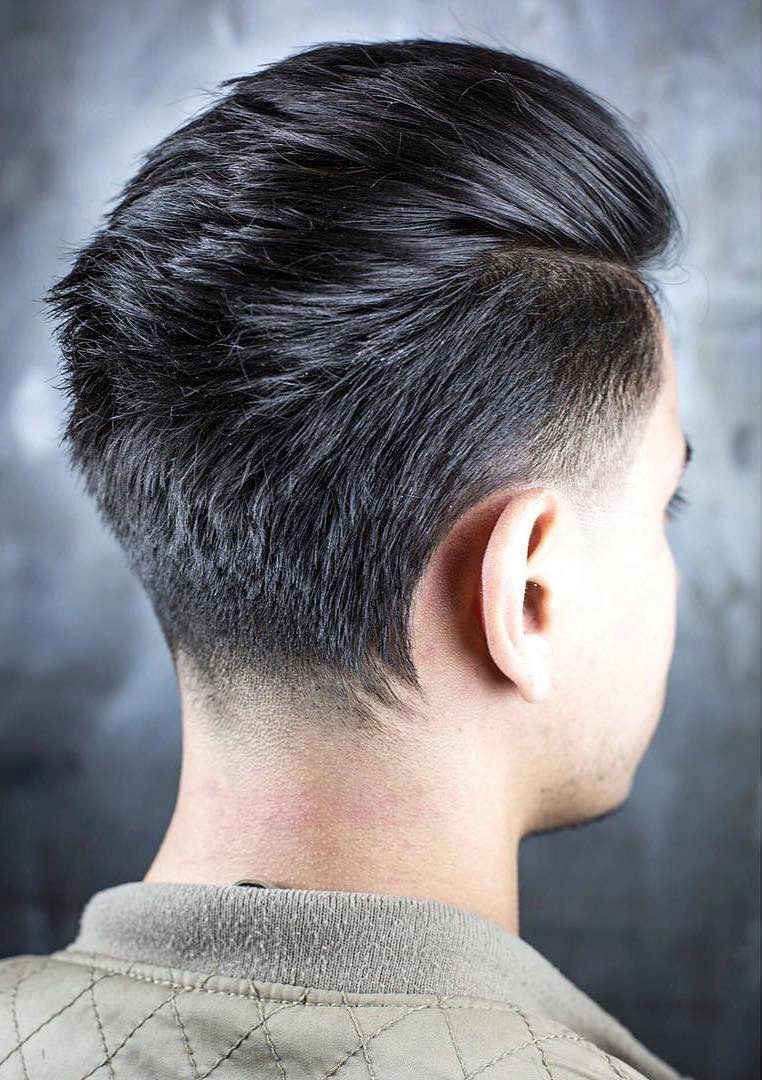
Formal Duck Tail with Undercut
The ducktail works great in formal situations, and you can save yourself a lot of hassle by keeping the back nice and short. Remember to apply the same ducktail principles to the top, to really keep the soul of the style present.
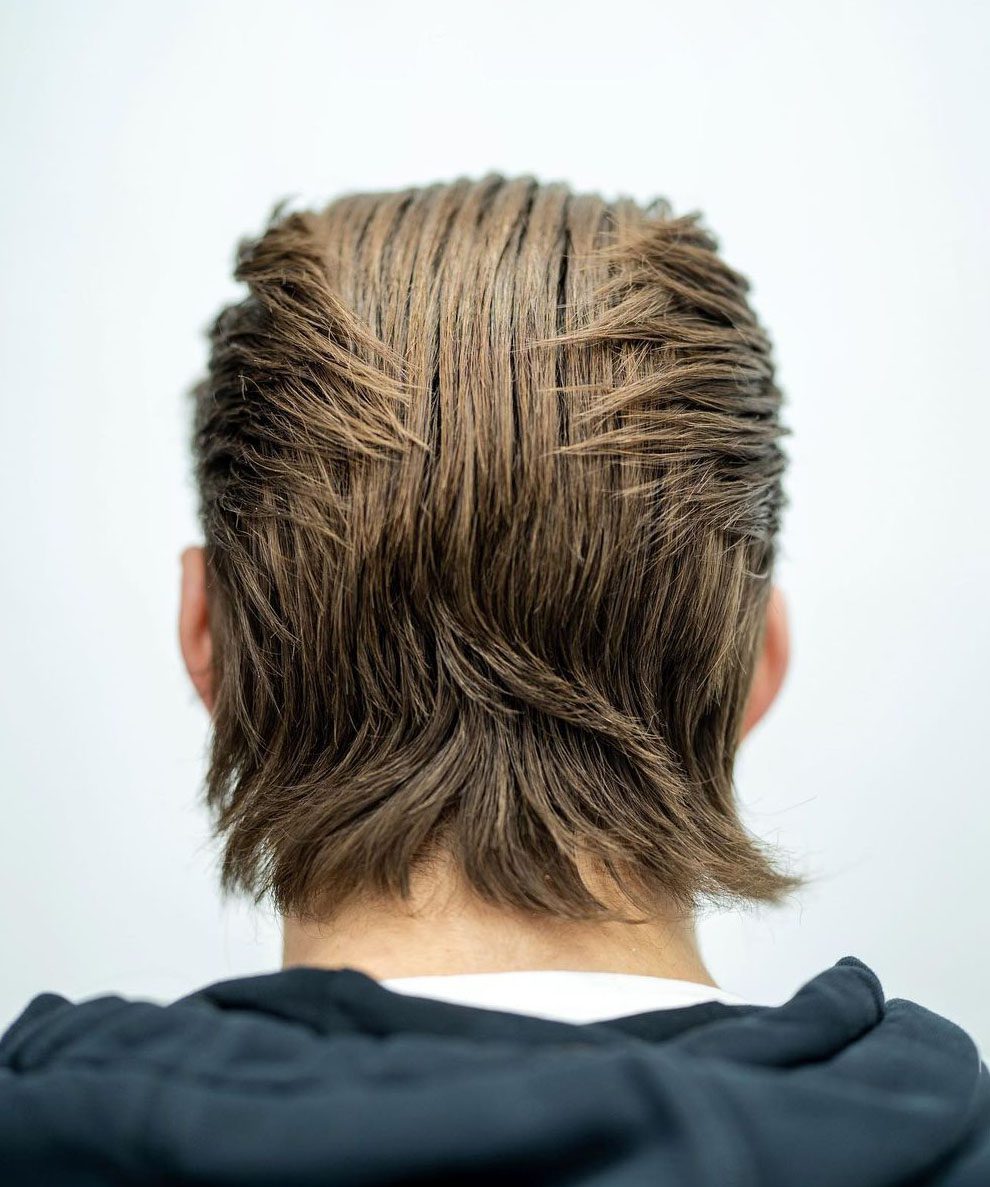
Retro Ducktail
This retro version of a ducktail hair cut is achieved by doing a classic scissor cut. This look was created by using products like pomade or gel to comb back the hair and form it into a ducktail shape. In this cut, the front of the hair is all swooped away from the face.
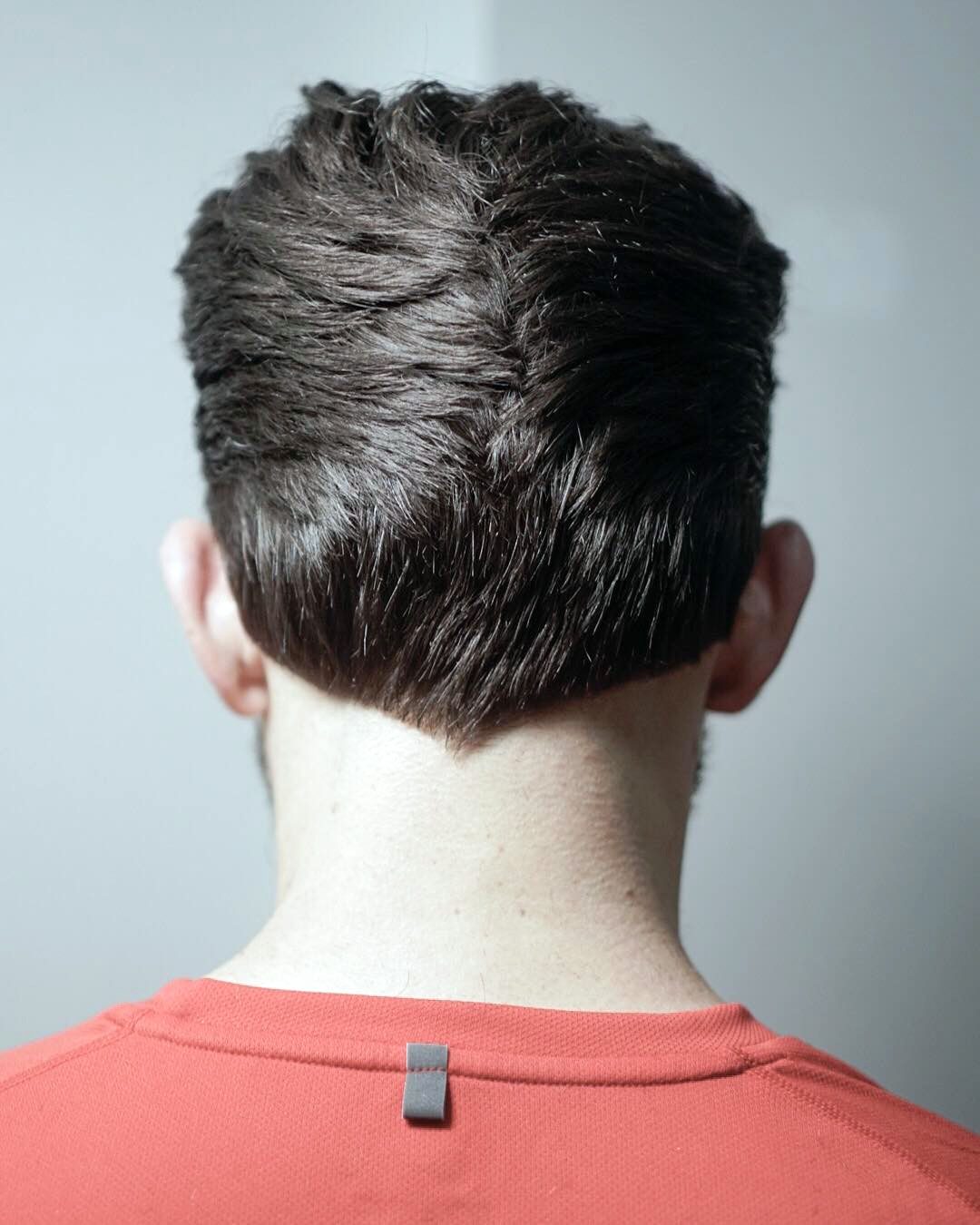
Ducktail with V-Shaped Neckline
Devil is in the details! That is the saying that best describes this hairstyle: the perfect haircut does not have to look neat and attractive only from the front side. But so many guys forget that the neckline plays a huge role in the entire look. So to make sure you rock any of your outfits with the perfect cut – pay attention to the back of your haircut and trim it as often as needed. The v-shape would be the easiest neckline to keep neat without going to the barbershop every week or so.
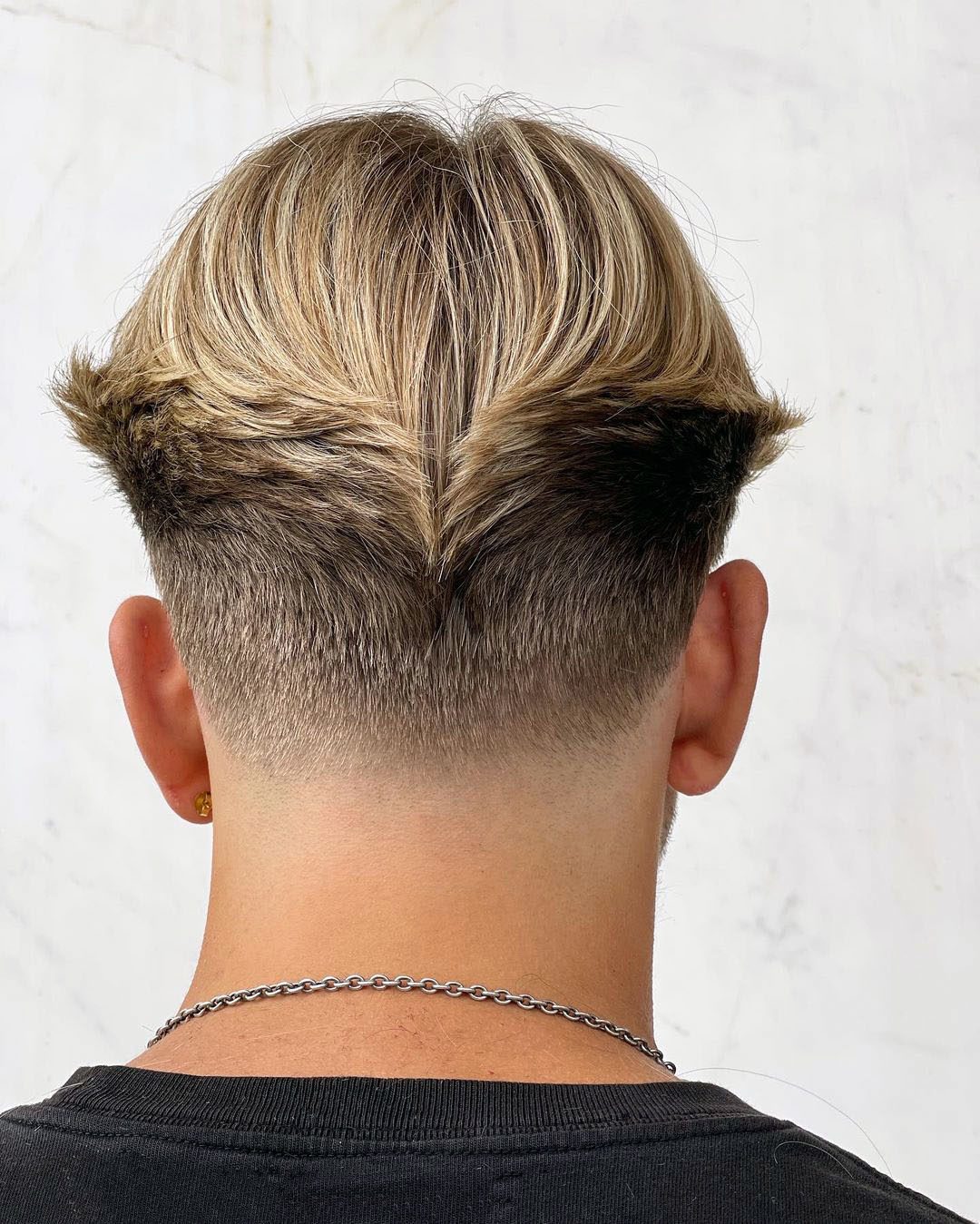
Blonde Ducktail
This 50’s haircut deserves a modern interpretation. Hence, color your hair in a blonde ombre, which accentuates the different layers when viewed from the back. The lighter color should be on the top and becomes darker going down. Wear a simple chain necklace and one earring to keep the focus on the art at the back of the head.
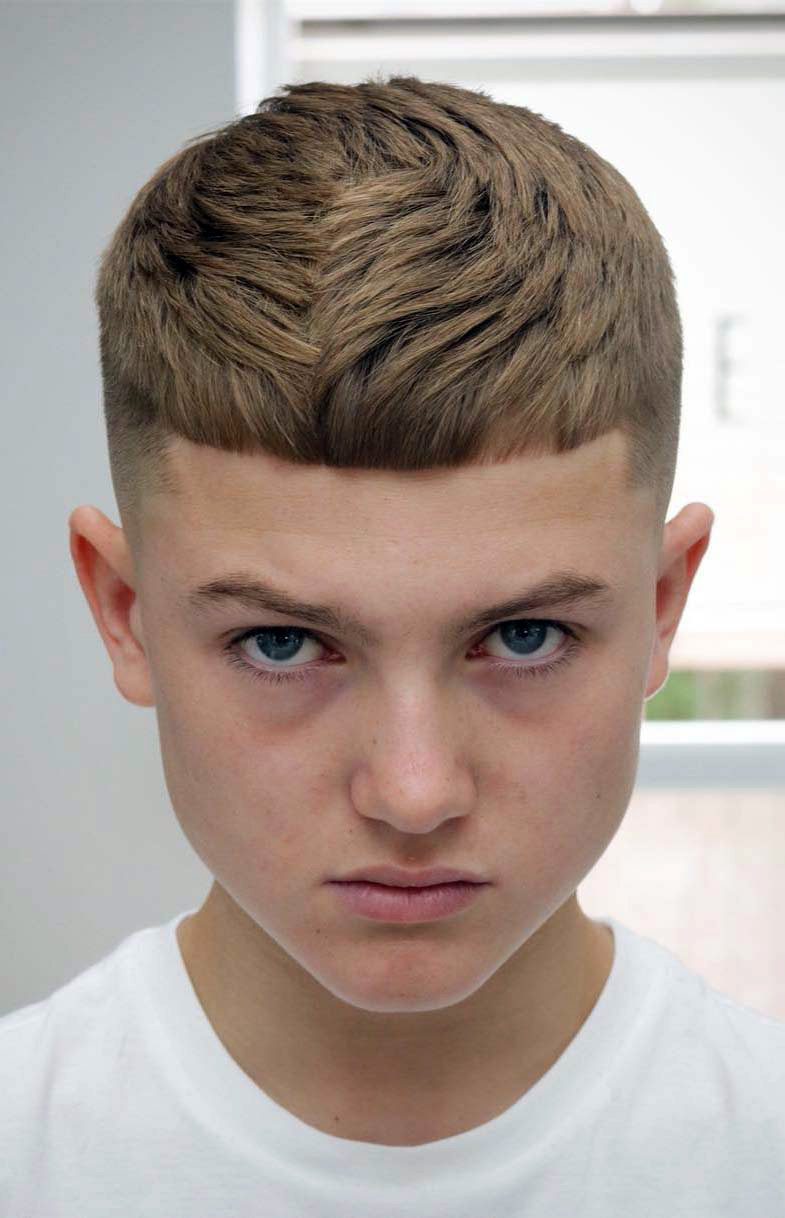
Inverted Ducktail on Crop
This inverted ducktail hairstyle takes the concept of the ducktail and flips it around. Instead of slicking the hair backward, the two sides are slicked forwards to meet in the middle of this cool crop.
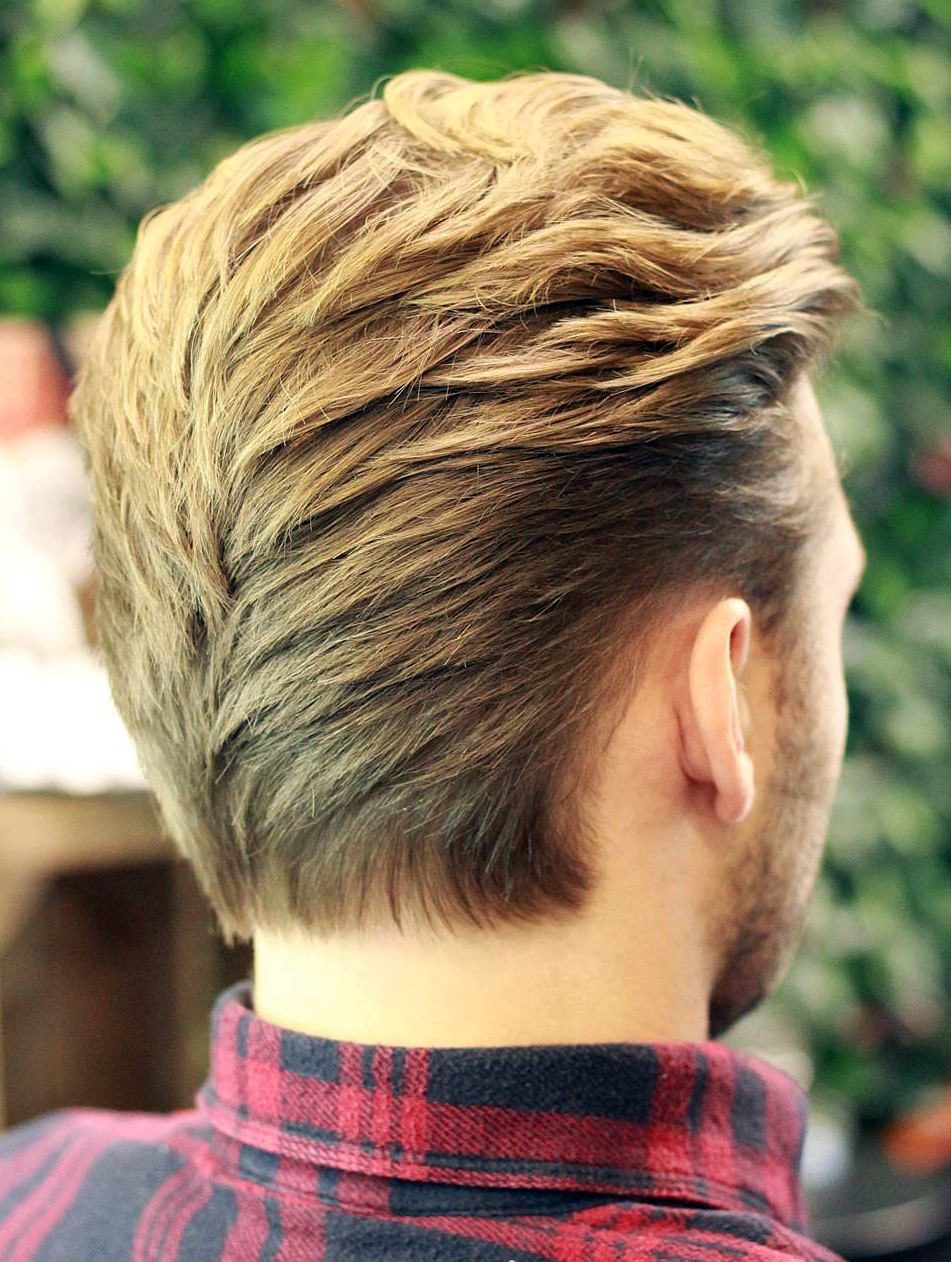
Light Classic Ducktail
Here’s a classic ducktail haircut that’s been brushed into place. Notice how it’s not an overly “sticky” look, like some heavily-gelled ducktails. This one is stylish and super clean — we love it!
Related
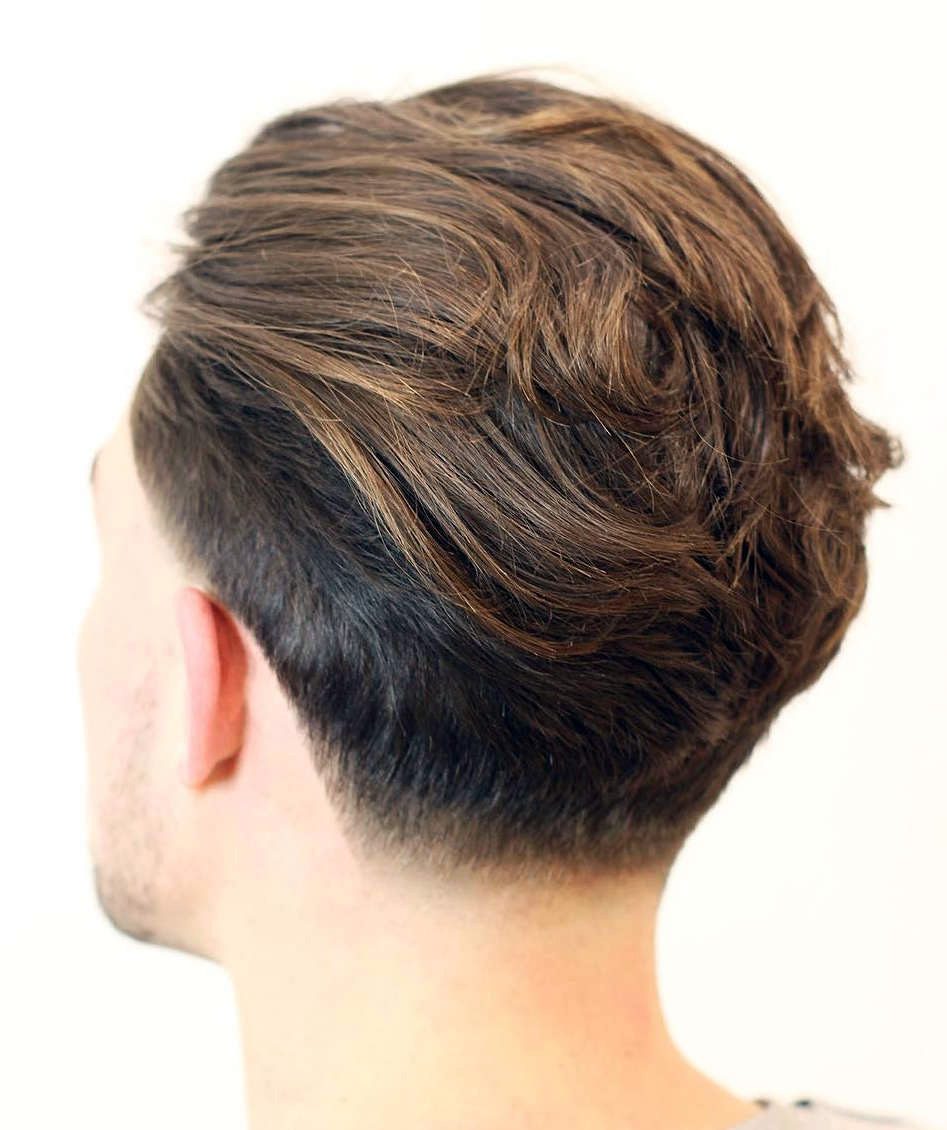
Modern Ducktail with Tapered Neckline
This is a more modern take on the ducktail, where the slicked sides have been layered onto the back hair. It might take some time to grow locks these long, but the final result is definitely worth it.
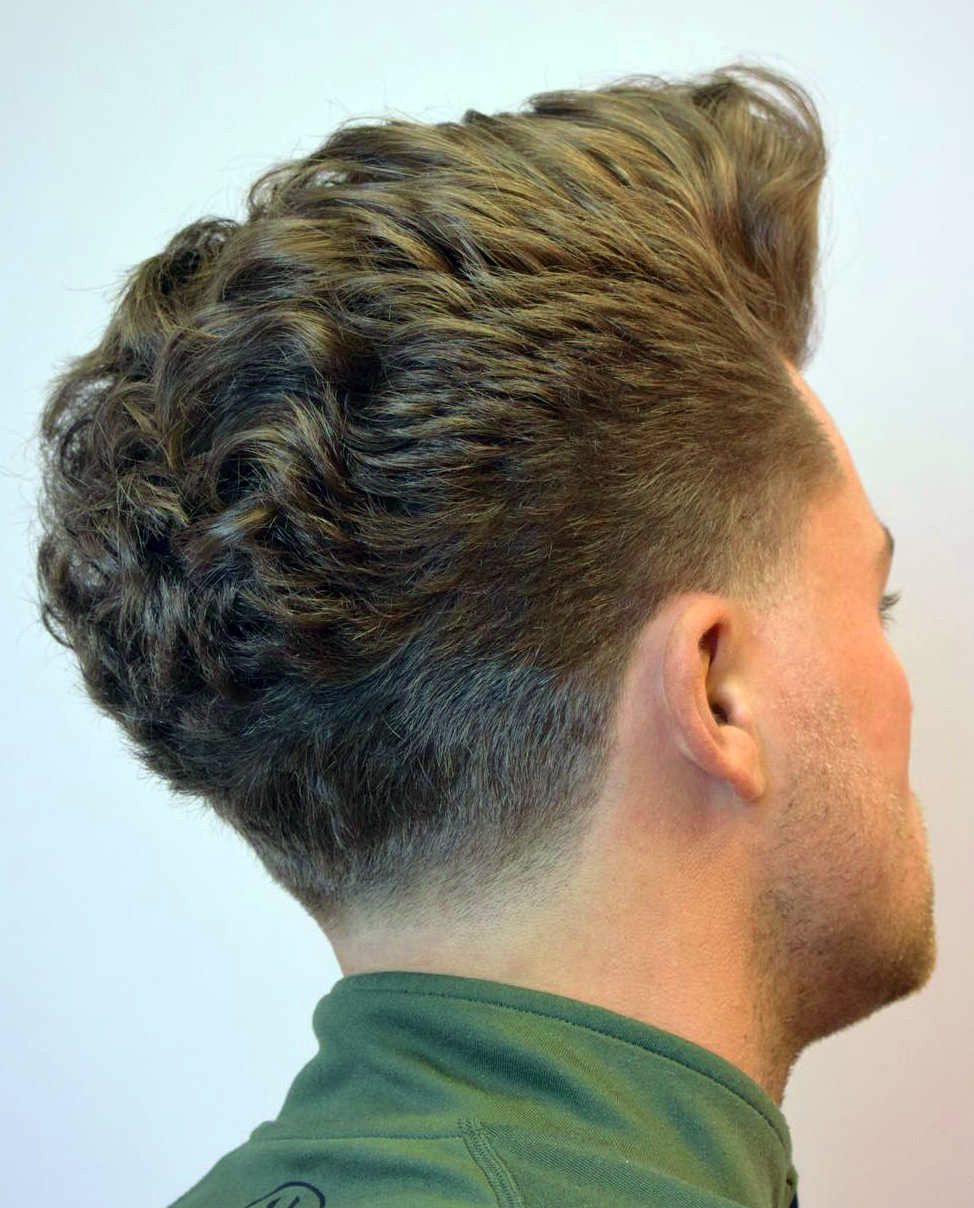
Front Volume and Curly Ducktail
For a twist on the regular ducktail, use the line along the middle as a guide for adding extra volume at the front. This curly ducktail hairstyle definitely has that technique down!
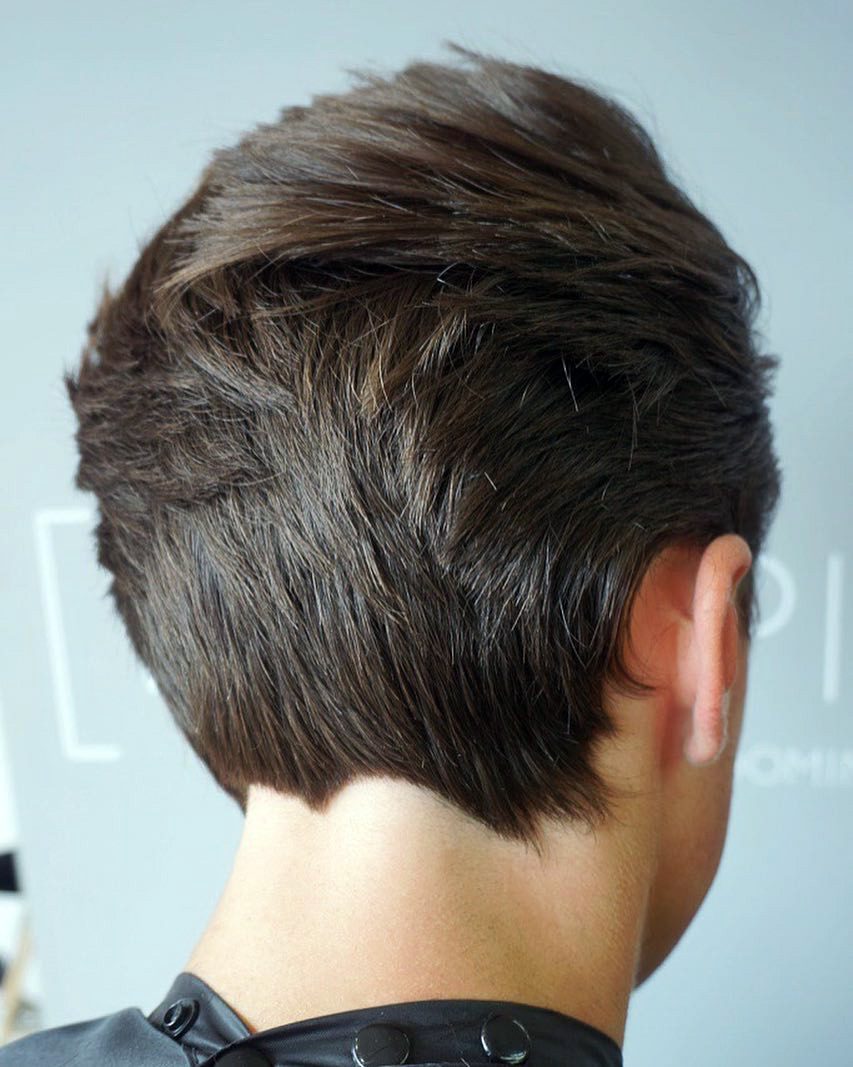
Deconstructed Ducktail
If a plain ducktail haircut is a little too rigid for you, try adding some more texture. This deconstructed ducktail is layered up with locks of hair pointing in all different directions, for a carefree, modern look.
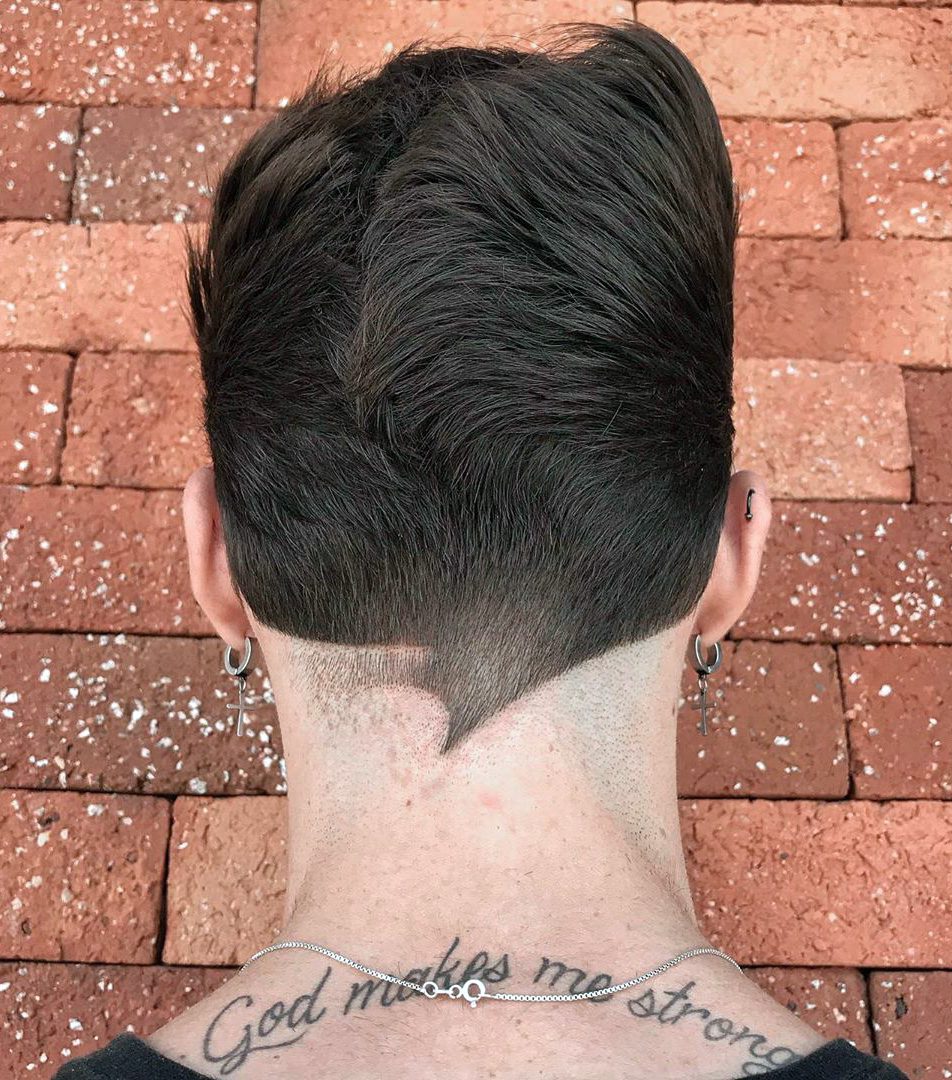
Ducktail and Neckline Design
This ducktail has some very interesting patterns running through it, with the two sides slicked back to meet along a wavy line. Yes, there’s a neckline pattern in this cut too; and yes, we think it’s a much-welcomed extra.
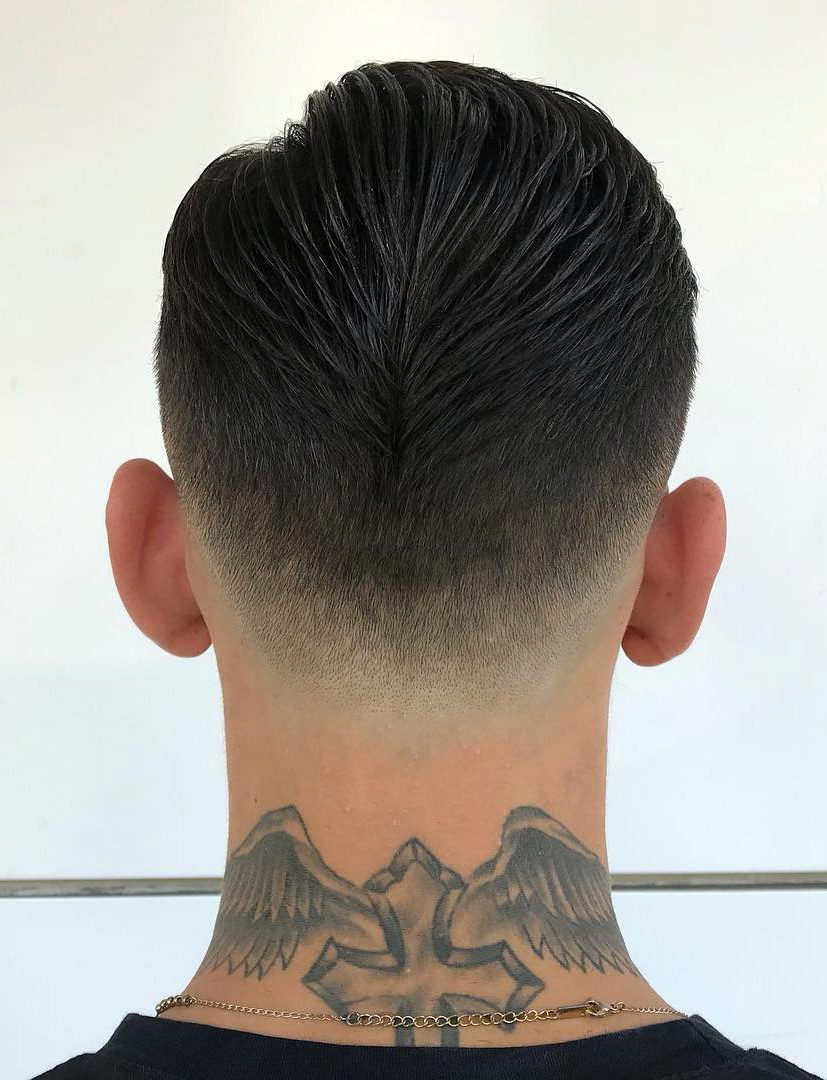
Short Ducktail Haircut
Here’s a simple, short ducktail with some light fading down the neck. We think this is an excellent choice for guys who like to keep things low-maintenance, but want to experiment with an age-old hairstyling motif.
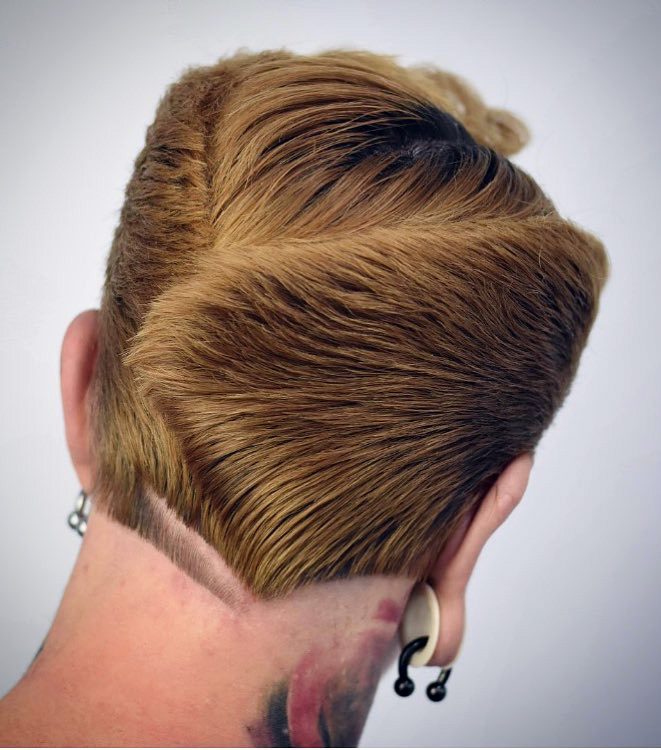
Ducktail Haircuts: Angular Take
Ducktails don’t always have to run in a straight line down the center of your hair. The more creative you are with your ducktail style, the more eye-catching it is. Check out this perfectly sculpted look in which the slicked-back sides meet in an angular line at the back. So cool!
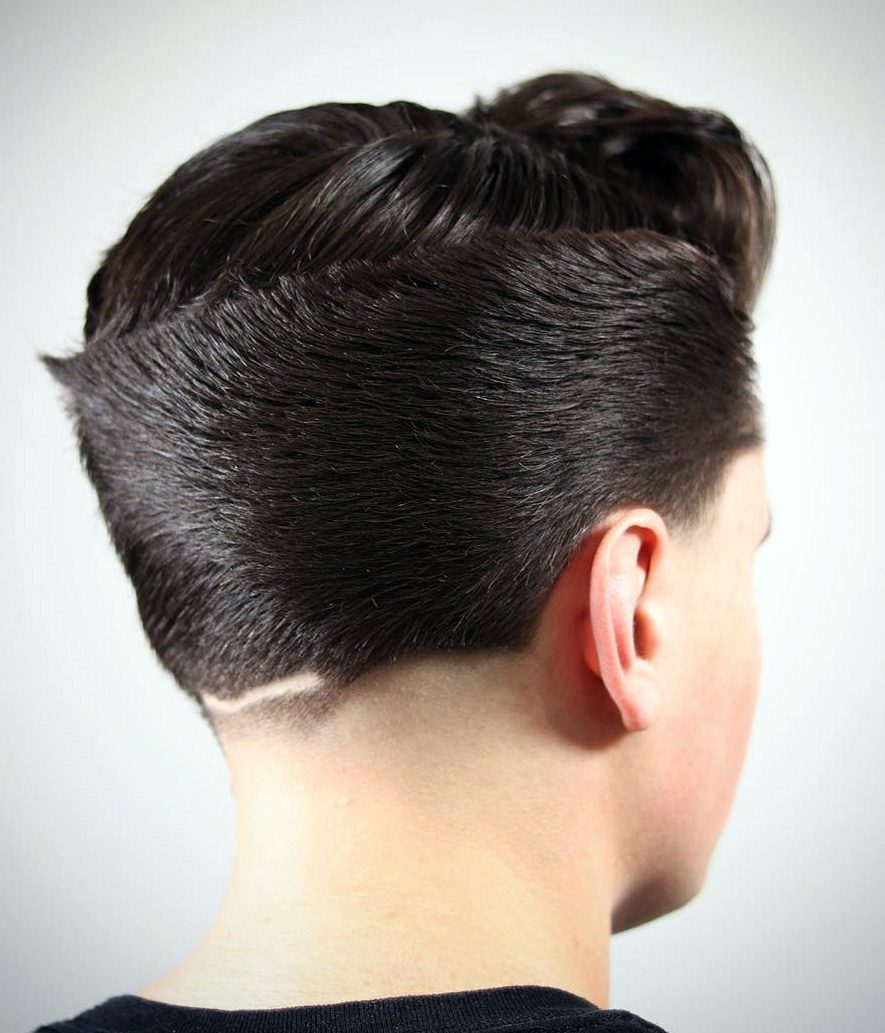
Horizontal Ducktail
Who says ducktails must always be vertical? For a unique take on the classic style, brush the sides back and then up to form a horizontal line along the midsection of your hair.
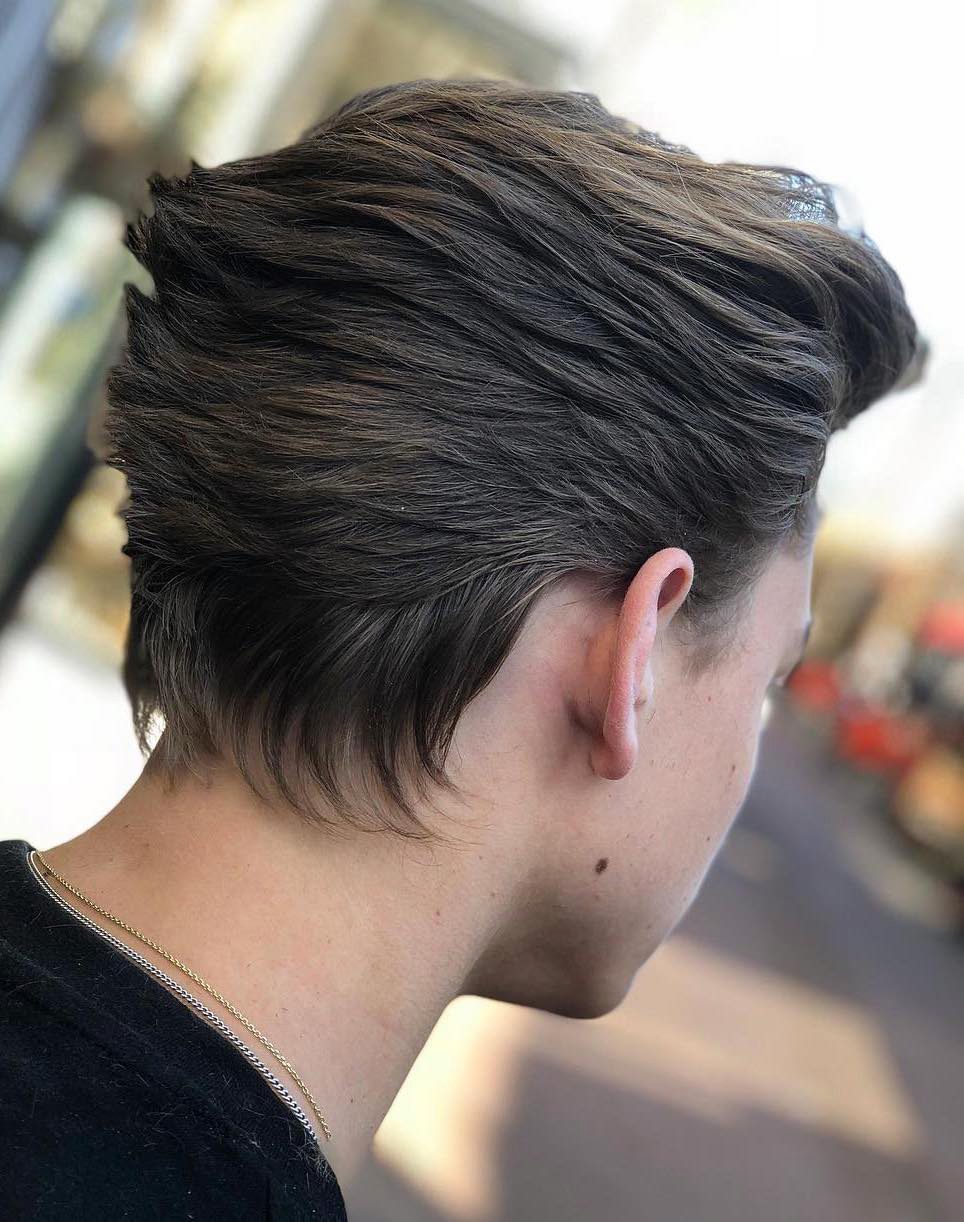
Stranded Duck Tail
We think any ducktail look has a nice texture but this has got to be one of the most stylish we’ve seen. The piecey strands on the sides look perfectly styled and we love how they meet in a choppy line down the middle.
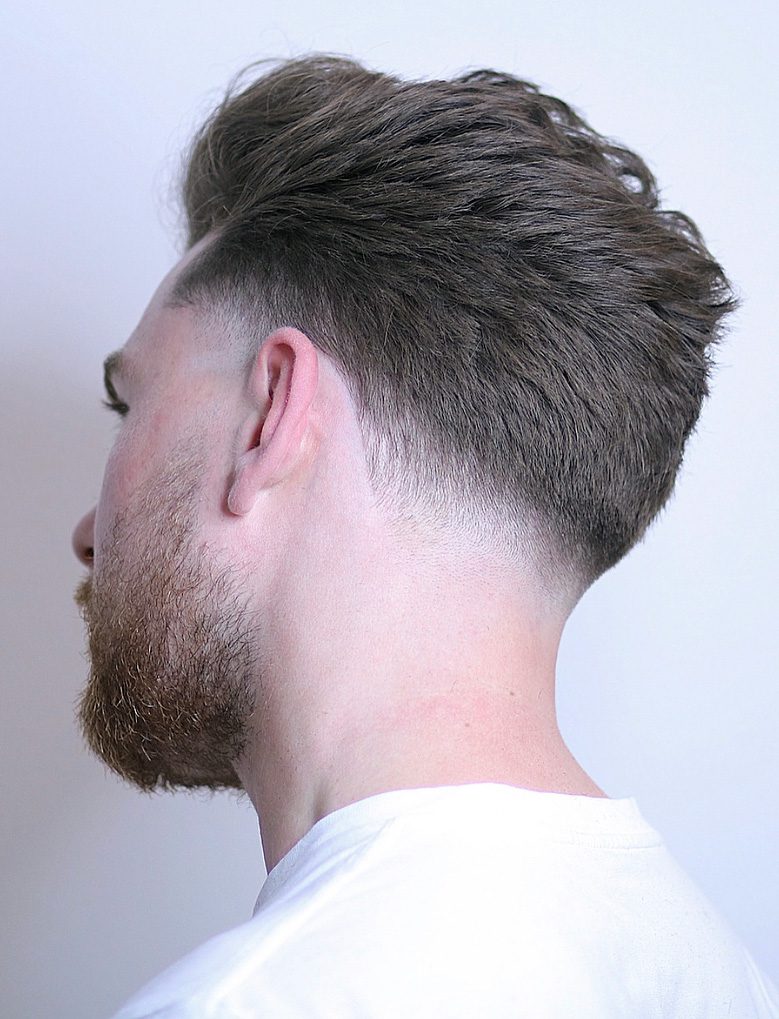
Miniature Ducktail Haircuts with Tapered Neckline
If you don’t want your cut to look too ’50s, you can go for a low-key style that features a mini ducktail running down the crown of your hair instead of the entire back. This adds a nice texture without that heavy vintage vibe.
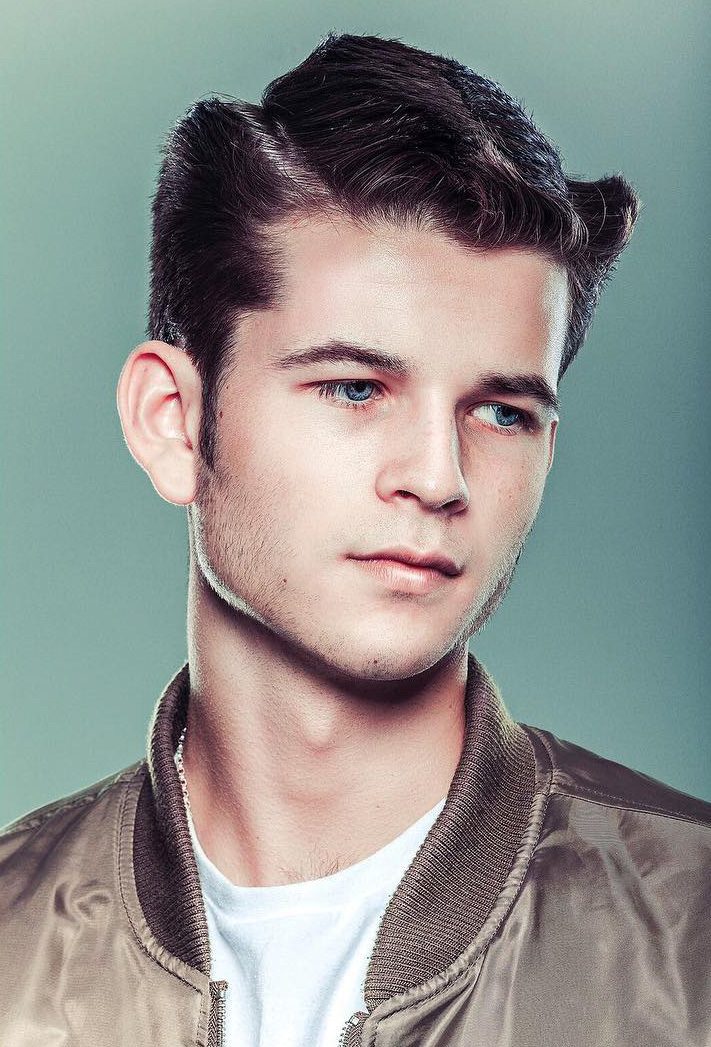
De-Constructed Top Ducktail
Try adding a little more variety to the top of your hair for a different take on the ducktail. This style features a part on either side of the head for extra pizzazz.
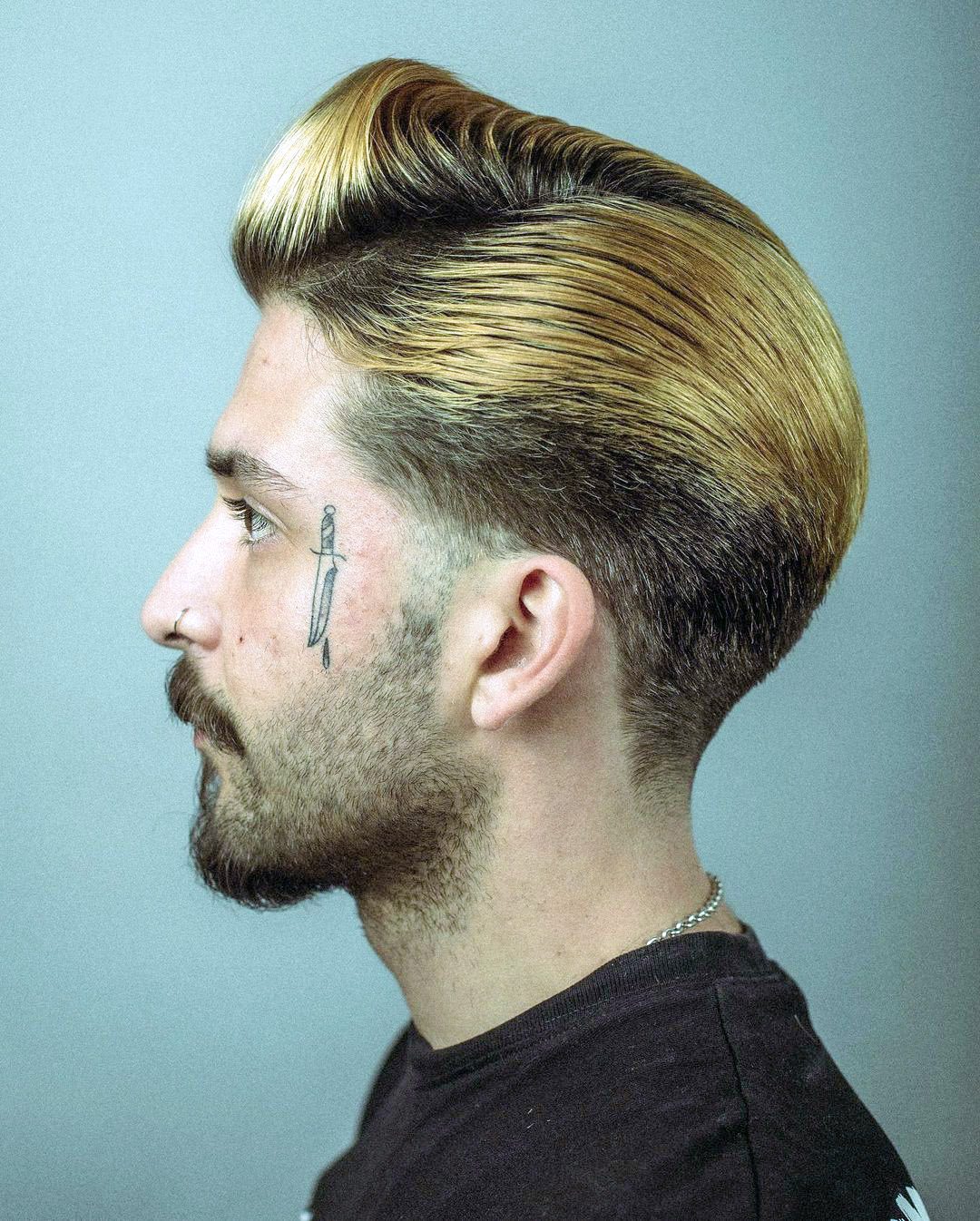
Some Retro Suave, Why Not
Not having longer hair strands won’t be a problem anyway so why not rock some long hair look this year? And what best is it than to rock some retro hairstyle from the ’80s? The top is curved and pompadoured with sides slightly tapered to push back and all of it is dyed to a shiny golden shade.
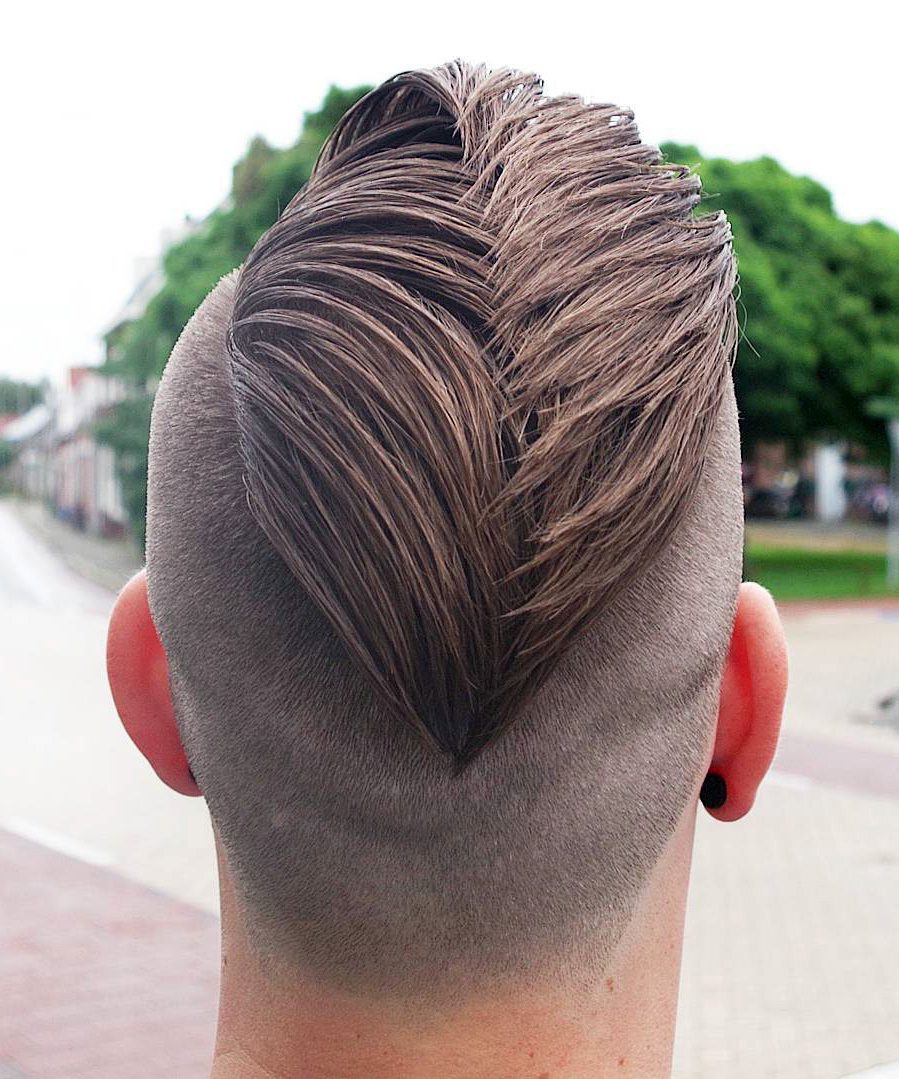
Ducktailed Top
You know what would make a mohawk even bolder? Style the top into a ducktail and you’ll totally be turning heads!
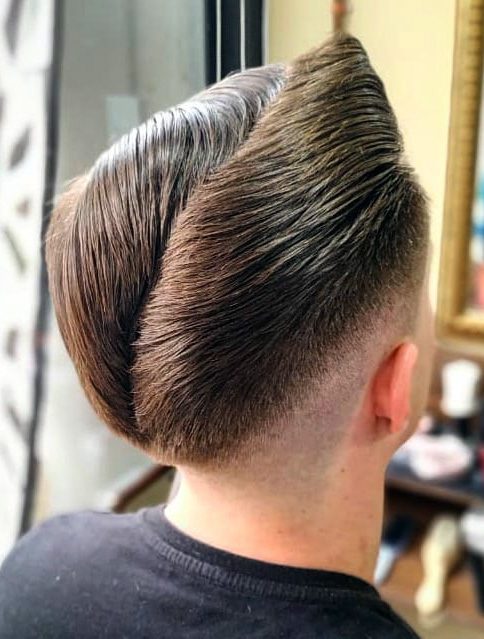
Pronounced Full Ducktail
This is the style you need to copy if you want to go for the quintessential ducktail. It has that heavy vintage feel with its slick look, extreme height, and very pronounced line running down the entire length.
What Is a Ducktail Haircut?
A ducktail haircut is a men’s hairstyle where the hair on both sides of the head is combed or styled backward so that it meets along a central line at the back of the head. From behind, this creates a distinctive shape resembling a duck’s tail.
The defining feature is the back of the haircut, rather than one specific length or style on top. A ducktail can be combined with a slick back, pompadour, quiff, undercut, taper, or more textured modern hairstyle.
Traditional ducktails typically use longer hair on the sides and back so the hair can be directed toward the center. Modern versions can be shorter and cleaner, with tapered sides or fades creating a sharper silhouette.
The hairstyle is also known as a duck’s tail or DA and is strongly associated with mid-century men’s grooming. The classic version became popular during the 1950s alongside rockabilly and greaser styles, but today’s ducktail can be adapted to suit a much wider range of hair types and personal styles.
Classic vs. Modern Ducktail Haircuts
The ducktail haircut has changed considerably since it became popular in the 1950s. While the classic ducktail is known for its slick finish, longer sides, and clearly defined center seam, modern versions adapt the signature shape to contemporary haircuts and styling trends.
Both approaches keep the defining idea of the ducktail: the hair on the sides and back is directed toward the center, creating the characteristic “tail” at the back of the head. The main difference is how structured, polished, and traditional the overall haircut looks.
Classic Ducktail Haircut
The classic ducktail is closely associated with 1950s men’s hairstyles and the greaser and rockabilly aesthetic. Hair is generally kept longer on the sides and back so it can be combed backward and toward the center.
A traditional ducktail typically has:
- Longer hair on the sides and back
- A clearly defined center seam
- A slicked-back finish
- Plenty of shine from pomade
- Volume through the top
- A polished, carefully combed appearance
For an authentic vintage look, the ducktail can be paired with a pompadour, quiff, or other voluminous hairstyle at the front. A strong-hold pomade and fine-tooth comb help create the clean lines associated with the original style.
The classic version is ideal if you want your haircut to have a noticeable 1950s, rockabilly, or greaser-inspired appearance.
Modern Ducktail Haircut
The modern ducktail keeps the distinctive shape at the back but gives the rest of the haircut a more contemporary finish. The sides can be tapered or faded, while the top may be textured instead of heavily slicked.
Modern ducktail haircuts can include:
- Low or mid tapers
- Faded sides
- Undercuts
- Shorter sides and back
- Textured tops
- Matte styling products
- Less-defined or deliberately relaxed center seams
A modern ducktail doesn’t have to look perfectly polished. A textured or slightly messy finish can make the hairstyle feel more current while still preserving the recognizable shape.
This version is a good choice if you like the idea of a retro ducktail haircut but don’t want to commit to a completely vintage appearance.
Classic vs. Modern: Which Should You Choose?
Choose a classic ducktail if you want:
- A strong vintage aesthetic
- A traditional 1950s-inspired haircut
- High shine and a polished finish
- Longer hair around the sides and back
- A prominent center seam
- A rockabilly or greaser-inspired style
Choose a modern ducktail if you prefer:
- Shorter or tapered sides
- A fade or undercut
- A more relaxed appearance
- Textured hair
- Matte styling products
- Easier everyday styling
Your hair type can also influence which version works best. Thick, straight hair can make it easier to create the structured shape of a classic ducktail, while wavy or curly hair can produce an interesting textured interpretation of the modern version.
Can You Combine Classic and Modern Elements?
Absolutely. You don’t have to choose between a completely traditional or completely contemporary ducktail.
For example, you could keep the longer, slicked-back top associated with a classic ducktail while adding a subtle taper around the neckline. Alternatively, you could combine a modern textured top with the clearly defined center shape of a traditional ducktail.
This hybrid approach is often the easiest way to make a ducktail haircut feel personal rather than like a recreation of a historical style.
When talking to your barber, bring reference photos that show the front, sides, and especially the back of the haircut. Tell them whether you want the finished style to look classic and polished or modern and textured, then let them adjust the length and shape to suit your hair.
The defining feature should always remain the same: hair that comes together toward the center of the back to create the distinctive ducktail shape.
How to Ask Your Barber for a Ducktail Haircut
A ducktail haircut is defined by the way the hair comes together at the back, so showing your barber what you want is especially important. A single front-facing photo may not show enough detail to recreate the distinctive shape.
Before your appointment, save a few reference photos that show the front, sides, and back of the hairstyle. Then explain whether you want a traditional ducktail or a more modern interpretation.
Tell Your Barber What Type of Ducktail You Want
Start by describing the overall style you’re after.
For a traditional look, ask for a classic 1950s ducktail with longer sides and back, a defined center seam, and enough length to comb the hair toward the middle.
For a contemporary version, ask for a modern ducktail with tapered or faded sides and a more textured finish.
You can also mention specific variations, such as:
- Classic slicked-back ducktail
- Ducktail pompadour
- Ducktail with a low taper
- Ducktail fade
- Ducktail undercut
- Short ducktail
- Textured ducktail
- Long rockabilly ducktail
Explain How You Want the Back
The back is the most important part of a ducktail haircut.
Tell your barber how prominent you want the central “tail” to be. A defined ducktail creates a noticeable V-shaped or central line where the hair from both sides meets, while a softer modern version can blend the hair together more subtly.
If you’re unsure, show your barber a photo of the back. This is often more useful than trying to describe the shape with words.
Decide on the Sides
Tell your barber whether you want the sides:
- Long and traditional
- Scissor-cut
- Tapered
- Low faded
- Mid faded
- Undercut
Longer sides generally create a more authentic vintage ducktail, while a taper or fade gives the haircut a cleaner, contemporary appearance.
If you want a modern ducktail but don’t want the sides extremely short, a low taper can be a good middle ground.
Discuss the Top and Front
The ducktail can be combined with several different hairstyles on top.
Tell your barber whether you want a:
- Pompadour
- Quiff
- Slick back
- Textured top
- Side part
- Short cropped top
- Longer swept-back style
If you’re going for a classic 1950s look, ask for enough length and volume to create a pompadour or quiff. For a modern ducktail, you can keep the top shorter and more textured.
Tell Your Barber How You Style Your Hair
Be honest about how much time you want to spend styling your hair.
If you enjoy using pomade and a comb every morning, a traditional ducktail can work well. If you want something that takes only a few minutes, ask for a modern version that works with your natural hair texture.
Mention whether you normally use:
- Pomade
- Wax
- Clay
- Styling cream
- Gel
- Hair dryer
- Comb
Your barber can then adjust the cut so it works with your normal routine.
Bring Reference Photos
Reference photos are one of the easiest ways to avoid misunderstandings. Ideally, bring at least two or three images showing different angles.
A useful set includes:
- Front view — shows the overall top and front shape.
- Side view — shows the length and taper or fade.
- Back view — shows the most important part of the ducktail.
Don’t worry if your hair doesn’t look exactly like the model’s. The purpose of the photos is to communicate the shape and overall style so your barber can adapt it to your hair type and head shape.
A Simple Way to Describe Your Ducktail
If you don’t know the terminology, you can simply say:
“I want a ducktail haircut where the hair comes together toward the center at the back. I’d like [long/tapered/faded] sides and a [classic/modern/textured] finish.”
Then show your barber your reference photos.
That’s usually more effective than requesting a specific length without explaining the overall shape you’re trying to achieve.
Remember: The Back Matters Most
With many men’s hairstyles, the front is the main focus. With a ducktail, the back deserves just as much attention.
Before leaving the barbershop, check the back from several angles and make sure the hair is creating the shape you wanted. If you’re aiming for a traditional ducktail, the central seam should be visible and the hair should flow naturally toward it.
The best ducktail haircut isn’t necessarily an exact copy of a reference photo. Your barber should adjust the length, taper, texture, and shape to work with your natural hair and features while preserving the defining ducktail silhouette.
Ducktail Haircut: Classic Cool for Modern Men
Don’t miss out> Classy Slicked Back Hairstyles for Men with Side Part
The ducktail—an iconic nod to mid-century style—is more than just a retro trend; it’s a bold statement that communicates confidence, precision, and individuality. Whether you’re after a polished, high-shine finish or a relaxed matte variation, the ducktail has versatility rooted in timeless flair.
✂ What Makes the Ducktail Stand Out
-
Sculptural profile: The tapered back meeting in the center creates a distinctive V-shape that elongates the jawline and adds refined structure.
-
Sleek vibe: When paired with a slicked-back top or side part, the ducktail enhances a clean, put-together look ideal for both formal and casual settings.
Styling Tips That Elevate the Look
-
Choose your finish wisely—use pomade for sheen and hold, or matte cream for a more understated, modern feel.
-
Style with a comb for precision or your fingers for texture—both work, depending on how polished or relaxed you want the end result.
-
Maintain the shape through regular trims, keeping the V-shape sharp and the sides balanced.
Making It Your Own
-
Blend the ducktail with current trends—like taper fades or disconnected sides—for a contemporary twist.
-
Feel free to add personal touches, such as subtle design lines or a softer part, to make the cut uniquely yours.